
🛍️ Affiliate Disclosure:
As an Amazon Associate, we earn from qualifying purchases. This means if you click a link and make a purchase, we may earn a small commission at no extra cost to you.
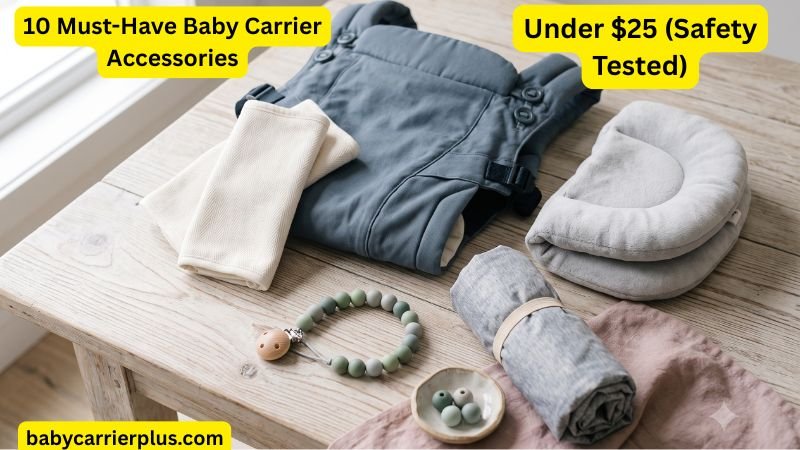
Finding high-quality, affordable baby gear doesn’t mean you have to compromise on infant ergonomics or pediatric safety. While a premium primary carrier—like Ergobaby, Tula, or Lillebaby—provides the structural foundation for hands-free babywearing, everyday use quickly exposes functional gaps. From drool-saturated shoulder straps to improper newborn hip placement, standard carriers often require supplementary accessories to maintain both hygiene and biomechanical support.
Investing in budget-friendly, safety-tested accessories is the most practical way to protect your primary carrier, extend its lifespan, and ensure optimal spinal alignment for your growing child. In this guide, we evaluate 10 essential baby carrier accessories under $25 based on pediatric health guidelines, fabric non-toxicity (GOTS/CPSIA), and ergonomic weight distribution.
🛡️ Pediatric Safety Registry Hack
Create a Free Amazon Baby Registry before browsing. It costs you $0, locks in exclusive welcome rewards, and activates your active 2026 Prime session discounts instantly.
🎁 Create Free Amazon Baby RegistryBiomechanical & Pediatric Safety Testing Framework
Before adding any accessory to your carrier, it must pass strict safety and ergonomic criteria. We evaluate budget-friendly baby carrier accessories using a 5-Step Testing Framework:
- Chemical Non-Toxicity: Materials must be certified organic (GOTS) or CPSIA-compliant, free from BPA, lead, and phthalates to ensure safety during teething.
- Orthopedic Hip Alignment: Accessories like infant inserts must support knee-to-knee ergonomics to maintain the medically recommended “M-shape” position and prevent hip dysplasia.
- Lumbar Weight Dispersion: Extenders and pads must evenly distribute the infant’s weight across the lower back to relieve vertical spinal pressure on parents.
- Thermal & Moisture Management: Fabrics must offer high breathability and moisture-absorption to protect sensitive infant skin from rashes.
- Structural Integrity: Buckles, clips, and fasteners must withstand pull-tension tests to ensure accessories cannot break or detach unexpectedly.
The T.I.C.K.S. Airway Preservation Protocol Preventing infant suffocation in soft carriers requires strict adherence to postural airway preservation protocols. Caregivers must enforce the internationally recognized T.I.C.K.S. safety protocol:
- Tight: The carrier panel must hold the infant snug against the caregiver’s torso to prevent slumping.
- In View at All Times: Accessory covers, weather shields, and sun shades must never obstruct a direct line of sight to the infant’s face and airway.
- Close Enough to Kiss: The infant’s head should sit near the caregiver’s clavicle, enabling immediate monitoring.
- Keep Chin Off Chest: A continuous clearance of at least one finger-width beneath the infant’s chin must be maintained.
- Supported Back: Soft structural inserts and carrier panels must maintain the infant’s natural C-shaped spinal curvature.
According to the International Hip Dysplasia Institute, using proper affordable baby gear protects infant joint development.
Top 10 Affordable Baby Gear Accessories Under $25 (Quick Comparison)
Always verify safety certifications before buying affordable baby gear online.
| Image | Product | Features | Price |
Our Pick
1 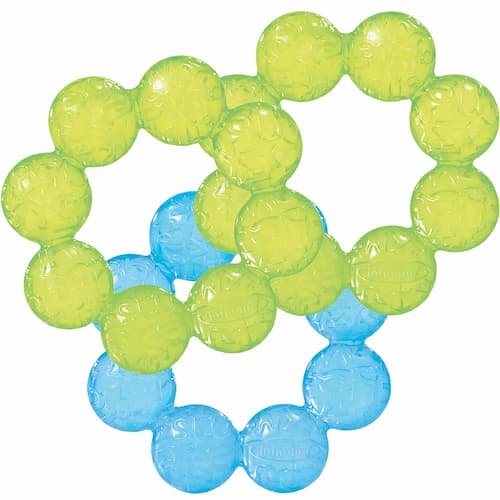 | Infantino Water Teethers (Cooling & Massaging Relief, 3-Pack) | Cooling Comfort: Water-filled design soothes sore gums when chilled. |
| Image | Product | Features | Price |
Our Pick
1 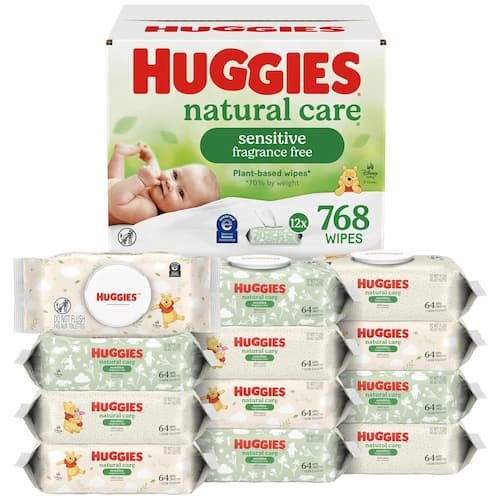 | Huggies Natural Care Sensitive Baby Wipes (12 Flip-Top Packs, 768 Count) | 99% Water: Hypoallergenic, plant-based formula. |
| Image | Product | Features | Price |
Our Pick
1 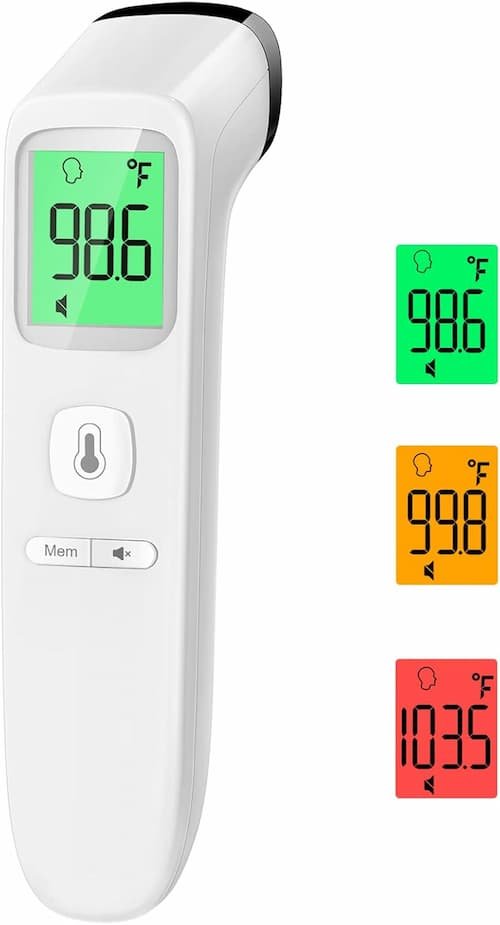 | No-Touch Thermometer for Adults and Kids | 1s Fast Reading: Instant touchless temperature checks. |
| Image | Product | Features | Price |
Our Pick
1 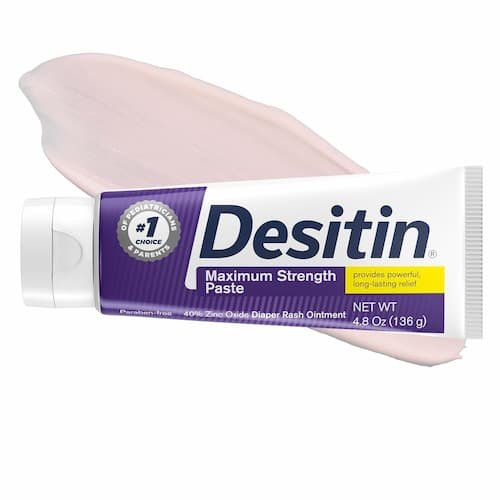 | Desitin Maximum Strength Diaper Rash Paste (40% Zinc Oxide) | 40% maximum strength zinc oxide for fast relief |
| Image | Product | Features | Price |
Our Pick
1  | Amazon Baby Registry Welcome Box | #1 Best Seller in Newborn Gift Sets |
| Image | Product | Features | Price |
Our Pick
1 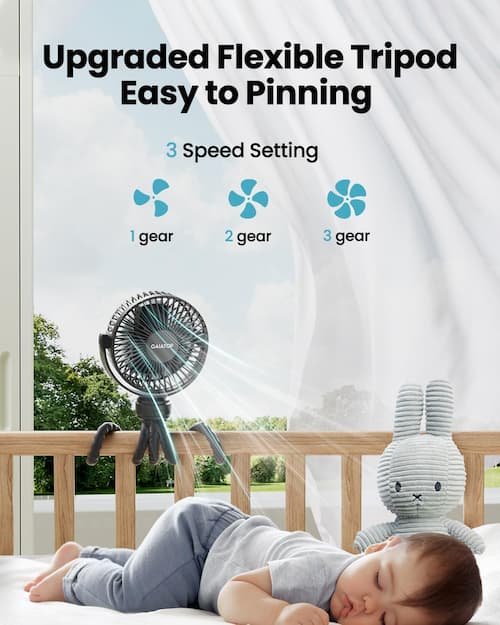 | Gaiatop Mini Portable Stroller Fan | Upgraded flexible tripod design |
| Image | Product | Features | Price |
Our Pick
1 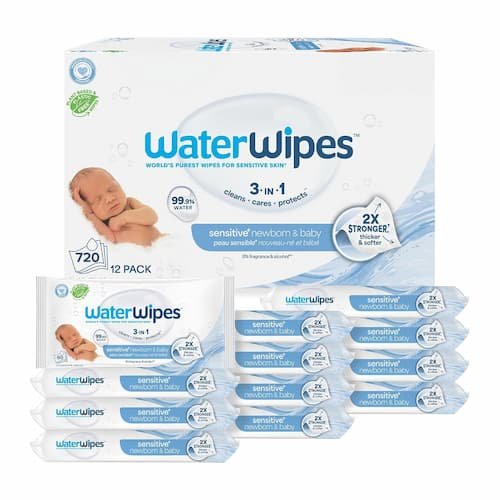 | WaterWipes Sensitive Baby Wipes (12 Packs / 720 Count) | 99.9% purified water & fruit extract |
Buyer’s Checklist: Fabric Safety & Hip Dysplasia Prevention
Selecting affordable baby gear requires careful evaluation of safety and mechanical standards. Parents must ensure that lower-cost accessories do not compromise the infant’s health or carrier structural integrity.
| Evaluation Standard | Safe & Ergonomic Standard | Unsafe or Substandard Standard |
|---|---|---|
| Hip Positioning | Knee-to-knee support; knees held higher than hips (“M-Shape”) | Straight dangling legs causing hip stress (“Dangling Legs”) |
| Fabric Non-Toxicity | Certified GOTS organic cotton or CPSIA compliant | Synthetic, chemically dyed, or harsh plastic materials |
| Airway & Neck Support | Firm yet flexible padding that leaves airways completely unobstructed | Rigid or overly dense foam pushing head forward |
| Thermal Control | Breathable natural fibers or 3D air mesh lining | Non-breathable nylon trapping moisture and heat |
| Fasteners & Buckles | Heavy-duty polypropylene buckles and strong Velcro closures | Thin, brittle plastic clips prone to snapping |
Key Takeaways for Smart Shopping
- Verify Chemical Standards: Always check for GOTS or CPSIA certifications when purchasing affordable baby gear, especially items baby will chew on, like drool pads.
- Prioritize Joint Safety: Never compromise on proper M-position hip support to prevent developmental hip dysplasia.
- Check Buckle Tension: Ensure fasteners can comfortably handle your baby’s weight during extended movement.
Detailed Safety & Biomechanical Analysis for Baby Carrier Accessories
Understanding the Physiological Impact of High-Velocity Accessories
When selecting affordable baby gear, parents must understand how secondary add-ons interact with the primary carrier’s original geometry. High-volume accessories such as teething pads, infant support cushions, and waistband extenders alter weight distribution vectors and fabric tension dynamics. A well-engineered carrier accessory works in harmony with the parent’s musculoskeletal structure and the infant’s anatomical development.
1. Salivary Breakdown and Textile Degradation
Infant teething is accompanied by excessive hypersalivation. Infant saliva contains active digestive enzymes, most notably alpha-amylase, which catalyzes the hydrolysis of alpha-(1,4)-glucosidic bonds in natural cellulose fibers like cotton. When an infant chews directly on non-removable carrier shoulder straps, moisture and enzymes penetrate deep into internal polyurethane or EVA foam cores, creating an ideal environment for bacterial colonization and chemical fiber degradation.
Standard structured carrier straps are often constructed from heavy cotton canvas or polyester blends that absorb moisture deep into their internal foam padding. When these straps remain damp, bacteria, mold, and localized fiber degradation occur, weakening the carrier’s structural integrity. Integrating removable, high-absorbency drool pads creates a sacrificial barrier. By absorbing moisture at the surface level using GOTS-certified organic cotton and high-density Zorb inner layers, the primary carrier remains dry, sterile, and free from structural fiber decay.
2. Orthopedic Hip Alignment and the M-Position Geometry
The International Hip Dysplasia Institute emphasizes that an infant’s hip joints are composed of soft cartilage during the early months of development. Incorrect positioning—such as allowing the legs to dangle straight down—exerts excessive vertical force on the femoral head, potentially leading to developmental hip dysplasia or dislocation. High-quality support inserts and seat extenders ensure proper “knee-to-knee” support, lifting the infant’s knees level with or slightly above their hips. This creates the medically approved M-position (or frog-leg position), which centers the femoral head safely within the hip socket.
3. Spinal Ergonomics and Lumbar Pressure Vector Dispersion
Babywearing places dynamic loads on the adult spine. Without proper weight distribution, the wearer compensates by arching the lower back (hyperlordosis) or slumping forward. Over extended walking sessions, this leads to lower back strain and trapezius fatigue.
Biomechanical Load Formula:
The mechanical force (F) exerted by an infant’s body mass (m) under gravitational acceleration (g) transfers directly onto the caregiver’s frame: F = m × g
In standard configurations, narrow straps generate high localized pressure: P₁ = F / A₁
Expanding the contact surface area from A₁ to A₂ (where A₂ > A₁) significantly reduces peak pressure: P₂ = F / A₂
Adding heavy-duty EVA foam lumbar support pads and waistband extenders increases the surface contact area against the parent’s sacral region. According to biomechanical load-distribution principles, expanding the contact surface area drastically reduces the peak pressure exerted on localized lumbar vertebrae. This shifts the weight vector evenly onto the pelvis, allowing parents to carry comfortably for longer periods.
4. Thermal Dynamics and Airflow Optimization
Infants possess underdeveloped thermoregulation mechanisms, making them particularly vulnerable to overheating during warm-weather babywearing. Conventional synthetic carrier fabrics can trap ambient body heat between the adult and child. Integrating 3D breathable air-mesh liners and UPF 50+ UV protection hoods facilitates continuous air circulation while protecting sensitive skin from direct solar radiation. The open-cell structure of 3D mesh allows moisture vapor to dissipate rapidly, keeping both parent and infant cool and preventing heat rashes.
Final Verdict on Affordable Baby Gear Accessories
Investing in high-utility, affordable baby gear accessories under $25 is the most practical way to bridge the gap between carrier durability, hygiene, and infant safety. While primary baby carriers require a significant financial investment ($100–$250), budget-friendly additions like organic drool pads, head supports, and lumbar pads extend the life of your carrier while maintaining optimal biomechanical alignment for your baby. By prioritizing CPSIA and GOTS certified materials and supporting natural M-position hip development, parents can enjoy safe, long-term babywearing without exceeding their budget.
For further reading, consult our specific newborn wrap safety reviews, structured carrier comparisons, or infant insert sizing guides.
Frequently Asked Questions
Are organic drool pads compatible with all baby carrier brands?
Yes, most universal drool pads feature slide-on designs with high-grade snaps or Velcro, making them compatible with popular carriers including Ergobaby, Tula, Lillebaby, Infantino, and Hope&Plum.
What is the maximum safe length for pacifier clips attached to a baby carrier?
Under CPSC safety regulations (16 CFR §1511.6) and ASTM toy standards, pacifier and toy clips must measure no longer than 7 to 8 inches (178–203 mm) in total length. Longer cords present a dangerous strangulation hazard if wrapped around an infant’s neck.
How do I properly wash certified organic drool pads?
Understanding how to maintain your affordable baby gear ensures long-term comfort and durability. Wash organic cotton pads on a gentle machine cycle using non-toxic baby detergent, and air dry to preserve fabric density.
Why is an infant support insert necessary for newborns?
Standard structured carriers are designed for older infants. Without an insert, a newborn may slump, compromising their airway and putting unnecessary strain on their developing hip joints.
Are budget-friendly carrier rain covers safe and breathable?
Yes, quality budget covers feature a waterproof outer layer and a breathable inner lining, providing wind protection while preserving airflow to prevent overheating.
How do waistband extenders improve babywearing ergonomics?
Waistband extenders add up to 10 inches to the carrier waistbelt, allowing equal weight distribution across the hips and reducing lower back strain for diverse body shapes.
About the Author: Hafiz Nauman Baig is a PhD Scholar in Zoology specializing in Fisheries at Quaid-i-Azam University. Leveraging advanced statistical data analysis in R Studio and research expertise in aquatic adaptation and oxidative stress, he provides rigorous, evidence-based safety and ergonomic evaluations for baby gear.