Drool patches, formula spills, and milk spit-up are part of daily life when babywearing, but while major contamination events like diaper leaks require following official OEM machine-washing guidelines, tossing your carrier into the washer for every minor stain unnecessarily accelerates mechanical wear. Knowing how to wash baby carrier fabrics correctly starts with understanding that frequent machine washing weakens cotton fibers, degrades structural stitching, and causes premature color fading. Instead of risking unnecessary wear and tear, mastering quick spot-cleaning techniques allows you to tackle localized messes in minutes.
Whether you are using a structured carrier or managing a stretch wrap, learning how to spot clean baby carrier spit up stains preserves both the fabric integrity and safety of your daily gear. By using natural enzyme solutions and gentle blotting methods, you can easily handle daily messes, remove stubborn odors, and figure out how to clean baby carrier without washing machine cycles every single week. For advanced compliance and structural integrity checks, explore our complete breakdown on brand-specific Ergobaby machine washing guidelines and structural safety inspection protocols.
| Cleaning Aspect | Generic Parenting Sites | Our Expert Spot-Cleaning Guide |
|---|---|---|
| Cleansing Agent | Harsh dish soaps & degreasers | Natural enzymes & pH-balanced bile soap |
| Milk Protein Action | Coats fibers, leaving residue behind | Breaks down casein proteins at molecular level |
| Fabric & Fiber Health | Strips cotton oils, causing pilling & fraying | Protects organic cotton, linen & modal elasticity |
| Odor Neutralization | Synthetic perfumes & scented sprays | Non-toxic white vinegar & enzyme methods |
| Infant Safety | Risk of contact dermatitis & respiratory triggers | 100% hypoallergenic, non-irritating for skin contact |
Why Frequent Washing Reduces Baby Carrier Lifespan
While it is tempting to throw your carrier into the laundry after every spill, subjecting it to repeated machine cycles drastically shortens its usable lifespan. Baby carriers—whether structured buckle carriers, woven wraps, or elastic jersey slings—are engineered load-bearing safety devices. Knowing how to wash baby carrier fabrics without causing structural damage comes down to understanding that full washing cycles expose the fabric, internal padding, and stress points to excessive mechanical agitation, saturation strain, and detergent breakdown. Over time, frequent machine washing accelerates material fatigue, compromising both the comfort and safety of your carrier long before its time.
- Mechanical Fiber Stress: Running a full machine cycle when figuring out how to wash baby carrier wraps or structured slings causes intense friction that weakens natural cotton, linen, and jersey knit fibers, leading to thinning, pilling, and eventual tearing.
- Buckle and Webbing Degradation: Machine washing with unfastened plastic buckles causes repeated impact against washer drums, leading to internal micro-fracturing of high-density polyoxymethylene (POM) plastic fasteners. High spin speeds also subject load-bearing X-stitched seams to excessive centrifugal shearing force, increasing the risk of structural failure and violating ASTM F2236 load-bearing safety standards.
- Internal Padding Saturation: Heavy foam in waistbands and shoulder straps absorbs massive amounts of water; frequent soaking and spin-drying breaks down the dense padding, causing it to lump, warp, or lose its ergonomic support.
- Seam and Stitching Strain: Heavy water weight during the spin cycle puts extreme tension on load-bearing seams and stress-point X-stitching, which is why learning how to clean baby carrier without washing machine cycles is vital for preserving seam integrity.
- Detergent and Color Fading: Continuous exposure to water and harsh surfactants strips natural dyes, making it difficult to keep baby carrier clean from spit up stains without leaving the fabric looking dull, washed out, and prematurely aged.
OEM Exception Note: While routine spot-cleaning is ideal for daily messes, major hygienic contamination—such as diaper blowout leaks—requires following official Original Equipment Manufacturer (OEM) guidelines. Major brands like Ergobaby, BabyBjörn, and Tula explicitly endorse cold-to-warm delicate machine cycles inside a mesh laundry bag when full sanitation is unavoidable.
The Spot-Cleaning Arsenal: Wet Wipes, Soft Cloths, and Natural Bile Soap
Tackling daily spills requires the right tools that effectively lift stains without stripping fabric fibers or introducing harsh chemicals to your baby’s skin. Many mainstream parenting guides recommend standard dish soaps or chemical stain removers, but these often contain synthetic surfactants that break down natural cotton fibers and leave irritant residues. Building a gentle yet effective cleaning kit allows you to treat fresh spit-up, drool, and milk marks immediately, mastering how to spot clean baby carrier spit up stains safely at home or on the go. For pediatric safety guidelines on infant skin exposure to detergents, consult the officialAmerican Academy of Pediatrics safety standards.
Essential Spot-Cleaning Tools
- Natural Bile Soap (Gallseife): Unlike synthetic detergents, natural bile soap contains bovine bile enzymes (oxgall) that specifically target and digest lipids and milk proteins (casein) in formula and breastmilk. It is completely pH-balanced, non-toxic, and safe for organic cotton, linen, and structured carrier shells without weakening the fabric weave.
- Microfiber and Soft Muslin Cloths: Avoid abrasive sponges or stiff scrub brushes, which cause pilling and weaken load-bearing threads. Soft, lint-free microfiber or thick cotton muslin cloths are ideal for working solutions gently into the weave without damaging the surface texture.
- Fragrance-Free Baby Wipes: For immediate field maintenance, plant-based water wipes (containing 99% water and no alcohol or synthetic fragrances) are your first line of defense. They allow you to lift fresh drool before it sets into the underlying padding.
- Enzyme-Based Baby Stain Removers: If natural bile soap is unavailable, opt for plant-derived liquid detergents explicitly labeled free of optical brighteners. Optical brighteners leave chemical residues designed to alter light reflection, which can cause severe skin sensitization in infants and break down synthetic elastane threads responsible for stretch recovery in jersey wraps. Always prioritize products meeting Oeko-Tex Standard 100 Class 1, ensuring fabric components remain 100% free from harmful chemicals when mouthed by your baby.
Step-by-Step Spot-Cleaning Method
- Blot Fresh Liquid: Immediately dab fresh spit-up or milk with a dry muslin cloth. Never rub vigorously, as friction forces liquid deeper into the inner foam padding.
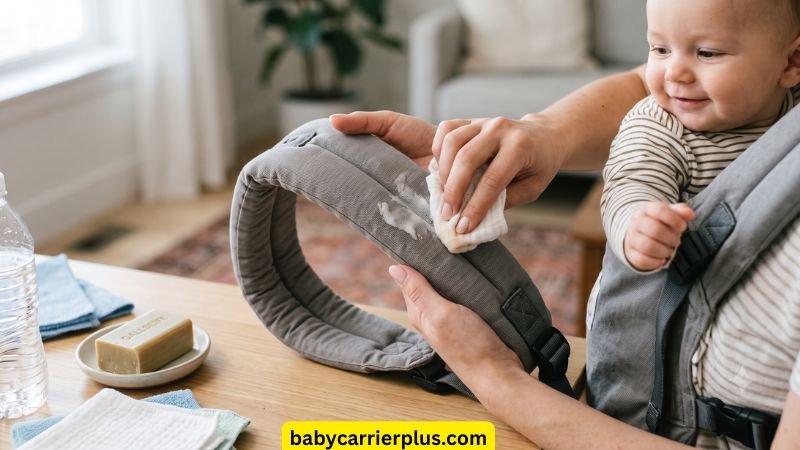
- Apply the Solution: Wet a soft cloth with lukewarm water, rub a small amount of natural bile soap onto the cloth (not directly onto the carrier), and gently work it into a light lather.
- Work from Outside In: Gently dab the stained area starting from the outer edge working toward the center. This prevents the stain from spreading and creating a visible water ring.
- Rinse with a Clean Damp Cloth: Wipe away all soap residue using a separate cloth dampened with cool, clean water. Removing all soap traces is essential to avoid attracting dirt later or causing mild skin irritation.
- Air Dry Thoroughly: Allow the carrier to dry in a well-ventilated, shaded indoor area before wearing it again with your baby.
Learning how to clean baby carrier without washing machine cycles relies on these gentle, targeted tools. By keeping these essentials in your diaper bag, you can keep baby carrier clean from spit up stains while extending the life of your carrier’s structural materials. Building a reliable toolkit is the foundation of learning how to wash baby carrier fabrics without subjecting them to a full laundry cycle.
Safe Odor Neutralization: Removing Spit-Up and Formula Smells Without Synthetic Perfumes
Lingering spit-up and sour milk smells are among the most frustrating issues parents face when maintaining baby carriers. Formula and breastmilk contain complex lipids and proteins that sour as they decompose inside fabric fibers. Simply masking these odors with scented laundry sprays or synthetic fabric fresheners is dangerous—fragrance chemicals like phthalates and volatile organic compounds (VOCs) can trigger respiratory sensitivities, contact dermatitis, and allergic reactions in infants who rest their faces directly against the carrier. Learning how to wash baby carrier fabrics safely requires neutralizing sour odors at the molecular level using non-toxic, fragrance-free solutions.
Safe, Non-Toxic Odor Neutralizers
- Diluted White Vinegar Spray (1:4 Ratio): Acetic acid in distilled white vinegar breaks down alkaline milk salts and neutralizes sour odors naturally. Mix one part white vinegar with four parts distilled water in a spray bottle. Lightly mist the affected area after spot-cleaning; the vinegar scent dissipates completely as it air-dries, taking the sour milk smell with it.
- Warning on Baking Soda Applications: Never apply unfiltered baking soda paste directly to carrier fabrics. Sodium bicarbonate possesses a highly alkaline pH of approximately 8.3 to 9.0. Applying alkaline agents directly to natural cellulose fibers or protein blends causes irreversible fiber stiffening, yellowing, and localized weakened tensile strength.
- Enzyme-Based Odor Eliminators: Look for specialty fragrance-free, plant-derived enzyme sprays designed for baby gear. These active enzymes break down the organic milk proteins (casein) responsible for the smell rather than covering them up.
Key Rules for Infant Safety & Odor Prevention
- Avoid Essential Oils: Never spray essential oils (like tea tree or lavender) on baby carriers. Even natural plant oils can cause skin sensitization, photochemical reactions, or respiratory distress in young infants.
- Treat Fresh Spills Immediately: The faster you address a milk spill, the less time proteins have to settle and decompose inside the waistband padding or shoulder straps.
- Never Store Damp Gear: Storing a carrier in a diaper bag or dark closet while slightly damp encourages mildew growth and traps sour odors deep within the inner foam layers.
By relying on natural neutralizing agents, you can effectively keep baby carrier clean from spit up smells and master how to spot clean baby carrier spit up stains without exposing your baby’s delicate skin to harmful synthetic perfumes. Neutralizing organic odors safely is an essential skill when mastering how to wash baby carrier waistbands and straps affected by sour milk.
Symmetrical Blotting Mechanics: Preserving the Texture of Woven and Jersey Knit Fabrics
Cleaning a carrier isn’t just about removing stains—it is also about preserving the structural integrity and tactile softness of the textile. Scrubbing or rubbing a wet spot on a wrap or structured carrier exerts asymmetrical physical force on delicate yarns. On woven wraps (like jacquard, twill, or plain weave cotton), harsh friction causes thread shifting and surface pilling. On stretchy jersey knit carriers (like modal or elastane blends), pulling or rubbing warps the elasticity, causing saggy, uneven spots that ruin the carrier’s ergonomic fit. Mastering symmetrical blotting mechanics is crucial when learning how to wash baby carrier wraps and slings without damaging their technical weave.
The Science of Symmetrical Blotting
Symmetrical blotting applies equal downward pressure across the stained surface area rather than directional friction. By pressing directly into the fabric using two absorbent layers—one behind the stained fabric and one on top—you create a capillary action that draws moisture and lifted milk proteins straight out of the textile without distorting the warp and weft yarns.
To execute this capillary sandwich correctly without distorting warp and weft yarns:
- Top Absorbent Layer: A dry, folded muslin cloth applied over the stain to deliver downward pressure.
- Center Layer: The damp, stained carrier fabric panel.
- Bottom Support Layer: A clean terrycloth towel placed beneath the fabric to absorb capillary transfer.
Step-by-Step Blotting Protocol by Fabric Type
- For Woven Fabrics (Linen, Jacquard Cotton, Hemp Blends):
- Place a clean, dry terrycloth towel behind the stained section to support the weave.
- Dampen the front of the stain with your soapy solution.
- Take a folded microfiber or muslin cloth and press firmly down onto the stain for 5–10 seconds.
- Lift straight up, rotate the cloth to a dry section, and repeat until the liquid transfers completely onto the blotting towel.
- For Stretchy Jersey Knit Fabrics (Modal, Bamboo, Cotton-Spandex Blends):
- Never pull, stretch, or twist jersey fabric while it is wet, as wet fibers have reduced tensile recovery.
- Sandwich the damp fabric between two dry, absorbent cloths.
- Use flat palms to compress the sandwich symmetrically.
- Allow the knit structure to relax back into its original shape naturally.
Applying proper blotting mechanics is the safest way to keep baby carrier clean from spit up spots without causing permanent fabric distortion. Understanding these delicate textile properties ensures you know how to clean baby carrier without washing machine cycles while keeping the material feeling brand-new against your baby’s skin. Practicing proper blotting pressure ensures you know how to wash baby carrier wraps without damaging delicate cotton or modal fibers.
Different textiles require targeted care based on their structural properties:
- 3D Air Mesh (Polyester): Engineered for maximum air permeability. High heat or ironing melts the fine polyester monofilament structures, permanently collapsing the airflow matrix.
- Woven Linen & Hemp: High cellulose rigidity makes linen prone to creasing and brittle fracturing under high spin cycles. Requires lukewarm gentle washing and reshaping while damp.
- Luxury Wool/Silk Blends: Protein fibers undergo irreversible felting and shrinkage if subjected to thermal shock or mechanical friction. These require exclusive handwashing with pH-neutral, enzyme-free washes.
Air Drying in the Shade: Preventing Direct Sunlight Color Fading
Once you have treated stains and blotted excess moisture, the drying process is the final step in preserving your gear. While hanging a wet carrier in bright sunlight might seem like a fast way to dry it, direct ultraviolet (UV) radiation damages high-quality babywearing fabrics. Sunlight degrades natural dyes, breaks down synthetic elastane fibers in stretchy wraps, and weakens load-bearing nylon straps and buckles over time. Knowing how to wash baby carrier gear properly includes mastering safe air-drying techniques that protect both fabric color and tensile strength.
The Risks of Direct UV Exposure
- Photodegradation of Dyes: UV rays break down chemical bonds in fabric dyes, leading to uneven bleaching, streaks, and permanent color fading on rich or custom-woven fabrics.
- Elastane & Spandex Breakdown: Heat and direct sunlight degrade synthetic elastic fibers inside jersey knits, causing them to lose snap-back recovery and become permanently saggy.
- Buckle Embrittlement: Extended UV exposure makes plastic buckles, adjusters, and rings brittle, increasing the risk of cracking or snapping under load.
Best Practices to Air Dry Baby Carrier Without Fading
- Choose a Well-Ventilated, Shaded Area: Hang or lay your carrier flat in a covered outdoor spot or a well-ventilated indoor room near an open window.
- Lay Stretchy Wraps Flat: Never hang wet jersey knit or modal wraps by their ends, as water weight will stretch the fabric vertically. Lay them flat on a clean, dry towel over a drying rack.
- Unbuckle Everything: Open all buckles, loosen webbing straps, and unroll concealed hood pockets to maximize airflow into padded areas.
- Avoid Direct Artificial Heat: Never place a damp carrier near radiators, electric space heaters, or hot vents, as forced heat warps internal foam pads and weakens adhesives.
Drying your carrier in the shade completes the daily maintenance routine safely. These simple drying steps help you preserve baby carrier fabric color and maintain a fresh, like-new appearance using a gentle drying method for wrap carriers. Following safe drying protocols completes the core process of how to wash baby carrier textiles while maintaining original fabric color.
The most effective way to protect your carrier is to integrate removable, machine-washable teething pads and bibs on the shoulder straps. These accessories absorb saliva and regurgitation, reducing full-carrier laundering frequency by up to 70%. This extends the product’s operational lifespan and ensures you do not accidentally void multi-year OEM warranties (like the ErgoPromise or BabyBjörn guarantees) through excessive mechanical washing.
Post-Cleaning Safety Protocols: The 3-Point Structural Inspection
Because baby carriers are engineered load-bearing safety devices, every cleaning session—whether a quick spot-clean or a rare delicate cycle—must be followed by a rigorous safety check before placing your infant back inside. Before wearing your gear, perform this mandatory 3-point inspection:
- Buckle & Fastener Audit: Inspect all plastic male and female buckles for hairline fractures, stress whitening, or chipped prongs. Insert each buckle to verify a firm, audible locking click, and ensure waist safety elastic loops remain resilient.
- Load-Bearing Seam Check: Visually inspect high-stress joint areas (where shoulder straps meet the body panel) for unspooling or loose threads. Gently apply manual tension across the seams; if threads separate, discontinue carrier use immediately.
- Webbing & Adjuster Inspection: Check high-density nylon webbing straps for fraying or thinning, ensuring slide adjusters grip tightly under tension without slipping.
Additionally, ensure your cleaned carrier maintains the TICKS ergonomic safety framework: keeping your baby Tight, In view at all times, Close enough to kiss, Keeping chin off chest, and Supported along their back in an M-position seat.
Conclusion: Mastering Daily Babywearing Care
Spot-cleaning is the single best habit you can build to protect your investment in high-quality baby gear. By treating local messes as soon as they happen rather than waiting for laundry day, you preserve the load-bearing integrity of shoulder straps, keep foam waistbands firm, and maintain vibrant fabric dyes for years.
With a simple toolkit of natural bile soap, soft muslin cloths, and gentle odor neutralizers, you can handle drool patches, milk spills, and daily wear in under five minutes. Learning how to wash baby carrier spots using a gentle daily care routine for baby gear allows you to extend baby carrier lifespan while keeping your carrier soft, safe, and hygienic for your baby.
Consistently removing surface grime before it settles deep into the foam padding prevents long-term odor retention and fabric decay. This proactive approach saves you both time and money by eliminating the need for frequent full-cycle washes. Ultimately, mastering these quick spot-treating techniques ensures your wrap or carrier remains a reliable, comfortable, and safe hygienic babywearing solution throughout your baby’s infancy.
Frequently Asked Questions
How often should I spot-clean my baby carrier?
You should address drool patches and milk spills immediately after every outing. Wiping down the chest panel and shoulder straps daily prevents organic fluids from setting into the inner padding and preserves fabric integrity.
Can I use standard dish soap to clean milk stains?
Avoid standard dish soaps whenever possible. Dish detergents contain heavy degreasers and synthetic fragrances that strip natural cotton oils, weaken fiber elasticity, and leave residues that irritate delicate infant skin. Stick to pH-balanced natural bile soap or hypoallergenic baby detergent.
How do I safely eliminate sour milk odors from the carrier?
Use a diluted white vinegar spray (1:4 ratio with water) to neutralize sour milk smells at the molecular level. Avoid synthetic air fresheners, essential oils, or direct baking soda pastes, which can cause skin irritation or fiber damage.
Why is machine washing bad for structured carriers?
Frequent machine washing exposes load-bearing seams, internal foam waistbands, and plastic safety buckles to extreme mechanical agitation. This leads to foam lumping, strap fraying, and premature structural breakdown.
What is the safest way to dry a wet baby carrier?
Always air dry your carrier flat in a well-ventilated, fully shaded area. Direct sunlight causes UV photodegradation, fading rich fabric dyes and making plastic safety buckles brittle over time.
About the Author: Hafiz Nauman Baig is a PhD Scholar in Zoology specializing in Fisheries at Quaid-i-Azam University. Leveraging advanced statistical data analysis in R Studio and research expertise in aquatic adaptation and oxidative stress, he provides rigorous, evidence-based safety and ergonomic evaluations for baby gear.