This article is for educational purposes only and does not replace professional medical advice. Always consult a lactation consultant or healthcare provider for personalized guidance.

Elastic nipples are a common but often misunderstood variation of nipple anatomy that can cause discomfort during breastfeeding or pumping. Parents with elastic nipples may notice their nipple tissue stretching deeply into the pump flange, even when sizing seems correct.
Fortunately, education on elastic nipples and their behavior, particularly when using an elastic nipple flange, can make a marked impact. If pumping discomfort affects your baby’s feeding routine, you may also find these tips on soothing a fussy newborn helpful.
Watch video given below: Breast Pump Flanges : Finding the Right Flange Fit For You
Watch this helpful video by New Little Life on YouTube.
What Is an Elastic Nipple?
Elastic nipples stretch more than average while breastfeeding or pumping. All nipples have a certain amount of flexibility, but elastic nipples pull deeply into the tunnel under suction. Consequently, the pressure may be on the wrong areas, which can be uncomfortable, reduce milk output, or-after some time-irritate tissue.
Nipple elasticity is a physiological variation in connective tissue compliance governed by skin collagen architecture. During pregnancy and postpartum lactation, systemic surges in relaxin, estrogen, and progesterone soften connective tissues throughout the breast. Clinically, it is defined as hyper-extensible collagenous tissue that stretches 2 to 3 times its resting length deep into the flange tunnel under mechanical vacuum pressure.
Although there is no formal medical diagnosis for elastic nipples, understanding how they behave can make a big difference when nursing or pumping. Because elastic tissue responds differently to suction, standard flange advice may not always work. Therefore, learning what elastic nipples are—and how they function—can guide you toward more comfortable and effective feeding solutions.
What Does This Look Like During Pumping?
When pumping, many parents notice signs of elastic nipples such as:
- The nipple swelling to fill the entire flange tunnel
- Stretching all the way to the end of the tunnel
- This happens even when the correct flange size is being used
Because of this, elastic nipples are often easier to identify during pumping than breastfeeding. For more pumping support, see our comprehensive breast pump flange sizing guide.
Signs You May Have Elastic Nipples
- Nipples stretch to the end of the flange tunnel
- Areola is pulled into the tunnel during pumping
- Discomfort despite correct flange size
- Nipples appear swollen after pumping
Elastic Nipples – Quick FAQ Table
| Question | Short Answer | Why It Matters | What Helps |
|---|---|---|---|
| What are elastic nipples in pumping? | Elastic nipples are stretchier than average and pull deeply into the flange tunnel. | It can cause discomfort and poor milk removal. | Correct flange size and gentle suction |
| Is elastic nipple tissue normal? | Yes, elastic nipple tissue is a natural variation. | Not a medical problem, but may need adjustments. | Education and proper pump setup |
| Can elastic nipples cause pumping pain? | Yes, especially with high suction or poor fit. | Repeated stretching may irritate tissue. | Lower suction, silicone inserts |
| Can I still pump with elastic nipples? | Absolutely—you just need the right setup. | Comfort improves milk output and consistency. | Elastic nipple flanges or longer flanges |
| How do I know if I have elastic nipples? | Nipples stretch to the end of the tunnel when pumping. | Helps avoid wrong flange sizing. | Observe nipple movement while pumping |
| What is the best solution? | There’s no cure, but many effective options. | Small changes make pumping easier. | Proper sizing, cushions, expert guidance |
Why Can Elastic Nipples Be a Problem?
Having elastic nipple tissue isn’t bad or exceptional. However, in some situations, it can create challenges:
- It may cause discomfort or pain while pumping
- Milk output can be affected over time
- Repeated contact with the end of the tunnel may lead to:
- Bruising
- Tenderness
- Nipple damage
- If a provider is unfamiliar with elastic tissue, it’s easy to be:
- Incorrectly sized
- Advised to increase flange size unnecessarily
This is a common clinical misdiagnosis. When providers are unfamiliar with hyper-mobile tissue, individuals are frequently and incorrectly advised to increase their flange size significantly, which severely exacerbates areolar swelling, friction, and tissue trauma.

Why Elastic Tissue Is Unique
When elastic tissue expands under mechanical suction, it is drawn deeply into the hard plastic funnel until the areolar parenchyma strikes the rigid transition ring. This creates an anatomical choke point that compresses subareolar lactiferous ducts against the rigid plastic. This mechanical constriction causes vascular blanching (ischemia), resulting in severe pain that suppresses oxytocin release, blocks milk passage, and prevents deep alveolar drainage.
Try Sizing Down
Dynamic Hydraulic Sizing Protocol Static sizing ruler cards fail elastic pumpers because tissue compliance under vacuum cannot be calculated from a resting state. Clinical protocol requires a dynamic sizing evaluation: measure the baseline resting diameter, trial a flange 1 mm to 2 mm smaller, account for vacuum absorption if using liquid silicone, and perform a dynamic trial under active vacuum to ensure the areola does not enter the barrel.
What Can I Do?
You can’t get rid of elastic nipple tissue, but you can make pumping more comfortable and effective. Here’s what often helps:
- Work with a lactation professional
Choose someone experienced with pumping who can confirm whether the issue is flange size or elasticity. - Try silicone flanges or pump cushions
These add gentle compression behind the nipple, reducing how far it stretches into the tunnel. - Use a longer flange
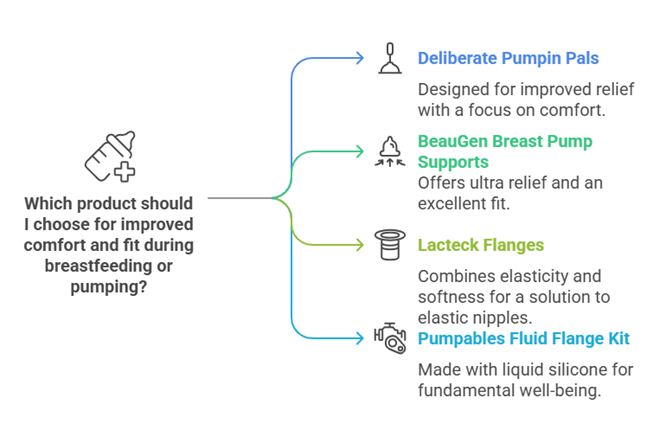
Options like Pumpin’ Pals can prevent the nipple from constantly hitting the end of the tunnel.
A Helpful Sizing Tip
Precision Flange Cushion Sizing Generic math leads to mismatched hardware sizing, constriction, and ductal trauma. You must account for brand-specific offset dynamics. For example, BeauGen silicone flange cushions reduce the hard flange internal diameter by exactly 2 mm, or 4 mm if folded. Always calculate exact dimensional offsets rather than guessing, as precise friction reduces distal stretch.
For more essential newborn care advice, see our guide on safe newborn bathing and whether you can bathe your baby daily.
Personal Experience with Elastic Nipples
Clinical Evidence-Based Interventions Clinical management of hyper-extensible tissue requires specific mechanical adjustments rather than trial and error. Evidence-based interventions include: Getting properly measured using a dynamic sizing evaluation under active vacuum. Transitioning to soft liquid silicone flanges (such as LacTeck or Pumpin’ Pals). Integrating silicone flange cushions to reduce the internal barrel diameter and add friction. Ensuring the nipple tip never impacts the rigid distal end of the tunnel.
Silicone Inserts Can Assist
Silicone inserts can be a life-changing addition if you have stretchy nipple tissue. They go inside your flange and will adjust to your true size by varying the inside diameter.
They’re helpful because:
- They shorten the flange tunnel
- They prevent the nipple from hitting the back
- Their slightly grippy texture helps keep the areola in place
If your nipples stretch significantly during pumping, inserts can greatly improve comfort. For more helpful newborn care resources, check out our infant wearable blanket and baby sleep sack guide.
Lube the Inside, Not the Outside
To help your nipple glide smoothly without pulling in the areola:
Use pure, food-safe, high-viscosity emollients, such as organic cold-pressed coconut oil or medical-grade lanolin. Apply a micro-layer strictly to the internal barrel of the flange tunnel using a cotton swab or sponge. The conical shield where the breast parenchyma seats, as well as the outer surface of silicone inserts, must remain completely clean and dry to maintain tactile friction on the outer areolar margin.
This small adjustment can reduce friction while maintaining a secure fit. For a more detailed explanation of how nipple elasticity during pumping behaves during pumping , you can read this detailed flange sizing guide for elastic nipples.
Silicone Flanges vs. Inserts
Although some pumps have full silicone flanges, others do not have accurate sizing, using a gradual curve which may not be ideal for all women. Thus, if your nipples have elasticity, you might want to try:
- A hard flange for structure
- A silicone insert that fits your exact size
This combination usually provides better control, comfort, and milk removal. If you want more detailed tips on finding the right pump flange fit for elastic nipples, this external guide provides helpful explanations and examples.
Stretchy nipple tissue?
If you are still experiencing pain while breast pumping, you can try reducing the suction level. Chances are you can achieve good pumping without using a high setting. Often when you must have a high setting, it can mean your flange fit is not yet optimized, especially with elastic nipples.
A proper fit should:
- Allow the nipple to move freely
- Feel comfortable at a medium suction level
- Remove milk efficiently without pain
For more breast pumping help and wireless pump options, check out our wireless breast pump guide for 2025.
Flange Shape Matters Too
However, not just the size but other matters are also important in this case. For instance, if your nipples have a conical shape but your breast tissue is more circular, it can be a problem in creating a good seal.
Consider trying:
- Bowl-shaped or anatomically contoured flanges
- “Crater-style” flanges for better comfort
- A 24 mm flange when using inserts to reach your ideal size
Combining the right shape with the right insert size can make a big difference for elastic tissue.
Confidently Moving Forward
While elastic nipples do not affect the basic principles of assembling a pump, they sometimes demand a small adjustment to fit your physiology.
Keep in mind:
- If you pump occasionally, a perfect fit isn’t critical
- If pumping is a major part of your feeding plan, precise fitting matters more
Most importantly, you aren’t pumping “wrong.” With a few tweaks in mind, pumping with elastic nipples can be a more comfortable, efficient, and satisfying process. For an external perspective on what elastic nipple tissue is and how it behaves , you can check out this helpful guide.
Try Longer Flanges
Wearable breast pumps feature truncated flange tunnels, often ranging between 14 mm and 17 mm. When elastic tissue elongates under suction inside a wearable pump, the nipple tip violently impacts the internal barrier within seconds, causing severe trauma regardless of flange diameter. Standard traditional flanges offer 40 mm to 50 mm of tunnel clearance, minimizing distal impact trauma. If using modern wearables, silicone inserts are mandatory to restrict expansion.
Benefits include:
- Less irritation during pumping
- Reduced nipple compression
- Improved overall comfort
Nipple Elasticity During Pumping
Optimizing Vacuum and Cycle Tempo High vacuum on elastic tissue amplifies friction, causes vascular blanching, and suppresses oxytocin. Instead of merely using medium suction, clinical management requires lowering the vacuum strength while optimizing the cycle speed and tempo to elicit a letdown reflex without causing excessive tissue traction.
Let Your Tissue Recover
Finally, if you notice soreness, bruising, or visible damage, your body may need a break.
To support healing:
- Reduce frequent pumping sessions temporarily
- Use nipple-safe creams or ointments
- Allow time between sessions for recovery
Clinical Home Diagnostics and Latch Dynamics Evaluating elasticity at home requires the Clinical Home Rebound Pinch Test: apply gentle compressional pressure behind the nipple base and release. Firm tissue rebounds rapidly (under 1 second), while elastic tissue elongates significantly, displays a gelatinous ripple, and slowly returns to its resting shape (over 3 seconds). Furthermore, during direct nursing, hyper-mobile tissue may cause latch slippage and clicking. Utilizing asymmetric latching techniques, such as the sandwich hold (C-hold), helps stabilize hyper-mobile tissue during latch initiation.
Conclusion
Elastic nipples can be considered an alternative or variant of normal and natural breast anatomy. Although they cause issues with breastfeeding or pumping, with postpartum milestone tracking and feeding care modifications, they can make all the difference in the world. With adequate knowledge concerning how elastic nipples respond when under sucking stimulation and proper devices and settings used in moderation, you can alleviate pain and improve milk drainage with confidence.
For another helpful perspective on identifying highly elastic nipple tissue and common signs, you can check out One Willow’s external guide .
FAQs About Elastic Nipples
1. What does it mean to have elastic nipples while pumping?
Elastic nipples mean the nipple tissue is extra stretchy and soft. As a result, the nipple may pull deeply into the flange tunnel during pumping, which can cause discomfort or affect milk flow.
2. Are elastic nipples normal or a problem?
Yes. Because elastic nipple tissue stretches more than average, it may rub against the tunnel or hit the end of the flange, leading to soreness or irritation—especially with high suction.
3. Can you still pump with elastic nipples?
Absolutely. With the right setup—such as elastic nipple flanges, inserts, and gentle suction—many parents pump comfortably and maintain good milk output.
4. What flange works best for elastic nipples?
Flanges that limit excessive stretching work best for elastic nipples. Many parents find comfort using silicone inserts, longer flanges, or elastic-specific flanges like Pumpin’ Pals or Lacteck, combined with moderate suction.
5. What helps manage elastic nipples while pumping?
- Using correctly sized flanges
- Trying silicone inserts or longer flanges
- Lowering suction levels
- Getting guidance from a lactation consultant
About the Author: Hafiz Nauman Baig is a PhD Scholar in Zoology specializing in Fisheries at Quaid-i-Azam University. Leveraging advanced statistical data analysis in R Studio and research expertise in aquatic adaptation and oxidative stress, he provides rigorous, evidence-based safety and ergonomic evaluations for baby gear.