
This article is for educational purposes only and does not replace professional medical advice. Always consult a lactation consultant or healthcare provider for personalized guidance.

Elastic nipples are a common but often misunderstood variation of nipple anatomy that can cause discomfort during breastfeeding or pumping. Parents with elastic nipples may notice their nipple tissue stretching deeply into the pump flange, even when sizing seems correct.
Fortunately, education on elastic nipples and their behavior, particularly when using an elastic nipple flange, can make a marked impact. If pumping discomfort affects your baby’s feeding routine, you may also find these tips on soothing a fussy newborn helpful.
Watch video given below: Breast Pump Flanges : Finding the Right Flange Fit For You
Watch this helpful Video by The Breastfeeding Den on YouTube
What Is an Elastic Nipple?
Elastic nipples stretch more than average while breastfeeding or pumping. All nipples have a certain amount of flexibility, but elastic nipples pull deeply into the tunnel under suction. Consequently, the pressure may be on the wrong areas, which can be uncomfortable, reduce milk output, or-after some time-irritate tissue.
Simply stated, elastic tissue is soft, highly mobile, and easily stretches without snapping back right away. Some have firmer breast tissue, while others note how their tissue shifts or ripples when touched. It’s a completely natural difference that helps explain the elastic nipple meaning during feeding.
Although there is no formal medical diagnosis for elastic nipples, understanding how they behave can make a big difference when nursing or pumping. Because elastic tissue responds differently to suction, standard flange advice may not always work. Therefore, learning what elastic nipples are—and how they function—can guide you toward more comfortable and effective feeding solutions.
What Does This Look Like During Pumping?
When pumping, many parents notice signs of elastic nipples such as:
- The nipple swelling to fill the entire flange tunnel
- Stretching all the way to the end of the tunnel
- This happens even when the correct flange size is being used
Because of this, elastic nipples are often easier to identify during pumping than breastfeeding. “For more pumping support, see our complete breast pump flange sizing guide using the best burping techniques.
Signs You May Have Elastic Nipples
- Nipples stretch to the end of the flange tunnel
- Areola is pulled into the tunnel during pumping
- Discomfort despite correct flange size
- Nipples appear swollen after pumping
Elastic Nipples – Quick FAQ Table
| Question | Short Answer | Why It Matters | What Helps |
|---|---|---|---|
| What are elastic nipples in pumping? | Elastic nipples are stretchier than average and pull deeply into the flange tunnel. | It can cause discomfort and poor milk removal. | Correct flange size and gentle suction |
| Is elastic nipple tissue normal? | Yes, elastic nipple tissue is a natural variation. | Not a medical problem, but may need adjustments. | Education and proper pump setup |
| Can elastic nipples cause pumping pain? | Yes, especially with high suction or poor fit. | Repeated stretching may irritate tissue. | Lower suction, silicone inserts |
| Can I still pump with elastic nipples? | Absolutely—you just need the right setup. | Comfort improves milk output and consistency. | Elastic nipple flanges or longer flanges |
| How do I know if I have elastic nipples? | Nipples stretch to the end of the tunnel when pumping. | Helps avoid wrong flange sizing. | Observe nipple movement while pumping |
| What is the best solution? | There’s no cure, but many effective options. | Small changes make pumping easier. | Proper sizing, cushions, expert guidance |
Why Can Elastic Nipples Be a Problem?
Having elastic nipple tissue isn’t bad or exceptional. However, in some situations, it can create challenges:
- It may cause discomfort or pain while pumping
- Milk output can be affected over time
- Repeated contact with the end of the tunnel may lead to:
- Bruising
- Tenderness
- Nipple damage
- If a provider is unfamiliar with elastic tissue, it’s easy to be:
- Incorrectly sized
- Advised to increase flange size unnecessarily
This is very common.
In fact, I experienced this myself. Over several months, I was sized 10–12 mm too large because of discomfort and how my nipples looked while pumping. The issue wasn’t flange size; it was elastic nipple tissue.

Why Elastic Tissue Is Unique
With elastic nipples, the tissue doesn’t just spring a little, it stretches significantly. Under suction, the nipple becomes longer and tighter, which changes how a flange fits. As a result, a flange size chosen based only on your nipple at rest may be too large.
Because elastic tissue behaves differently while pumping, more of the areola can be pulled into the tunnel.
This can lead to:
- Discomfort or swelling
- Poor milk removal
- Ongoing frustration despite “correct” sizing
Try Sizing Down
If you have elastic tissue, sizing down often helps. Many parents find they need a flange 1–2 mm smaller than expected.
When testing sizes:
- Start with your measured size
- Also try one or two smaller options
- Look for a fit that pulls in only the nipple, not the areola
- Comfort + good milk flow is the goal
What Can I Do?
You can’t get rid of elastic nipple tissue, but you can make pumping more comfortable and effective. Here’s what often helps:
- Work with a lactation professional
Choose someone experienced with pumping who can confirm whether the issue is flange size or elasticity. - Try silicone flanges or pump cushions
These add gentle compression behind the nipple, reducing how far it stretches into the tunnel. - Use a longer flange
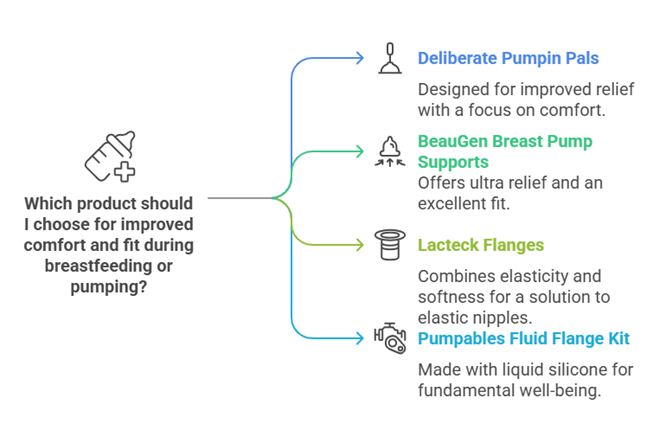
Options like Pumpin’ Pals can prevent the nipple from constantly hitting the end of the tunnel.
A Helpful Sizing Tip
Pump cushions usually reduce flange size by about 2 mm.
For example:
If you normally use a 19 mm flange
- Adding a cushion makes it closer to 17 mm (too small)
- Instead, place the cushion in a 21 mm flange to maintain a 19 mm fit
Small adjustments like this can make a big difference in comfort and milk output. For more essential newborn care advice, see our guide on safe newborn bathing and whether you can bathe your baby daily.
Personal Experience with Elastic Nipples
For a very long time, I thought this bruising with pumping was normal. Whether using a smaller or larger flange, my nipples will always stretch all the way to the end of the tunnels. Then a trusted lactation consultant finally explained to me that this had absolutely nothing to do with flange size, but rather elastic nipples.
But since I changed to using flanges intended for stretchy nipple tissue and added silicone pads, pumping has become very comfortable for me.
What helped me most:
- Getting properly measured and assessed while pumping
- Using Lacteck or Pumpin’ Pals flanges
- Adding silicone shields or pump cushions
- Preventing my nipples from hitting the end of the tunnel
Small changes made a big difference—and pumping no longer hurts.
Silicone Inserts Can Assist
Silicone inserts can be a life-changing addition if you have stretchy nipple tissue. They go inside your flange and will adjust to your true size by varying the inside diameter.
They’re helpful because:
- They shorten the flange tunnel
- They prevent the nipple from hitting the back
- Their slightly grippy texture helps keep the areola in place
If your nipples stretch significantly during pumping, inserts can greatly improve comfort. For more helpful newborn care resources, check out our infant wearable blanket and baby sleep sack guide.
Lube the Inside, Not the Outside
To help your nipple glide smoothly without pulling in the areola:
- Use a small amount of food-safe, water-based emollient or nipple ointment
- Apply it inside the flange only using a swab or sponge
- Maintain the outside dry so the insert stays in place
This small adjustment can reduce friction while maintaining a secure fit. For a more detailed explanation of how nipple elasticity during pumping behaves during pumping , you can read this detailed flange sizing guide for elastic nipples.
Silicone Flanges vs. Inserts
Although some pumps have full silicone flanges, others do not have accurate sizing, using a gradual curve which may not be ideal for all women. Thus, if your nipples have elasticity, you might want to try:
- A hard flange for structure
- A silicone insert that fits your exact size
This combination usually provides better control, comfort, and milk removal. If you want more detailed tips on finding the right pump flange fit for elastic nipples, this external guide provides helpful explanations and examples.
Stretchy nipple tissue?
If it is still painful when pumping with your elastic nipples, you can try reducing the suction level. Chances are you can achieve good pumping without using a high setting. Often when you must have a high setting, it can mean your flange fit is not yet optimized, especially with elastic nipples.
A proper fit should:
- Allow the nipple to move freely
- Feel comfortable at a medium suction level
- Remove milk efficiently without pain
For more breast pumping help and wireless pump options, check out our wireless breast pump guide for 2025.
Flange Shape Matters Too
However, not just the size but other matters are also important in this case. For instance, if your nipples have a conical shape but your breast tissue is more circular, it can be a problem in creating a good seal.
Consider trying:
- Bowl-shaped or anatomically contoured flanges
- “Crater-style” flanges for better comfort
- A 24 mm flange when using inserts to reach your ideal size
Combining the right shape with the right insert size can make a big difference for elastic tissue.
Confidently Moving Forward
While elastic nipples do not affect the basic principles of assembling a pump, they sometimes demand a small adjustment to fit your physiology.
Keep in mind:
- If you pump occasionally, a perfect fit isn’t critical
- If pumping is a major part of your feeding plan, precise fitting matters more
Most importantly, you aren’t pumping “wrong.” With a few tweaks in mind, pumping with elastic nipples can be a more comfortable, efficient, and satisfying process. For an external perspective on what elastic nipple tissue is and how it behaves , you can check out this helpful guide.
Try Longer Flanges
A problem with your nipple hitting the end of the tunnel can sometimes be relieved with the aid of longer flanges. They will give you more room, which will cut down on friction and perhaps protect your delicate elastic tissue around your nipples.
Benefits include:
- Less irritation during pumping
- Reduced nipple compression
- Improved overall comfort
Nipple Elasticity During Pumping
In addition, suction strength plays a big role when pumping with Elastic nipples. High suction can worsen discomfort and increase stretching.
Instead:
- Start with lower, gentler suction
- Choose settings that mimic your baby’s natural nursing rhythm
- Increase intensity only if needed, and never at the expense of comfort
Let Your Tissue Recover
Finally, if you notice soreness, bruising, or visible damage, your body may need a break.
To support healing:
- Reduce frequent pumping sessions temporarily
- Use nipple-safe creams or ointments
- Allow time between sessions for recovery
Conclusion
Elastic nipples can be considered an alternative or variant of normal and natural breast anatomy. Although they cause issues with breastfeeding or pumping, with suitable devices and very minor modifications, they can make all the difference in the world. With adequate knowledge concerning how elastic nipples respond when under sucking stimulation and proper devices and settings used in moderation, you can alleviate pain and improve milk drainage with confidence.
For another helpful perspective on identifying highly elastic nipple tissue and common signs, you can check out One Willow’s external guide .
FAQs About Elastic Nipples
1. What does it mean to have elastic nipples while pumping?
Elastic nipples mean the nipple tissue is extra stretchy and soft. As a result, the nipple may pull deeply into the flange tunnel during pumping, which can cause discomfort or affect milk flow.
2. Are elastic nipples normal or a problem?
Yes. Because elastic nipple tissue stretches more than average, it may rub against the tunnel or hit the end of the flange, leading to soreness or irritation—especially with high suction.
3. Can you still pump with elastic nipples?
Absolutely. With the right setup—such as elastic nipple flanges, inserts, and gentle suction—many parents pump comfortably and maintain good milk output.
4. What flange works best for elastic nipples?
Flanges that limit excessive stretching work best for elastic nipples. Many parents find comfort using silicone inserts, longer flanges, or elastic-specific flanges like Pumpin’ Pals or Lacteck, combined with moderate suction.
5. What helps manage elastic nipples while pumping?
- Using correctly sized flanges
- Trying silicone inserts or longer flanges
- Lowering suction levels
- Getting guidance from a lactation consultant

Hafiz Nauman Baig is a Researcher and PhD Scholar in Zoology, with a specialized focus on Biomechanics and Anatomical Data Analysis. Merging his academic expertise in biological structures with a deep background in Physical Ergonomics and strength mechanics, Nauman evaluates baby gear through a rigorous scientific lens.
Unlike standard product reviewers, he utilizes R Studio and statistical modeling to assess safety data, focusing on the physiological impact of carriers on the infant airway and the caregiver’s spine. His mission is to bridge the gap between complex biological safety standards and practical, pain-free babywearing.


Pingback: Why a Nursing gift basket is the perfect respect to show gratitude. - babycarrierplus.com
Hi there, just became aware of your blog through Google, and found that it’s really informative. I’m going to watch out for brussels. I’ll be grateful if you continue this in future. Many people will be benefited from your writing. Cheers!
Hi there, You’ve performed a fantastic job. I will certainly digg it and in my opinion recommend to my friends. I am confident they’ll be benefited from this website.