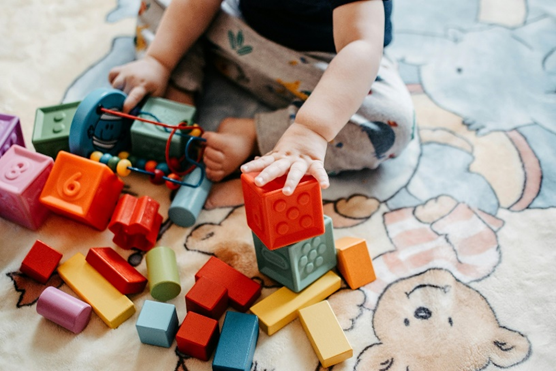
While many parents view playtime as simple entertainment, scientifically, it is the primary driver of synaptic pruning and neuroplasticity. In the first year, an infant’s brain makes 1 million neural connections per second. This guide moves beyond ‘toys’ to analyze the mechanism of action behind sensory activities—explaining how specific movements trigger myelination in the spinal cord and cognitive growth in the cortex.
Watch the video below Do This with Your Newborn to Promote Healthy Development
Watch this helpful Video by Emma Hubbard on YouTube
Table of Contents
| Age Group | Activity | Main Benefit |
|---|---|---|
| 0-3 Months | Tummy Time & Singing | Neck Strength & Bonding |
| 3-6 Months | Mirror Play & Reaching | Visual Tracking & Grip |
| 6-9 Months | Peek-a-Boo & Textures | Object Permanence (Brain) |
| 9-12 Months | Copycat & Light Switch | Cause & Effect Logic |
| 12-18 Months | Container Play & Walking | Spatial Awareness & Motor Skills |
0-3 Months: Newborn Sensory Awakening
In the first three months, activities for infants should focus on bonding, sensory input, and gentle movement. Your baby’s brain is rapidly forging neural connections based on touch and sound.
1. Tummy Time (The Foundation)
While setting up your baby’s play area, ensure you choose a Non-Toxic Play Mat to provide a safe environment for their daily exercises.
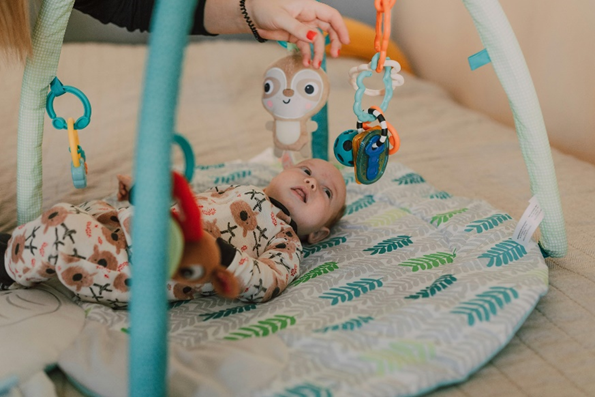
Place your baby on their stomach for a few minutes while awake. This is one of the most critical activities for infants to build neck and shoulder strength.
🧬 Researcher’s Note: Tummy time is not just exercise; it stimulates myelination of the spinal cord nerves, which is the biological prerequisite for head control.
2. Tap Along (Auditory Bonding)
Place your baby on their back and sing a gentle song, tapping the bottoms of their feet in rhythm with the music.
- Benefit: Engaging in musical activities for infants enhances their listening skills and stimulates the developing auditory cortex.
3. Infant Massage (Calming Touch)
Use gentle strokes on your baby’s arms and legs.
- Benefit: Relieves tension and lowers cortisol (stress hormones), making it one of the most soothing activities for infants for better sleep.
3-6 Months: The Active Explorer
At this stage, your baby is becoming more alert. Developmental activities for infants in this phase should encourage grasping, rolling, and visual tracking.
4. Reach, Reach, Reach! (Fine Motor Skills)
Hold a soft, baby-safe object in front of your baby, moving it gently toward their hand to encourage them to reach and grasp.
- Benefit: Grasping is a key milestone. Specific activities for infants that target hand-eye coordination strengthen the muscles required for future self-feeding.
5. Chit Chat (Language Development)
Make eye contact, smile, and respond to your baby’s babbles. Pause to let them “talk” back.
- Benefit: Simple conversational activities for infants teach “turn-taking,” a social skill regulated by the brain’s frontal lobe.
6. Mirror Play (Self-Recognition)
Show your baby their reflection in a plastic, baby-safe mirror.
- Benefit: While they don’t recognize themselves yet, visual activities for infants using mirrors boost focus and social curiosity.
<div style=”background-color: #fff4e5; border-left: 6px solid #f39c12; padding: 20px; margin: 25px 0; border-radius: 8px;”> <h4 style=”margin-top: 0; color: #d35400;”>⚠️ Researcher’s Warning: Container Baby Syndrome</h4> <p>Overusing devices like bouncers, rockers, and car seats restricts movement and can lead to <strong>Plagiocephaly</strong> (flat head syndrome) and delayed motor skills. This is medically known as <em>Container Baby Syndrome</em>. Limit time in these devices to 15-20 minutes maximum per session.</p> </div>
6-9 Months: Sitters and Observers
Your baby may be sitting up now. The best activities for infants at this age involve texture, object permanence, and core strength.
7. Peek-a-Boo (Cognitive Growth)
Hide your face behind your hands or a cloth, then pop out with a smile.
🧬 Researcher’s Note: Among all activities for infants, this game teaches Object Permanence—the cognitive realization that parents continue to exist even when unseen.
8. Texture Talk (Sensory Integration)
Provide fabrics like silk, wool, or velvet. Use words like “smooth” or “rough” as they touch them.
- Benefit: Sensory activities for infants stimulate the somatosensory cortex, helping the brain categorize different tactile sensations.
9. Magical Ride (Vestibular System)
Lay your infant on a blanket on their stomach. Gently pull the blanket around the room (slowly and safely).
- Benefit: Movement-based activities for infants stimulate the vestibular system (inner ear balance), crucial for walking.
9-12 Months: Crawlers and Investigators
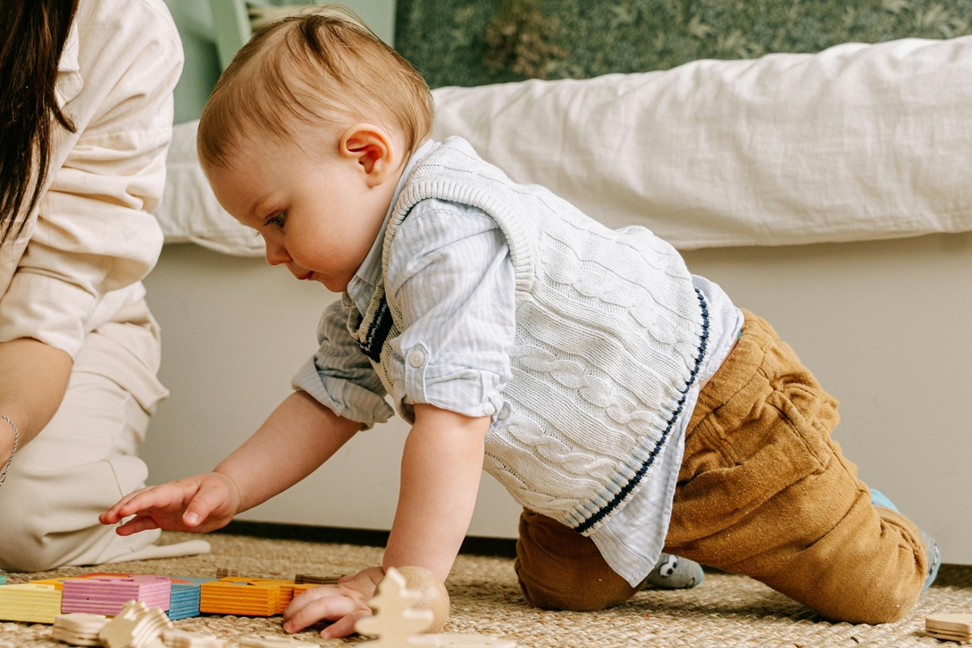
As mobility increases, activities for infants should focus on cause-and-effect and following simple commands.
10. Turn the Switch (Cause and Effect)
Go around the house turning safe lights or appliances on and off, saying “On” and “Off.”
- Benefit: Logical activities for infants help them understand that their action produces a direct result.
11. Copycat (Mirror Neurons)
Clap your hands, wave, or make a funny noise and encourage your baby to mimic you.
- Benefit: Mimicking activities for infants activate mirror neurons in the brain, the foundation of empathy.
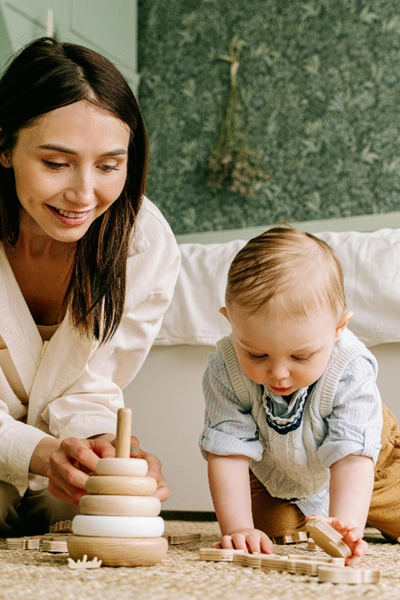
12-18 Months: Toddlers on the Move
💡 Pro Tip for Parents: If you are planning a trip with your toddler, don’t miss our specialized guide on Flying with an 18-Month-Old to keep them entertained during long flights.
Now entering toddlerhood, activities for infants shift to independence, vocabulary, and complex motor planning.
12. Walking Buddy (Gross Motor)
Take your toddler for a stroll in a safe, open area, letting them set the pace.
- Benefit: Outdoor activities for infants challenge their proprioception (body awareness) on different surfaces like grass.
13. In and Out (Container Play)
Give your toddler a box and toys. Encourage them to put items “in” and take them “out.”
🧬 Researcher’s Note: These types of activities for infants refine spatial awareness and fine motor release, which is neurologically harder than grasping.
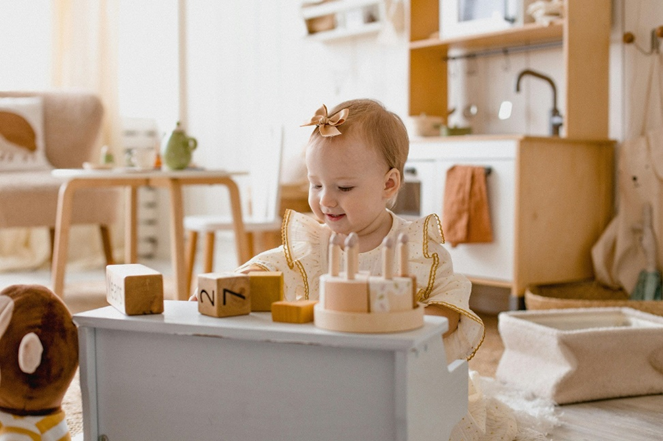
14. Words, Words, Words! (Vocabulary)
Point to real-world objects (balls, dogs) and name them clearly.
Benefit: Language-focused activities for infants accelerate the “vocabulary explosion” typical of this age.
Watch another video below BABY PLAY – HOW TO PLAY WITH 0–3-MONTH-OLD NEWBORN – BRAIN DEVELOPMENT ACTIVITIES
Watch this helpful Video by Taylor Raine on YouTube
Frequently Asked Questions (FAQs) for Baby Activities 0-6 Months
1. What is Tummy Time, and why is it important?
Tummy time is when you place your baby on their stomach while they are awake and alert. It helps build upper body strength, especially in the back and shoulder muscles. This is essential for milestones like rolling over and eventually sitting up.
Not all play mats are safe for Tummy Time. Avoid cheap foam mats containing Formamide or PVC, as these release toxic chemicals right near your baby’s face. Look for mats labeled “Non-Toxic TPU” or “EVA-Free” for a safe chemical-free zone.
2. When can I start using a baby bouncer?
You can start using a baby bouncer once your baby has developed enough head and neck control, typically around 3-4 months old. Always supervise your baby while they are in the bouncer.
3. How does music benefit my baby’s development?
Music stimulates brain development, encourages auditory processing, and helps with language acquisition. Listening to music also provides relaxation and can improve mood.
4. Why do babies enjoy looking at mirrors?
Babies enjoy looking at mirrors because it allows them to see their reflection. At this age, they start becoming curious about themselves and other faces, which is a key part of their social and visual development.
5. What are some water activities for babies?
Simple water activities like splashing in the bath or dipping hands into a shallow bowl of water are great for babies. Water play enhances sensory development and builds coordination.
6. Can I start reading to my baby at 0-6 months?
Yes! Reading to your baby even at a young age is beneficial for their brain development. Though they can’t understand the story, they will enjoy the sound of your voice and the rhythm of the words. Picture books with textures and colors are particularly engaging for babies.
7. How do singing lullabies help my baby?
Singing lullabies has a calming effect on babies, helping them relax and wind down. The rhythm and melody can be soothing, creating a peaceful environment that encourages sleep.
8. Is swimming safe for babies?
Yes, swimming can be a safe and enjoyable activity for babies if done properly. It helps build muscles and coordination, but it’s important to ensure the water temperature is comfortable and to always supervise your baby closely.
9. How do I introduce a baby mobile to my infant?
Introduce a baby mobile by placing it in your baby’s crib or play area. It provides visual stimulation and encourages your baby to focus on moving objects, which is good for their visual tracking skills.
10. What are the benefits of sensory classes for babies?
Sensory classes engage your baby’s senses with activities like light shows, music, and tactile exploration. These classes help promote brain development, motor skills, and social interaction with other babies.
11. Can I massage my baby?
Yes, gentle massages can be very soothing for your baby. It helps relax them, promotes better sleep, and strengthens the bond between you and your baby. Just be sure not to use oils until your baby is older than a month.
12. What is the best way to play peek-a-boo with my baby?
The classic peek-a-boo game is an excellent way to interact with your baby and enhance their cognitive abilities. Hide your face behind your hands and then reveal it with excitement. This teaches babies about object permanence — that things can disappear and reappear.
13. What are the best toys for babies aged 0-6 months?
Toys like rattles, soft balls, or textured fabric toys are great for babies in this age group. They help with sensory exploration and motor skills development. Ensure that there are no small fragments and that the toys are baby-safe.
14. When can I begin tummy time with my baby?
Immediately after your baby is born, you can begin tummy time. Start with short sessions of 2–3 minutes, and as they become stronger, gradually increase the duration.
15. How can I connect with my baby through activities?
Small games such as singing, cuddling, making funny faces, or playing peek-a-boo can be wonderful means of bonding with your baby. Physical contact, eye contact, and verbal communication are essential for developing a strong emotional bond.
Conclusion: Essential Baby Activities for infants 0-6 Months
Participating in simple but enjoyable activities through the first half year is fundamental for your child’s growth. From tummy time to strengthening muscles, lullabies to calm, and playing with toys to improve coordination, every exercise helps your baby develop. They all build strong foundations in necessary skills such as motor coordination, language, and social interaction. By including these activities for infants, not only do you entertain your baby, but also get closer and foster their all-round development. Keep discovering ways to interact with your little bundle of joy and observe them grow in exciting milestones!
About the Author: Hafiz Nauman Baig is a PhD Scholar in Zoology specializing in Fisheries at Quaid-i-Azam University. Leveraging advanced statistical data analysis in R Studio and research expertise in aquatic adaptation and oxidative stress, he provides rigorous, evidence-based safety and ergonomic evaluations for baby gear.