
🛍️ Affiliate Disclosure:
As an Amazon Associate, we earn from qualifying purchases. This means if you click a link and make a purchase, we may earn a small commission at no extra cost to you.

These critical updates are governed by the One Big Beautiful Bill Act (OBBBA) of 2025 (Public Law 119-21), which significantly amended Section 529 of the Internal Revenue Code to provide families with more flexibility. If you’re considering your child’s upcoming education, understanding 529 tax benefits is an excellent place to start. A 529 college savings plan offers tax-deferred growth, and in many cases, taking out for education are tax-free. In our analysis of the 2026 tax landscape, these shifts represent a transition for 529 plans from simple savings tools to central pillars of comprehensive wealth management.
Even if your baby hasn’t been born yet, a parent or grandparent can still start a 529 investment plan and inform the beneficiary after birth. In addition, whether you’re a parent, grandparent, or family friend, starting or contributing to a college fund for kids is a helpful way to support their educational journey. Under the Pre-Birth Placeholder Strategy, expectant parents can open a 529 account naming themselves as the beneficiary. Once the child is born and an SSN is issued, you can transfer the account to the baby, capturing up to nine months of additional tax-deferred growth.
| Product Name | 529 Category | Best For | Action |
|---|---|---|---|
| Insect Lore Butterfly Garden Kit | Curriculum Material (Science) [cite: 283, 285] | K-12 Homeschooling & Life Cycle Study | Check Price on Amazon |
| Airbition Talking Flash Cards | Instructional Platform [cite: 286] | Toddler Language Development (Ages 1-4) | Check Price on Amazon |
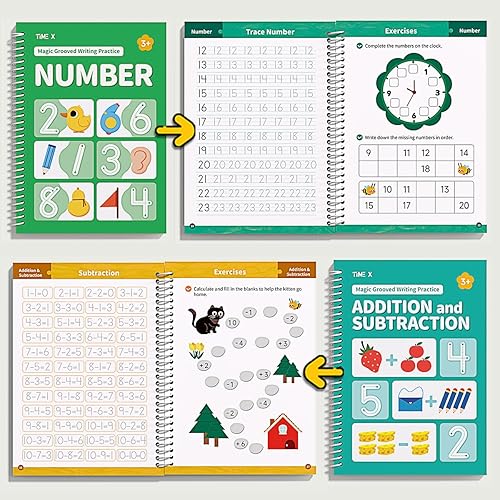
| TIME X Magic Grooved Writing Books | Instructional Media [cite: 284, 292] | Preschool Handwriting Mastery (Ages 3-8) | Check Price on Amazon |
Watch the video below Big Changes are Happening to 529 Plans in 2024
Watch this helpful Video by Karlton Dennis on YouTube
What Is a 529 Plan?
As the charge of education keeps increasing, many families are exploring clever ways to save for the future. One wonderful option is a 529 plan, known for its 529 tax benefits. The government originally created this plan under Section 529 of the Internal Revenue Code to help cover college expenses. However, the advantages have expanded. For example, laws passed in 2022 and 2024 now allow 529 plans to also involve K–12 education, education programs, and even student loan refunds. Additionally, gratitude to the SECURE Acts of 2022 and 2024, 529 funds can now be revolved into a Roth IRA under certain restrictions.
There are two main kinds of 529 plans:
- Education savings plans (for tuition, books, and other costs)
- Prepaid tuition policy (which lock in present tuition rates)
These plans are suggested by all 50 U.S. states and Washington D.C. But learn, rules and fees vary varying on where you live.
In short, a 529 college savings plan is a flexible, tax-privileged way to arrange for your child’s educational future.
529 Plan Overview Table
| Feature | 529 Savings Plan | Prepaid Tuition Plan | Brokerage Account |
|---|---|---|---|
| Tax Benefits | Tax-deferred growth & tax-free withdrawals | Tax-deferred growth & tax-free withdrawals | Taxable growth; no specific tax benefits for education |
| Qualified Expenses | K–12, college, apprenticeship, student loans | Tuition only | Any use; no restrictions |
| Contribution Limits | High (varies by state; up to $500K+) | Set by the plan | No limit |
| Investment Control | Limited to plan options (e.g., mutual funds, target-date) | No control (fixed tuition rates) | Full control (stocks, bonds, ETFs, mutual funds) |
| State Tax Deduction | Available in many states for residents | Available in some states | None |
| Risk of Loss | Market risk depending on investments | Tuition guarantee (varies by state) | Market risk; no guarantees |
Final Thoughts: Choosing the Right Plan
If your savings goal is distinctly tied to education, a 529 plan is normally the better option due to its tax-deferred growth, state tax deductions, and tax-free removals. On the other hand, a brokerage account may affect you well if you value flexibility and broader investment choices, even though you’ll miss out on education-related tax benefits.
How 529 Plans Work and What 529 Tax Benefits You Can Expect
Realizing how 529 plans work is essential when planning for future education costs. These plans offer excellent 529 tax benefits, making them a standard selection for parents and grandparents alike.

There are two major types of 529 plans:
- College savings plans – These accept your investment to expand tax-deferred. When applied for qualified education fees like tuition, books, or room and board, the taking out are completely tax-free.
- Prepaid tuition policy – These let you lock in today’s tuition costs at contributing schools, serving you save money in the long run as education costs persist to rise.
Although the proposals are assigned after Section 529 of the federal tax code, they are run by specific states, containing the District of Columbia. That’s why rules and advantages can vary depending on where you live. Anyone can open a 529 account, but they’re generally set up by parents or grandparents for a youngster or grandchild, who is called the beneficiary. In some states, funders may qualify for state tax deductions on their donations.
The funds in a 529 plan grow tax-deferred, and when applied for IRS-approved fees, you won’t pay federal or state taxes on taking out.
Effective January 1, 2026, the federal tax-free withdrawal limit for K-12 expenses has doubled to $20,000 per year per beneficiary under the One Big Beautiful Bill Act (OBBBA). Furthermore, families are no longer limited to tuition alone; qualified expenses now include curriculum materials, textbooks, and standardized testing fees. As of July 5, 2025, qualified K-12 expenses have expanded beyond tuition to include tutoring from licensed teachers, curriculum materials, and standardized testing fees like the SAT or AP exams.
Since 529 contribution limits, advantages, and rules differ by state, it’s significant to examine your state’s plan information to get the full benefit of 529 investment plans.
Is Your Tutor ‘Qualified’?
To keep your tutoring withdrawals tax-free under the OBBBA, the provider must be an ‘eligible educator’. This means they must be a licensed teacher, a subject matter expert, or someone who has taught at an eligible institution. Payments made to a relative for tutoring generally do not qualify. Always retain a copy of the tutor’s teaching credentials with your payment confirmation. Crucially, to remain tax-free, tutoring fees must be paid to a provider who is not a relative and who possesses recognized professional teaching credentials or subject-matter expertise. Payments made to family members for academic support are generally flagged as non-qualified by the IRS.
Types of 529 Plans and Their Key Tax Benefits
When planning for your child’s learning, it’s vital to understand the types of 529 available plans. Each plan offers distinctive 529 tax benefits that can improve families’ savings for the future. Whether you determine on a savings plan or a prepaid tuition decision, both are designed to help long-term education goals with tax benefits.


529 College Funds Plans
The most popular choice is the 529 college savings plan, where the account holder contributes funds that are financed in mutual funds or related options. The account expands based on how these funds function over time. Several plans also offer target-date funds that routinely adjust risk as the child nears college age. Withdrawals are tax-free if treated for qualified costs such as K–12 tuition, college fees, room and board, and further. Thanks to the SECURE Acts of 2019 and 2022, this procedure can also be applied for education programs, student loan repayment (up to $10,000), and even permit a rollover of up to $35,000 into a Roth IRA with 15 years.

529 Prepaid Tuition Plans
In contrast, 529 prepaid education plans allow you to lock in current tuition fees for future college attendance, which can save funds as tuition costs increase. These plans are mostly state-sponsored and apply to exact institutions, but they do not cover K–12 education or further costs like room and board. Prepaid plans may have limitations on which schools you can use the funds for, and they are not supported by the federal government. Because security varies by state, it’s important to fully know the terms before investing in this type of scheme.
If you read the full article of Newborn Poop: How to Remove Stains from Baby Clothes.
529 Tax Benefits: How These Plans Offer Tax-Free Expansion
One of the best attractive features of a 529 plan is the tax benefit it gives. When used for eligible educational costs like tuition, books, and housing, the money takes away from a 529 plan is excepted from both federal and state income taxes.
Tax Fines for Non-Qualified Withdrawals
If you use the funds for non-educational commitments, the IRS may utilize regular income taxes along with a 10% fine. However, some allowances exist, such as if the beneficiary passes away or becomes restricted.
State-Level 529 Tax Deductions and Credits
Although federal tax deductions aren’t accessible, more than 30 states offer state tax deductions or credits for provisions made to a 529 plan. Keep in mind, though, that specific states expect you to spend in their specific plan to be eligible. However, residents of Tax Parity states like Arizona, Kansas, Missouri, and Pennsylvania can receive a state tax deduction regardless of which state’s 529 plan they choose to invest in.
Watch Out for State Variances:
While federal law now allows $20,000 annually for K-12 expenses, not all states follow this rule. For example, New York still considers K-12 tuition a ‘non-qualified withdrawal’ for state tax purposes, which could lead to a recapture of your state tax benefits. Always check if your state is a ‘Tax Parity’ state (like Arizona or Pennsylvania) before making large K-12 withdrawals. It is essential to recognize that state tax treatment may differ from federal law. While the federal OBBBA allows $20,000 for K-12, some states (like New York or Minnesota) may still treat these as non-qualified withdrawals for state tax purposes. Always verify your local state plan’s rules to avoid unexpected state tax recapture or penalties.
Gift Tax Implications and 529 Tax Benefits
When making arrangement to contribute to a child’s learning fund, it’s important to understand how gift tax rules affect your 529 plan payments. In 2026, the annual gift tax exclusion has been adjusted for inflation to $19,000 per person ($38,000 for married couples). This means you can contribute up to this amount per beneficiary without impacting your lifetime gift tax exemption. Therefore, you can give up this expanse to any individual per year without disturbing your lifetime gift tax exemption.
Special 5-Year Contribution Rule for 529 Plans
Remarkably, one of the unique 529 tax benefits is the ability to make front-load contributions. Under the 2026 superfunding strategy, a donor can front-load five years of annual exclusions into a single year, totaling $95,000 per individual or $190,000 for married couples. This strategy maximizes the power of compounding growth from the child’s birth. However, they must avoid making any extra contributions for the similar beneficiary over the next five years. As a result, this huge gift won’t count against their lifetime gift tax freedom.
529 Plan Transfer Rules: How to Transfer Funds to Another Beneficiary
Realizing the 529 plan transferability rules is crucial when planning for multiple children or family members. Fortunately, the IRS grants flexibility in how funds are reassigned.
You can shift funds between 529 plans once per year—unless you’re altering the plan’s beneficiary. Even if it is helpful, you don’t need to switch plans just to switch the beneficiary.

Eligible Family Members for 529 Plan Transfers
Allowing the federal tax code, a 529 college investments plan can be transferred to any of the subsequent family members without penalties:
- Child, stepchild, foster child, adopted child, or their offspring
- Siblings (brother, sister, stepbrother, stepsister)
- Parent, grandparent, or their ancestors
- Stepparent
- Niece, nephew
- Aunt, uncle
- In-laws (son-, daughter-, father-, mother-, brother-, or sister-in-law)
- Spouse of any of the above
- First cousin
Tip
Although you’re not needed to provide in your own state’s plan, achieving so may offer valuable 529 tax benefits, such as state tax contributions or credits. Therefore, it’s worth examining your state’s options first before deciding on an out-of-state plan.
Additional Tips for a 529 Plan: Maximize 529 Tax Benefits Early
When it originates to a 529 plan, starting early offers important 529 tax benefits by allowing your input to grow tax-deferred over time. The first you start, the more potential your savings must compound and finance your child’s education. To guarantee fewer chemical emissions and cleaner indoor conditions to their kids, many parents favor Greenguard Gold Certified items. Moreover, if you select for a 529 prepaid education plan, you can lock in today’s tuition service you avoid rising costs while maximizing the plan’s profit.
Leftover Funds? How to Still Enjoy 529 Tax Benefits
If your child gets a scholarship or doesn’t join college, there are numerous smart ways to use leftover 529 plan funds while preserving 529 tax benefits:
- ✅ Modify the beneficiary to another qualified family member
- ✅ Save the money for graduate school or future education
- ✅ Use up to $10,000 to refund student loans (for the beneficiary or siblings)
- ✅ In addition, roll over up to $35,000 into a Roth IRA (account must be 15+ years old)
- The OBBBA has made the 529-to-ABLE (529A) rollover permanent. For beneficiaries who become disabled before age 26, up to $19,000 annually can be moved to an ABLE account to cover housing and transportation expenses, which are normally non-qualified for standard 529s.
Lastly, withdrawing income for non-qualified utilization will trigger income tax and a 10% penalty on incomes.

529 Tax Benefits vs. Costs: What You Should Know
Realizing the cost of a 529 plan is key to becoming the most from your 529 tax benefits. Mainly states charge a yearly maintenance fee, normally between $0 and $25.
Additionally, if your plan is set up around a broker, you may experience asset management fees.
To reduce expenses, think low-cost mutual funds or ETFs inside your 529 plan to make sure your income works harder—for fewer.
Who Maintains Control Over a 529 Plan and Its 529 Tax Benefits?
A 529 plan is a custodial account, indicating an adult (generally a parent or guardian) controls the finances for the minor beneficiary. While the beneficiary may legally suppose control at age 18, the funds should still be used for qualified educational expenses to maintain 529 tax benefits. Additionally, the account owner can determine how and when funds are spent—confirming they are used wisely and in line with IRS principles.
Qualified Expenses That Preserve 529 Tax Benefits
To take full benefit of 529 tax benefits, the funds must be applied on IRS-approved education costs. These qualified expenses contain:
- ✅ College, graduate, or career school tuition and fees
- ✅ K–12 tuition (up to $10,000 per year)
- ✅ Books, supplies, and course items
- ✅ Student loan repayments (up to $10,000)
- ✅ Room and board (if enrolled at least half-time)
- ✅ Computers, internet, and academic software
- ✅ Accessibility equipment for special demands students
Important Compliance Rule for K-12: While technology is generally qualified for college students , for K-12 beneficiaries, a laptop or tablet is only a qualified expense if it is specifically required by the school for enrollment or attendance. Parents should retain a copy of the school’s official technology policy or a mandating email from a teacher as documentation for the IRS.
Crucial Note for K-12 Parents: While a laptop or tablet is almost always a qualified expense for college students, the IRS has a stricter rule for K-12 students. For children in primary or secondary school, technology is generally only qualified if it is specifically required by the school for enrollment or attendance. Pro Tip: Keep a copy of the school’s technology policy or a teacher’s email mandating the device alongside your Amazon receipt to protect yourself in case of an audit.”


To maintain compliance, account owners should maintain a distinct Amazon ‘Academic List’ to separate these purchases from personal items, as itemized receipts are the only valid defense in an IRS audit.
Therefore, using the account for these expenses ensures withdrawal remains totally tax-free. As of 2026, qualified distributions have expanded to include professional credentials and vocational certifications. This includes exam fees and prep courses for the Bar exam, CPA certification, and vocational licenses such as HVAC or CDL. To maintain IRS compliance when shopping on Amazon, account owners should maintain a distinct Amazon ‘Academic List’ to separate educational technology from personal items, as itemized receipts are the only valid defense in an IRS audit.

Watch another video about 529 College Savings Plan Explained
Watch this helpful Video by Travis Sickle on YouTube
The Bottom Line: 529 Tax Benefits Make Education Savings Easier
Establishing a 529 plan is a clever way to save education with significant tax advantages. It covers all from K–12 to graduate school, involving student loan repayments and apprenticeship programs. Moreover, if the account is at minimum 15 years old, you can roll over up to $35,000 of unused money into a Roth IRA—another way to expand your 529 tax benefits. In decision, a 529 plan offers flexibility, progress, and long-term savings power, making it one of the most successful education savings tools available.
The Future of Savings: Section 530A Trump Accounts
Starting July 4, 2026, the new Section 530A Trump Accounts (Public Law 119-21) will provide a one-time federal seed deposit of $1,000 for children born between January 1, 2025, and December 31, 2028, to jumpstart their long-term wealth. Unlike traditional 529s, these accounts are designed for lifelong growth, allowing employer matches of up to $2,500 annually that are excluded from the employee’s gross income. As you plan for your child’s future, don’t forget to organize your nursery for the present. Check out our Amazon Prime Day Baby Deals 2026 Registry Guide to secure premium educational and safety gear at significantly discounted prices.
FAQs About 529 Tax Benefits
1. What are the main 529 tax benefits?
The key benefits include tax-deferred growth and tax-free withdrawals for qualified expenses. Under the OBBBA, this now includes up to $20,000 annually for K-12 tuition and materials, as well as professional certification fees.
2. Are 529 plan contributions tax-deductible?
Contributions are not deductible on federal taxes, but more than 30 states offer state tax deductions or credits for contributions to an in-state 529 plan. Check your state’s policy for details.
3. Do I pay taxes when withdrawing from a 529 plan?
No—if withdrawals are used for eligible education expenses, they are generally tax-free. Non-qualified withdrawals may be subject to income tax on earnings and a 10% penalty on the earnings portion.
4. Can I use 529 plan funds for student loans?
Yes. Under current law, you can use up to $10,000 from a 529 plan to repay student loans for the beneficiary or certain family members (lifetime limit per beneficiary).
5. What happens to 529 funds if my child doesn’t go to college?
Options include changing the beneficiary to another family member, using funds for qualified apprenticeship programs, rolling over (subject to rules) to a Roth IRA for the beneficiary after meeting age/holding-period conditions, or taking a non-qualified withdrawal (taxes + possible 10% penalty on earnings).
6. Do I have to use my home state’s 529 plan to get tax benefits?
Often, yes—many states require you to use the state’s plan to receive state tax deductions or credits. Some states, however, allow benefits even if you invest in another state’s plan. Verify your state’s rules.
About the Author: Hafiz Nauman Baig is a PhD Scholar in Zoology specializing in Fisheries at Quaid-i-Azam University. Leveraging advanced statistical data analysis in R Studio and research expertise in aquatic adaptation and oxidative stress, he provides rigorous, evidence-based safety and ergonomic evaluations for baby gear.