
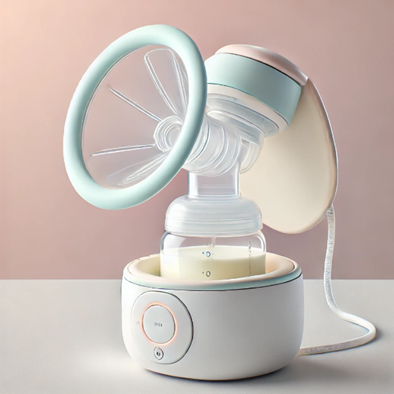
For today’s busy moms, convenience is everything—and that’s exactly where the wireless breast pump comes in. But what exactly is it, and how does it work?
Unlike traditional pumps that rely on cords or bulky equipment, a wireless breast pump is a hands-free, portable, and discreet device designed to fit inside your bra. It operates without external tubing or power cords, meaning you can pump on the go—whether you’re working, driving, or simply relaxing at home.
Popular brands like Elvie, Willow, and Momcozy have revolutionized the experience with quiet motors and smart tracking. In this guide, we’ll explore how these innovative pumps work, what features to consider, and which options best suit your lifestyle.
Watch the video below The BEST Breast Pumps of 2025 (after reviewing over 100 breast pumps!!!)
“Video by New Little Life – Pumping for Working Moms on YouTube
Table of Contents
How Wireless Breast Pumps Work (Beginner-Friendly)
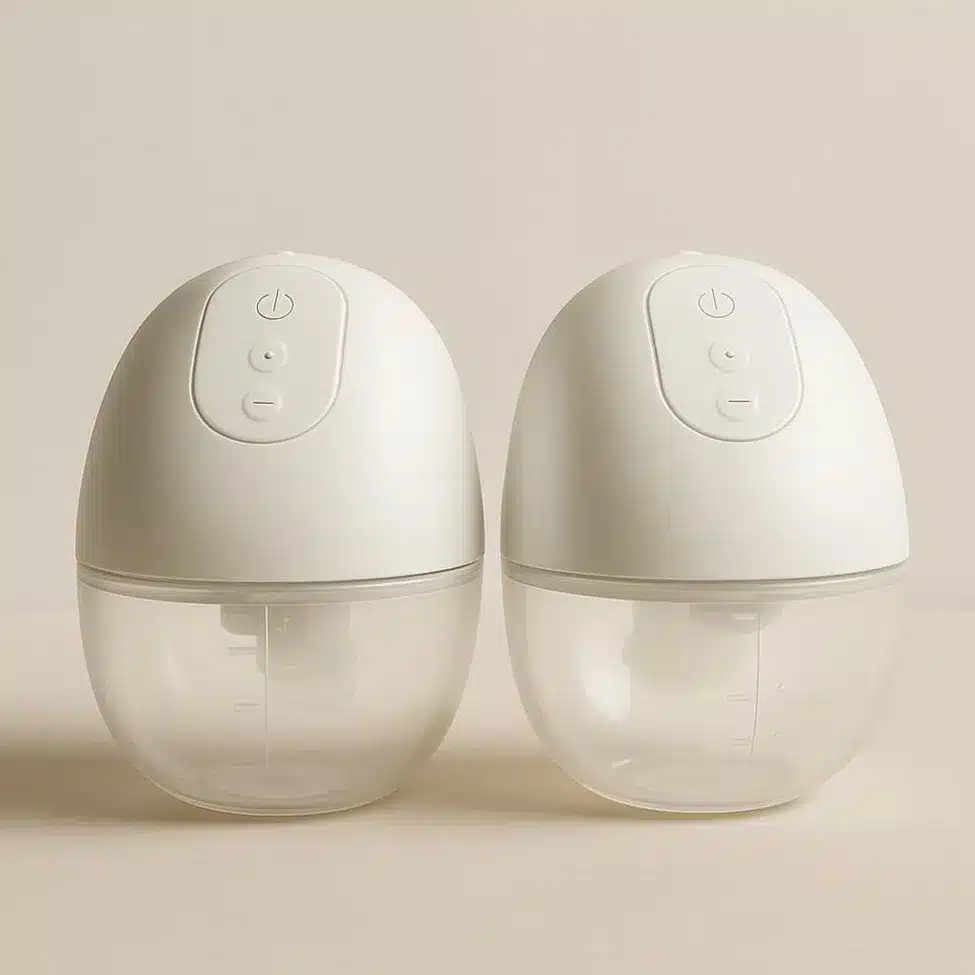
A Simple Explanation for New Moms
If you’re new to pumping, understanding how a wireless breast pump works is the first step toward choosing the right one. These modern pumps offer a hands-free, hassle-free alternative to traditional devices.
Powered by Battery and Built for Comfort
Unlike conventional models, a wireless pump is fully self-contained. It includes a quiet motor, a rechargeable battery, and a milk container—all compact enough to fit inside your nursing bra. Once placed, it uses gentle suction to express milk, mimicking your baby’s natural nursing rhythm. For detailed scientific research on newborn comfort, read our latest guide on Infant Drops for Gas.
Many models feature soft silicone flanges and smart controls for maximum comfort. Premium options, like Elvie and Willow, even connect to mobile apps so you can track sessions and milk output on your phone.
How It’s Different from Traditional Pumps
| Traditional Pumps | Wireless Breast Pumps |
|---|---|
| Requires external tubing and wall plug | Battery-powered, cordless |
| Bulky and often noisy | Discreet and quiet |
| Restricts movement | Fully wearable and portable |
8 Best Wireless Breast Pumps in 2026
When it comes to finding the best wireless breast pump, modern moms have more choices than ever. Below is a list of the top-rated models for 2025.
1. Elvie Pump (Best for Discretion)
- Overview: Sleek, ultra-quiet, and fits entirely inside your bra. It’s controlled via smartphone and features a “SmartRhythm” pumping system.
- Pros: Silent operation, fully wearable, app tracking.
- Cons: Premium price point, gentle suction (may be too light for some).
- Best for: Working moms who need absolute silence in the office.
2. Willow 360 (Best for Leak-Proof Mobility)
- Overview: Formerly known as the Willow 3.0, the Willow 360 is the only pump that is completely spill-proof, allowing you to pump in any position—even lying down (Yoga pose approved!).
- Pros: 360° leak-proof, app connectivity, hospital-grade suction.
- Cons: Requires specific bags for 360° use, learning curve to align.
- Best for: Active moms who want to move freely without leaks.
3. Momcozy M5 (Best Value)
- Overview: A budget-friendly favorite that offers strong suction and a compact “Baby Mouth” design without breaking the bank.
- Pros: Affordable, soft silicone flanges, travel case included.
- Cons: Not app-connected, slightly bulkier motor.
- Best for: Moms looking for performance on a budget.
4. Elvie Stride (Best Hybrid)
- Overview: Offers hospital-grade performance with a small motor that clips to your waist, connecting to cups in your bra via hidden tubes.
- Pros: Lightweight cups, hospital-grade power, covered by many insurance plans.
- Cons: Has tubing (unlike the original Elvie Pump).
- Best for: Moms who want power + portability covered by insurance.
5. BabyBuddha Portable Pump
- Overview: Though not “tubeless,” this ultra-small pump is famous for its incredible suction power and hangs around your neck like a lanyard.
- Pros: Extremely powerful, compact, rechargeable.
- Cons: Strong suction can be intense for some; uses tubing.
- Best for: Moms who need to empty breasts quickly.
6. Imani i2 Plus by Legendairy Milk
- Overview: A popular “hackable” pump that sits inside the bra. It features clear cups so you can easily see your nipple alignment.
- Pros: Digital display on the motor, large capacity cups.
- Cons: Can look bulky under tight clothing.
- Best for: Moms who want a visual display without using an app.
7. TSRETE Wearable Breast Pump
- Overview: A solid entry-level option often found on Amazon. It gets the job done for a fraction of the cost of premium brands.
- Pros: Very strong suction, large capacity, easy to use.
- Cons: Louder than Elvie/Willow, shorter warranty.
- Best for: First-time moms testing out wearable pumps.
8. Freemie Liberty II Deluxe
- Overview: The pioneers of wearable cups. The motor clips to your belt while the lightweight cups sit in your bra.
- Pros: Very large capacity cups (great for over-suppliers), programmable timer.
- Cons: Not app-based, more parts to wash.
- Best for: Moms with a high milk supply.
Comparison: Wireless vs. Wearable vs. Electric
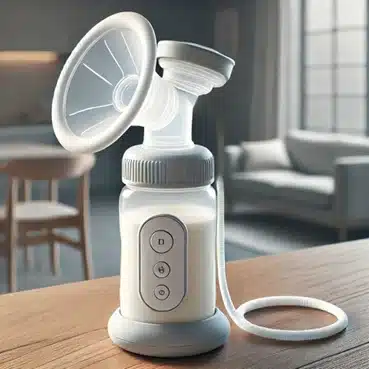
Choosing the right type can be overwhelming. Here is a quick breakdown:
| Feature | Wireless/Wearable | Traditional Electric |
|---|---|---|
| Power Source | Battery-operated (Rechargeable) | Plug-in (Wall outlet) |
| Mobility | Excellent – pump anywhere | Limited – must sit near outlet |
| Noise Level | Very Quiet (e.g., Elvie) | Moderate to Loud |
| Suction Strength | Moderate to Strong | Strongest (Hospital Grade) |
| Best For | Multitasking, Travel, Work | Establishing supply, Home use |
Verdict: If you value freedom and need to pump while driving or working, a wireless breast pump is your best bet. If you have low supply or are exclusively pumping, you might want a traditional electric pump for home and a wireless one for travel.
How to Choose the Right Smart Breast Pump
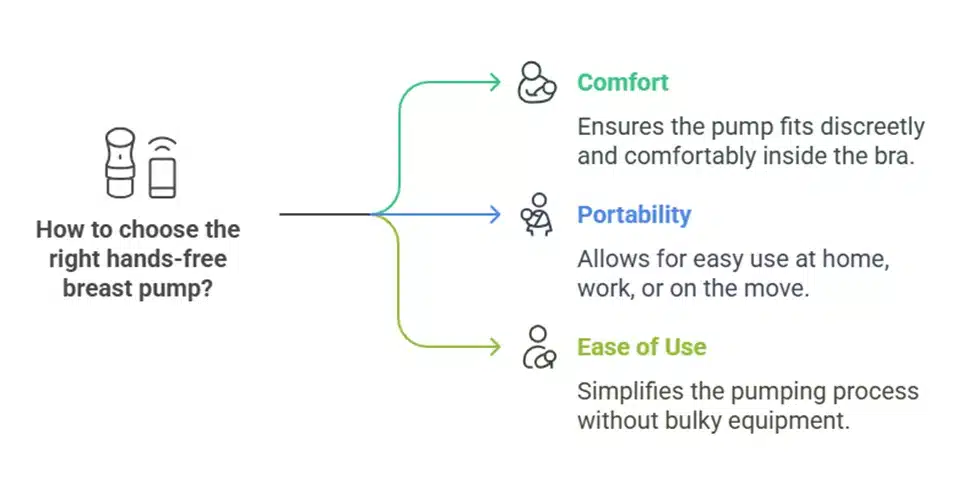
Evaluating these key factors will help you narrow down your choice of wireless breast pump:
- Budget: Prices range from $100 (Momcozy) to $550 (Elvie/Willow). Check if your insurance covers a portion.
- Suction Strength: If you need deep suction to empty, look at Willow 360 or BabyBuddha. If you prefer gentle suction, Elvie is superior.
- Battery Life: Look for a pump that lasts at least 3–4 sessions (approx. 2 hours) on a single charge.
- Ease of Cleaning: Fewer parts mean faster cleanup. The Willow Go and Momcozy M5 are known for being easier to wash than older models.
Can You Get a Wireless Pump Through Insurance?
Yes—but there is a catch.
Thanks to the Affordable Care Act (ACA), most U.S. insurance plans cover a breast pump. However, fully premium wireless breast pumps like Elvie and Willow often require an “Upgrade Fee.”
How it works:
- Check Coverage: Call your provider or use a service like Aeroflow Breastpumps.
- Full vs. Partial: Your insurance might cover a standard pump (value ~$150). If you want a $500 Willow, you will likely have to pay the difference (the upgrade fee).
- Fully Covered Options: Some plans now fully cover the Elvie Stride or Zomee Fit.
Pro Tips to Maximize Milk Output with a Wireless Pump
Many moms worry that a wireless breast pump might not empty them as well as a hospital-grade wall unit. While the motor might be smaller, you can still get a full milk supply if you use the right techniques. Here are expert tips to get the most out of every session.
1. The “Bra Hack” for Better Suction With traditional pumps, you hold the flanges to your chest. With wireless pumps, your bra does the holding.
- The Fit Matters: Your nursing bra must be tight enough to press the pump firmly against your breast. If it is too loose, you will lose suction.
- The Hack: If your bra feels loose, tighten the straps or use a “bra adjuster” clip to pull the straps closer together in the back. This creates a tighter seal and increases milk output.
2. Check Your Alignment Since you can’t see your nipple once the pump is inside your bra, misalignment is the #1 cause of low output or pain.
- Look Before You Snap: Lean forward and place the flange on your breast before attaching the motor (if your model allows). Ensure your nipple is centered in the tunnel.
- Use a Mirror: If you are unsure, stand in front of a mirror to check that the pump is sitting straight and not tilting to the side.
3. Use “Massage Mode” Twice Most wireless pumps start in “Massage Mode” (fast, light suction) to trigger a let-down. Once milk flows, they switch to “Expression Mode.”
- The Trick: If milk flow slows down after 10 minutes, switch the pump back to Massage Mode. This can trigger a second let-down and help empty the breast faster.
Troubleshooting Common Wireless Pump Issues
Even the best wireless breast pump can have hiccups. Before you panic and think your pump is broken, try these quick fixes for the most common problems.
1. “My Pump is Leaking!” Leaks are frustrating, especially when you are at work.
- The Cause: Usually, this happens if you bend over too far. Most pumps (except the Willow 360) have a small vent hole at the top.
- The Fix: Always squat with your knees instead of bending at the waist. Also, check that the silicone seal on the milk container is completely dry before assembling. Even a drop of water can break the seal.
2. “Suction Feels Weaker Than Usual” If the motor sounds fine but the pull feels weak:
- Check the Duckbill Valve: This is the small white silicone piece. If it has a tiny tear or is worn out, suction will drop instantly. Replace these every 4–6 weeks.
- Dry Parts: Ensure the diaphragm (the round silicone part protecting the motor) is 100% dry. Moisture here can block air suction.
3. “The App Won’t Connect” Smart pumps like Elvie and Willow rely on Bluetooth.
- Reset: Toggle your phone’s Bluetooth off and on.
- Location: Ensure the pumps are fully charged and inside your bra. Sometimes the body blocks the signal, so try holding your phone closer to your chest for the initial sync.
How to Clean & Maintain Your Pump
Proper maintenance keeps your wireless breast pump safe and sanitary.
Step-by-Step Cleaning:
- Disassemble: Take apart all washable parts (flanges, valves, containers).
- Rinse: Rinse with cool water to remove milk residue.
- Wash: Use warm soapy water and a dedicated bottle brush. Do not use the kitchen sponge (it harbors bacteria).
- Dry: Air dry on a clean paper towel. Never rub parts dry with a cloth towel.
Important Maintenance Tips:
- Replace Parts: Valves and duckbills wear out. Replace them every 4–8 weeks to maintain suction.
- The Motor: Never wash the motor or battery unit! Wipe it with a disinfectant wipe if needed.
- Sterilization: Boil parts for 5 minutes once a day for newborns. Check your manual—some parts (like Willow containers) are dishwasher safe, while others are not.
Final Thoughts: Are They Worth It?
If you are planning to travel with your baby, don’t forget to check our review of the Doona Infant Car Seat and Stroller.
In 2025, the answer is a resounding yes. The ability to pump while driving, typing, or folding laundry is a game-changer for mental health.
Who should get a wireless breast pump?
- Moms returning to work.
- Moms chasing a toddler while caring for a newborn.
- Anyone who hates being tethered to a wall outlet.
Whether you choose the premium Willow 360 or the budget-friendly Momcozy M5, the freedom to move is worth every penny.
Frequently Asked Questions (FAQs)
1. How long does the battery last?
2. Can I use these while driving?
3. Do they have hospital-grade suction?
4. Can I bend over while wearing them?

Hafiz Nauman Baig is a Researcher and PhD Scholar in Zoology, with a specialized focus on Biomechanics and Anatomical Data Analysis. Merging his academic expertise in biological structures with a deep background in Physical Ergonomics and strength mechanics, Nauman evaluates baby gear through a rigorous scientific lens.
Unlike standard product reviewers, he utilizes R Studio and statistical modeling to assess safety data, focusing on the physiological impact of carriers on the infant airway and the caregiver’s spine. His mission is to bridge the gap between complex biological safety standards and practical, pain-free babywearing.



It?¦s really a nice and useful piece of information. I?¦m happy that you just shared this useful information with us. Please keep us informed like this. Thank you for sharing.