
Breastfeeding has a significant impact on your menstrual cycle, often delaying the return of your period after childbirth. This happens due to the hormone prolactin, which is responsible for milk production and suppresses ovulation. As a result, many new moms experience irregular or absent periods during the early months of nursing. But can you get your period while breastfeeding? Yes — although it’s common for your cycle to pause, it’s entirely possible for menstruation to return, even while you’re still exclusively nursing. The timeline for when your period returns while breastfeeding varies from woman to woman and depends on factors such as nursing frequency, baby’s age, and whether you’re supplementing with formula or starting solids.
Understanding how your period while breastfeeding may change — or return unexpectedly — can help you prepare for what’s normal and what might signal something irregular. Let’s explore the signs to watch for and what they might mean for your postpartum health. If you’re curious about pregnancy progress before birth, check out our guide on being 21 weeks pregnant to learn about symptoms, baby size, and what to expect at this stage.
Watch the original video Breastfeeding and Periods – Everything that You Need to Know
Watch this helpful video by FirstCry Parenting on YouTube
Table of Contents
When Do You Get Your Period After Birth While Breastfeeding?
Many new moms wonder, “When do you get your period after birth while breastfeeding?” The answer isn’t the same for everyone. While some women may see their periods return as early as 6 to 8 weeks postpartum, others might not menstruate for several months — or even a year — especially if exclusively breastfeeding.
Several factors influence when your period returns:
- How often you breastfeed (more frequent nursing = longer delay)
- Whether you supplement with formula or introduce solids early
- Your individual hormone levels and body response postpartum
So, do you get your period while breastfeeding? Yes, but it depends on how your body adjusts. Some moms ovulate and get their period again within a few months, while others experience long delays or irregular cycles until they wean.
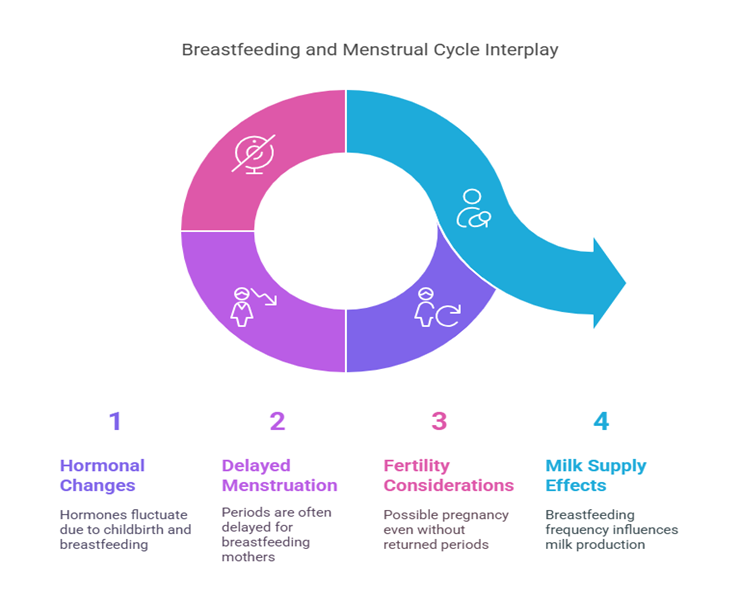
Signs of Period Returning While Breastfeeding
Curious about the signs of period returning while breastfeeding? While everybody is different, some physical and hormonal clues may signal that your menstrual cycle is about to restart.
Common signs include:
- Mild cramping or abdominal discomfort similar to pre-period symptoms
- Light spotting or brown discharge, even if your full period hasn’t started
- Mood swings or irritability, often due to shifting hormones
- Changes in breast milk supply, such as a temporary dip or your baby fussing more at the breast
Some women also notice increased cervical mucus or subtle body temperature changes, especially if ovulation is returning before menstruation. If you’re seeing any of these patterns, it may be your body’s way of gearing up for the return of your cycle. If you’re nearing the end of your pregnancy and wondering what to expect, take a look at our guide on 36 Weeks Pregnant (Symptoms, Signs & What to Expect) for helpful insights.
Is Having a Period While Breastfeeding Safe?
Wondering if it’s safe to continue breastfeeding while on your period? The answer is yes — breastfeeding during your period is completely safe for both you and your baby. However, there are a few things you might notice that can make the experience feel different.

Does Having a Period While Breastfeeding Change Milk Supply?
First, some mothers report a temporary drop in milk supply during their menstrual cycle. This usually occurs a few days before and during your period and is caused by hormonal shifts, particularly lower calcium levels.
Second, the taste of breast milk may change slightly due to these hormonal fluctuations. While this change is harmless, some babies may become fussy or feed less enthusiastically for a day or two.
Lastly, having your period while breastfeeding doesn’t affect the nutritional quality of your milk — it remains safe and beneficial. If supply seems to dip, staying hydrated and maintaining a balanced diet can help.
In short, managing your period while breastfeeding is not only safe but also recommended — just be aware of these minor changes and continue to nurse as usual.

Abnormal Periods While Breastfeeding: 7 Warning Signs
Breastfeeding can delay or alter your menstrual cycle, but it’s still important to recognize when something feels off. While irregular periods are common postpartum, certain symptoms may indicate a need for medical attention.
Common Signs of Abnormal Periods While Breastfeeding
If you’re experiencing abnormal periods while breastfeeding, here are seven red flags to watch for:
- Heavier or prolonged bleeding lasting more than 7 days
- Severe cramps that don’t improve with rest or over-the-counter meds
- Large blood clots, especially those larger than a quarter
- Spotting between periods, not linked to ovulation
- Sudden cycle changes like very short or excessively long cycles
- Breast tenderness or unusual discharge, which may indicate hormonal shifts
- Other hormonal imbalance symptoms such as acne, mood swings, or hair loss
These symptoms don’t always point to something serious, but it’s wise to consult a healthcare provider if you notice any of them. Catching signs early ensures your reproductive health stays on track — even while nursing. For a better understanding of your breast pump’s coverage and components, check out our detailed article on Spectra Gold Breast Pump: 10 Facts on S1 & S2 Parts and Insurance.
Periods Irregular While Breastfeeding: What’s Normal?
It’s completely normal to have periods irregular while breastfeeding, especially in the first several months postpartum. Due to hormonal changes—particularly higher prolactin levels—your cycle may be unpredictable.
You might notice variations in cycle length, with some months bringing lighter or shorter periods and others skipping altogether. Missed periods or extended gaps between cycles are also common, especially if you’re exclusively breastfeeding.
These irregularities typically normalize once breastfeeding frequency decreases or your baby starts solids. However, if your cycle remains highly erratic for a year or more, or is accompanied by other concerning symptoms, consider consulting your doctor.
No Period While Breastfeeding: Should You Worry?
Experiencing no period while breastfeeding is often completely normal and typically due to lactational amenorrhea—a natural phase where high prolactin levels suppress ovulation and menstruation. This condition is more common in mothers who breastfeed exclusively and frequently, especially during the night.
In most cases, the absence of a period doesn’t indicate a problem. However, you should talk to a doctor if you haven’t resumed menstruation after a year, you notice unusual symptoms like pain or discharge, or you’re concerned about fertility or hormonal balance. Transitioning to fewer feeds or introducing solids often signals the return of your cycle.
Period While Breastfeeding at 3 Months Postpartum
Getting your period while breastfeeding 3 months after birth isn’t uncommon, but it varies based on feeding habits and individual hormones. At this stage, some women may notice light spotting or a full return of menstruation, especially if they’re supplementing with formula or their baby sleeps for longer stretches at night.
Breastfeeding suppresses ovulation through prolactin, but its effect weakens as feedings become less frequent. If your cycle returns around three months postpartum, it’s usually not a cause for concern—it simply means your body is adjusting hormonally. However, if bleeding is heavy or irregular, a checkup is wise.
For unbeatable hygiene and convenience in bottle care, explore our guide on Best Baby Bottle Washer and Sterilizer to discover top-rated options that keep feeding safe and stress-free. For more information on why your periods may start again while breastfeeding, check out this helpful guide from BabyCentre UK.
Can Your Period Start Then Stop Again While Breastfeeding?
Yes, it’s possible—and quite common. If you’re wondering, “can your period start then stop again while breastfeeding?”, the answer often lies in hormonal fluctuations. During breastfeeding, estrogen and progesterone levels shift frequently due to feeding patterns. This can lead to temporary spotting, a light period that stops abruptly, or irregular cycles altogether. What may seem like a true period might just be brief hormonal bleeding. Stress, sleep changes, or baby nursing less often can also impact cycle consistency. If this pattern continues or comes with unusual symptoms, consider discussing it with your healthcare provider.
Signs of Ovulation While Breastfeeding (Without a Period)
Even if your period hasn’t returned yet, you can still ovulate while breastfeeding. In fact, many women wonder about the signs of ovulation while breastfeeding but no period, especially when they’re trying to avoid or plan pregnancy.
To begin with, one of the most noticeable signs is a change in cervical mucus—it may become clear, stretchy, and slippery like egg whites. Additionally, a subtle rise in your basal body temperature can occur if you’re tracking it daily.
Moreover, some women experience mild pelvic pain or bloating around ovulation time, known as mittelschmerz. While not all women notice these signs, they can still offer helpful clues that your body is gearing up to ovulate—even without a visible menstrual cycle.
When to See a Doctor About Your Period While Breastfeeding
While irregular periods are often normal during breastfeeding, there are certain signs you shouldn’t ignore. For instance, if you’re experiencing extremely heavy bleeding, large clots, or periods lasting longer than 10 days, it’s time to consult a healthcare provider. In addition, symptoms like severe pelvic pain, dizziness, or foul-smelling discharge may point to underlying issues. If your period suddenly stops after becoming regular, or you notice unusual spotting between cycles, don’t hesitate to reach out. Ultimately, any bleeding pattern that feels off or disrupts your daily life should be evaluated by a doctor to rule out hormonal imbalances or postpartum complications.
When Will My Periods Return While Breastfeeding?
After childbirth, every mother’s body follows its own pace in resuming regular cycles. If you’re breastfeeding, your period might not return for months or even years. However, if you’re using formulas, your periods may return shortly after childbirth.
Periods and Breastfeeding: Impact & Solutions
| Topic | Impact | Solutions | Notes |
|---|---|---|---|
| Return of Period | Can return 2-6 months postpartum depending on breastfeeding. | Track changes, consult a doctor. | Formula feeding can speed up return of period. |
| Breastfeeding and Pregnancy | It is possible to get pregnant while breastfeeding. | Use contraception if avoiding pregnancy. | Breastfeeding is not a foolproof contraceptive. |
| Milk Supply and Menstruation | Temporary dip in supply during menstruation. | Breastfeed often, stay hydrated, eat well. | Supply increases after hormones balance. |
| Milk Composition Changes | Milk becomes saltier and less sweet during menstruation. | Be patient, feed frequently. | Babies may be fussy, but they will adjust after a few days. |
Your First Period While Breastfeeding After Birth
The first period after giving birth can return as early as 5 to 6 weeks, or it might not return until you stop breastfeeding or introduce formula or solid foods.
Heavier First Period: During your first period after giving birth, you may have a heavier flow and experience more cramping. Some women experience blood clots too. If you think you’re losing too much blood or that you have abnormal clots, you should see your doctor.
Will My Periods Be the Same After They Return While Breastfeeding?
When your period comes back while you’re breastfeeding, it might not be the same. Early postpartum periods may be irregular, particularly if you are still exclusively breastfeeding. Missing a period or taking longer to get one back in the early months is common because your cycle may not follow a regular pattern while nursing. However, once you reduce breastfeeding frequency or start weaning, your periods are likely to return to a more predictable schedule.
Do I Need to Use Contraception While Breastfeeding?
Yes, pregnancy is possible when lactating, even if your period has not resumed. If you want to avoid pregnancy, talk to your doctor about suitable contraception methods while lactating.
How to Manage Nipple Discomfort During Your Period
Breastfeeding when you are menstruating can be uncomfortable, particularly in the initial days while your nipples may be sore. The following advice can help reduce discomfort or tenderness:
- Avoid numbing creams: These can make your baby uncomfortable by numbing their mouth.
- Pain relief: If needed, consult your doctor about over-the-counter pain relievers to ease the discomfort.
- Pump milk if necessary: If breastfeeding is too painful, consider pumping breast milk until the tenderness subsides.
Can I Avoid Becoming Pregnant by Breastfeeding?
Lactating can hinder the return of your period and may also reduce the chances of ovulation, especially in the early weeks postpartum. Some studies show that most women don’t ovulate for at least six weeks after giving birth. However, breastfeeding as natural birth control isn’t foolproof. If you’re not ready for another pregnancy, it’s important to use additional contraception alongside breastfeeding.
Tips to Boost Milk Supply During Your Period
To help maintain your milk supply during this time, consider:
- Herbal teas for breastfeeding: Some herbal teas may naturally help boost your milk production. Always check with your doctor before trying on any supplements.
- Eat iron-rich foods: Foods like red meat and leafy greens help prevent anemia, which can reduce milk supply. Foods known as galactagogues, such as fennel, oatmeal, and almonds, are also beneficial for milk production.
Breastfeeding and Postpartum Hemorrhage (PPH)
Women who experience postpartum hemorrhage (PPH) may face challenges in breastfeeding, which can delay the return of their period. These include maternal-infant separation, ICU admission, or medications administered during PPH and may influence breastfeeding success and consequently affect the control of period.
Barriers to Successful Breastfeeding
Some common obstacles to early postpartum breastfeeding, including insufficient milk supply, latching difficulty, and other health issues, can also affect the return of your menstrual cycle. Assistance from International Board-Certified Lactation Consultants (IBCLCs) has been demonstrated to facilitate mothers’ overcoming of such obstacles, ensuring successful breastfeeding and, in turn, influencing the timing of return of your menstrual cycle.
Conclusion: Understanding Your Period While Breastfeeding
In summary, experiencing changes in your menstrual cycle while breastfeeding is completely normal. From delayed periods and irregular cycles to symptoms of ovulation without a period, your body is adjusting to a unique hormonal landscape. However, it’s equally important to recognize the signs of abnormal periods while breastfeeding, such as unusually heavy bleeding, severe cramps, or prolonged cycle irregularities. While many variations fall within the range of normal, trusting your instincts and staying informed is key.
If you’re ever unsure about your symptoms or feel something isn’t quite right, don’t hesitate to speak with your healthcare provider. They can offer guidance, reassurance, and treatment if needed.
👉 Start tracking your cycle today—it can help you spot patterns and feel more in control of your postpartum health. And remember, you’re not alone in this journey. For reliable, government-approved insights—including how long periods may be delayed and factors influencing the return of menstruation—see this overview from Healthdirect Australia: “Periods While Breastfeeding”.
Frequently Asked Questions
Can I get pregnant before my first postpartum period?
Does getting your period mean milk supply will drop?
How long do irregular periods last while breastfeeding?
Can I ovulate without a period?

Hafiz Nauman Baig is a Researcher and PhD Scholar in Zoology, with a specialized focus on Biomechanics and Anatomical Data Analysis. Merging his academic expertise in biological structures with a deep background in Physical Ergonomics and strength mechanics, Nauman evaluates baby gear through a rigorous scientific lens.
Unlike standard product reviewers, he utilizes R Studio and statistical modeling to assess safety data, focusing on the physiological impact of carriers on the infant airway and the caregiver’s spine. His mission is to bridge the gap between complex biological safety standards and practical, pain-free babywearing.

This is a great, positive title that offers reassurance and guidance to mothers. It clearly promises helpful information, and a slight tweak like “Helpful Insights for Every Mom” could make it feel even more supportive and encouraging.