The Researcher Introduction: Bridging Toxicology and Parenting
The intersection of evolutionary biology, environmental toxicology, and everyday parenting is a space fraught with conflicting marketing claims and pervasive anxiety. My academic journey began in the meticulous world of zoology, studying the biological imperatives of mammalian attachment and the environmental stressors that disrupt early development. This eventually led to specialized doctoral research in environmental toxicology, analyzing how trace chemicals interact with developing physiological systems. When I transitioned into parent education, I recognized a profound gap in the market regarding the understanding of non-toxic baby carrier certifications. Modern caregivers are highly attuned to the concepts of clean living and chemical exposure, yet they are often left to navigate a labyrinth of corporate greenwashing without the scientific literacy required to separate genuine safety from superficial marketing.
This guide is born from that exact necessity. The goal is to function as a consumer safety laboratory, translating rigorous, peer-reviewed toxicological data, federal regulatory mandates, and complex biomechanical principles into accessible, actionable intelligence. By applying what I call the “Grandma Rule”—distilling complex PhD-level science into clear, empathetic, and easily understandable concepts without diluting the facts—this report empowers everyday mothers and caregivers. Here, we move beyond the aesthetic appeal of baby gear to examine the microscopic realities of textile finishing, the polymer science of safety buckles, and the stringent demands of non-toxic baby carrier certifications.
Table of Contents
The Biological Imperative of Babywearing
From a zoological perspective, human infants are born in an advanced state of neurological altriciality—meaning they are fundamentally helpless and neurologically immature compared to other mammalian species. For thousands of years, the biological solution to this extreme vulnerability has been continuous physical contact with the caregiver. Babywearing is not merely a modern parenting trend; it is an evolutionary expectation that provides profound physiological benefits:
- Thermal and Cardiac Stability: Carrying an infant directly against the chest naturally regulates their body temperature and stabilizes their developing heart rate.
- Stress Reduction: Close physical proximity drastically reduces the frequency of cortisol-inducing crying spells.
- Neurological Growth: The constant movement provides essential vestibular and proprioceptive stimulation, promoting optimal brain development.
However, the transition from traditional woven fibers to mass-produced baby gear has introduced an environmental mismatch, making non-toxic baby carrier certifications more important than ever. While the biological benefits of proximity remain, the micro-environment created by synthetic fabrics, polyurethane foams, and industrial textile dyes presents entirely new challenges:
- The Localized Habitat: A baby carrier serves as a micro-climate where an infant will spend thousands of hours sleeping, sweating, feeding, and breathing.
- Oral Exploration: Because infants naturally explore their environment orally, they frequently chew and suck on the straps and panels of these devices.
Consequently, the materials comprising the carrier become a direct and potent vector for chemical exposure, necessitating a rigorous toxicological evaluation of every fiber and fastener. This is exactly why understanding and strictly verifying non-toxic baby carrier certifications is critical for modern parents.
The Physiology of Infant Skin: Why Materials Matter
To comprehend why a chemical treatment that is considered safe for an adult garment can be highly hazardous in a baby carrier, one must look at the microscopic anatomy of a newborn. It is a common misconception to view babies simply as miniature adults. In reality, their physiological defense mechanisms are fundamentally underdeveloped.
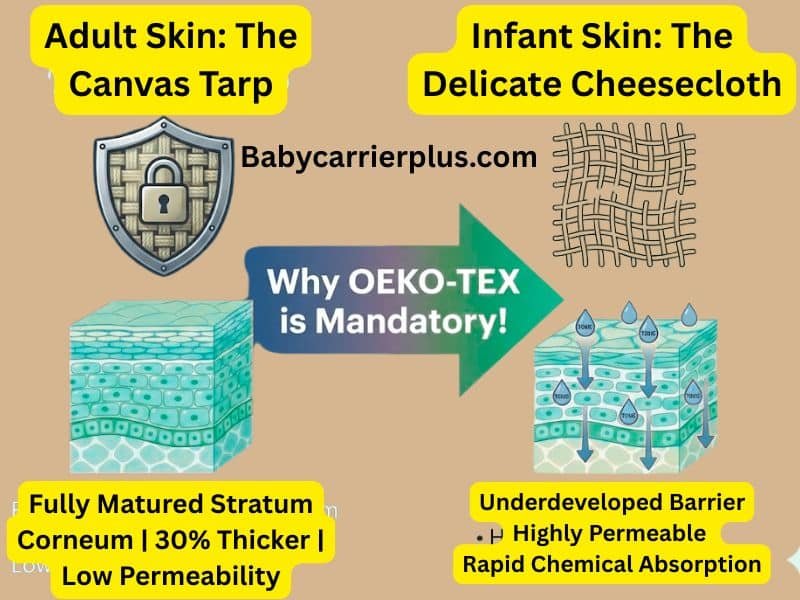
The primary barrier between the human body and the external chemical environment is the skin’s outermost layer, known as the stratum corneum. In infants, this vital protective layer is not fully matured, making them uniquely vulnerable:
- The “Cheesecloth” Barrier: Clinical dermatological research confirms that an infant’s skin is 20% to 30% thinner than that of a mature adult. If adult skin is a tightly woven canvas tarp, infant skin is more akin to a highly permeable, delicate cheesecloth.
- Rapid Toxin Absorption: Because of this structural immaturity and elevated rates of Transepidermal Water Loss (TEWL), chemical residues, environmental irritants, and synthetic dyes can penetrate the infant barrier with alarming ease.
- Disproportionate Surface Area: A newborn has a skin surface area that is three times greater by volume than an adult. When a baby is in a carrier, a massive percentage of their body mass is in direct contact with the fabric. If that fabric leaches chemicals, the absorbed dose (calculated per kilogram of body weight) is exponentially higher.
- Bypassing the Liver’s Filter: When an adult ingests a toxin, the liver employs “first-pass metabolism” to neutralize it. Dermal (skin) absorption, however, entirely bypasses this hepatic filter. Chemicals that penetrate the infant’s thin skin pass directly into the bloodstream and circulate throughout developing organs in a highly potent state.
When combining this extreme dermal permeability with the inevitable behavioral reality that infants will actively suck on the carrier straps, the argument for absolute chemical purity in baby gear becomes undeniable. This scientific reality makes strict non-toxic baby carrier certifications not just a lifestyle preference, but an absolute medical necessity.
The Chemical Threat Matrix in Infant Textiles
The modern textile industry relies on thousands of synthetic chemical compounds to streamline manufacturing and add consumer-friendly features to fabrics. Stain resistance, wrinkle prevention, vibrant colorfastness, and flame retardancy are often achieved through heavy chemical finishing. While these features may offer convenience, they introduce a matrix of toxicological threats into the infant’s micro-environment, highlighting the critical need for non-toxic baby carrier certifications.
Chemical Flame Retardants: A Legacy of Toxicity
Perhaps the most alarming class of chemicals historically found in juvenile products, including structured baby carriers, are chemical flame retardants. For decades, manufacturers added these to polyurethane foams to comply with stringent, yet ultimately flawed, flammability standards like California’s Technical Bulletin 117 (TB117).
The legacy of these chemicals is a dark chapter in consumer safety, proving why independent non-toxic baby carrier certifications are crucial:
- The “Tris” Threat: In the 1970s, chlorinated Tris (TDCPP) was voluntarily removed from children’s pajamas after it was identified as a severe mutagen and possible human carcinogen. Astoundingly, because of the demands of TB117, it found its way back into the polyurethane foams of baby products.
- Additive, Not Reactive: These flame retardants do not chemically bind to the foam. Instead, they continuously “off-gas,” migrating out of the carrier and attaching themselves to household dust, which infants constantly ingest.
- Severe Health Implications: The EPA and leading toxicologists link these compounds to severe endocrine disruption, reduced fertility, learning disorders, decreased IQ, and the development of various cancers. Maternal exposure is also associated with premature birth.
- The Natural Solution: Modern flammability standards (like 16 CFR 1610) can be satisfied through the intelligent use of inherently flame-resistant natural materials—such as tightly woven wool, linen, and organic cotton—completely eliminating the need for toxic additives.
Volatile Organic Compounds (VOCs) and Polyurethane Foams
When parents unbox a newly purchased, mass-produced baby carrier, they are often greeted by a potent, acrid odor, commonly described as a “chemical smell” or a “new car smell.” This olfactory warning is the direct result of Volatile Organic Compounds (VOCs) off-gassing from the product.
- Trapped Chemicals: VOCs (like toluene, benzene, and xylene) are utilized as solvents, adhesives, and blowing agents in synthetic textiles and polyurethane foams. They evaporate at room temperature and get trapped in packaging, releasing directly into the infant’s breathing zone upon opening.
- Respiratory Danger: Inhalation of VOCs is highly irritating to the delicate mucosal linings of a baby’s respiratory tract, causing headaches and respiratory distress.
- Long-Term Risks: Chronic exposure to off-gassing foams has been linked to severe developmental damage and liver toxicity. This makes seeking out non-toxic baby carrier certifications (like GREENGUARD Gold or OEKO-TEX) absolutely vital to ensure indoor air quality.
Formaldehyde and Anti-Wrinkle Treatments
Unless banned by non-toxic baby carrier certifications, formaldehyde is a ubiquitous chemical in the conventional textile industry, applied to prevent fabrics from wrinkling during shipping.
- Toxic Leaching: Formaldehyde is a highly reactive volatile compound classified globally as a known human carcinogen. When treated fabrics touch a baby’s sweaty skin, the chemical easily leaches from the textile and penetrates the compromised epidermal barrier.
- Severe Skin Reactions: This exposure is a leading cause of severe allergic contact dermatitis, presenting as angry, red, and intensely itchy rashes on the baby’s cheeks, torso, or thighs.
- Strict Limits Needed: To eliminate this risk, toxicologists demand adherence to rigorous non-toxic baby carrier certifications that cap formaldehyde presence in infant textiles at virtually undetectable limits (≤0.1 mg/kg).
Azo Dyes, Heavy Metals, and PFAS
The vibrant colors and patterns that make modern baby carriers visually appealing often hide complex chemical dangers if they lack non-toxic baby carrier certifications:
- Azo Dyes & Aromatic Amines: Approximately 60% to 70% of commercial colorants are azo dyes. When an infant sweats, the moisture breaks down these dyes into highly toxic byproducts known as aromatic amines (e.g., 2-naphthylamine), which are recognized carcinogens capable of causing genetic damage.
- Heavy Metals: The textile finishing process often leaves behind traces of heavy metals like cadmium, lead, and chromium (used as mordants to bind dyes). Even minute amounts are highly detrimental to a child’s rapidly developing neurological networks.
- PFAS (“Forever Chemicals”): Driven by the demand for “waterproof” or “stain-resistant” gear, PFAS are routinely detected in carriers. Infants are uniquely vulnerable to PFAS, and exposure is clinically linked to immune system suppression, metabolic disruptions, and severe reproductive harm.
Actively seeking out verified non-toxic baby carrier certifications is the most reliable method to shield your infant’s developing endocrine system from the pervasive “forever chemicals” highlighted in recent EWG textile toxicity reports.
Decoding Non-Toxic Baby Carrier Certifications: OEKO-TEX vs. GOTS
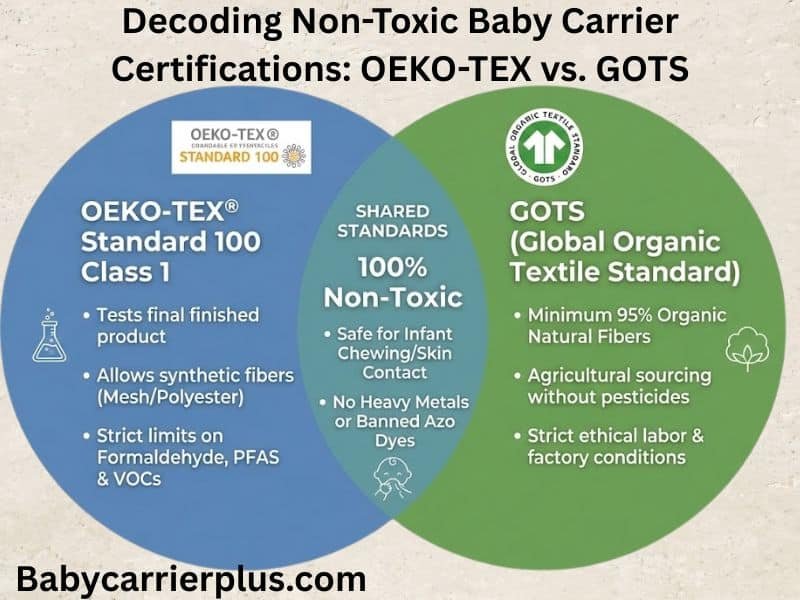
Given the terrifying reality of the chemical threat matrix, how does a caregiver safely purchase a baby carrier? Marketing buzzwords such as “natural,” “clean,” or “eco-friendly” are entirely unregulated and legally meaningless in the textile space. To ensure absolute safety, parents must rely on rigorous, third-party, laboratory-verified non-toxic baby carrier certifications.
The two most prominent and trusted standards in the infant textile market are OEKO-TEX Standard 100 Class 1 and the Global Organic Textile Standard (GOTS). To verify the authenticity of a brand’s marketing claims regarding non-toxic baby carrier certifications, caregivers can always cross-reference the manufacturer’s credentials directly via the official OEKO-TEX® Buying Guide. While both represent the pinnacle of consumer safety, they measure entirely different aspects of the manufacturing process:
OEKO-TEX Standard 100 (Product Class 1)
The OEKO-TEX Standard 100 is a globally recognized, independent testing system that focuses exclusively on the chemical safety of the finished end-product. Whether the carrier is made of organic cotton, conventional polyester, or synthetic 3D mesh, this label guarantees it is chemically benign.
- Comprehensive Component Testing: The rigor of OEKO-TEX sets it apart. It tests the final product, including every single sewing thread, plastic buckle, metal zipper, inner foam padding, and even printed care labels. All must be independently tested against a list of over 1,000 harmful substances.
- The “Class 1” Infant Standard: Product Class 1 is reserved specifically for textiles intended for babies up to 36 months of age, enforcing the strictest limits for skin contact.
- Microscopic Thresholds: Because infants frequently chew on fabrics, Class 1 restricts formaldehyde presence to ≤0.1 mg/kg (virtually undetectable) and guarantees the absolute absence of banned azo dyes, phthalates, PFAS, heavy metals, and toxic flame retardants.
Global Organic Textile Standard (GOTS)
While OEKO-TEX guarantees the final product will not harm the wearer, GOTS ensures that the product was created without harming the planet or the people who made it. GOTS is widely considered the ultimate “gold standard” for organic textiles.
- Natural Fibers Only: Unlike OEKO-TEX, which accepts synthetic fibers, GOTS certification is applicable only to natural fibers (cotton, linen, hemp).
- Strict Organic Sourcing: For a baby carrier to bear the “GOTS Organic” label, it must consist of at least 95% certified organic fibers. This means the agricultural sourcing was conducted entirely without synthetic pesticides, chemical fertilizers, or GMOs.
- Clean Manufacturing: GOTS evaluates the entire supply chain. It strictly prohibits toxic inputs during manufacturing, entirely banning heavy metals, formaldehyde finishes, aromatic solvents, and toxic azo dyes.
- Ethical Labor: Furthermore, GOTS mandates strict adherence to social and ethical criteria, ensuring fair wages, safe working conditions, and the absolute prohibition of child or forced labor throughout the supply chain.
Comparative Specification Analysis Table
| Specification / Safety Feature | OEKO-TEX Standard 100 (Product Class 1) | GOTS (Global Organic Textile Standard) |
|---|---|---|
| Primary Testing Focus | Absolute chemical safety of the finished end-product. | Organic origin, environmental processing, and ethical labor. |
| Fiber Eligibility | Applies to any fiber type (organic, conventional cotton, polyester, nylon, synthetic mesh). | Applies only to natural fibers (cotton, linen, hemp). |
| Scope of Component Testing | Tests all physical components: fabrics, threads, buttons, zippers, inner foams, and tags. | Focuses heavily on the agricultural sourcing and the chemical inputs used during production. |
| Formaldehyde Limitations | Exceptionally strict limit: ≤0.1 mg/kg (virtually undetectable for infants). | Prohibits the use of formaldehyde entirely in the finishing and manufacturing process. |
| Azo Dyes & PFAS | Tests for and strictly limits/bans harmful aromatic amines, allergenic dyes, and PFAS. | Prohibits toxic heavy metals, formaldehyde, aromatic solvents, and PFAS. |
| Social & Ethical Criteria | Not inherently included (focuses solely on chemical toxicology). | Strictly mandates fair labor practices, safe working environments, and human rights. |
Researcher’s Takeaway:
Neither certification is universally “better” than the other; rather, they serve distinct, complementary toxicological purposes. If a caregiver is purchasing a highly structured, utilitarian carrier that relies on synthetic materials (such as breathable 3D polyester mesh or durable polyurethane foam), OEKO-TEX Class 1 is the ultimate, non-negotiable safeguard against off-gassing and chemical residues. However, if the caregiver prefers a soft woven wrap or an apron-style carrier made from natural textiles, GOTS ensures the absolute agricultural purity of the fiber. For the highest conceivable standard of safety, utilizing a GOTS-certified organic cotton carrier that has additionally passed OEKO-TEX Class 1 testing provides an impenetrable, scientifically verified defense against chemical exposure.
Beyond Chemicals: Structural and Orthopedic Realities
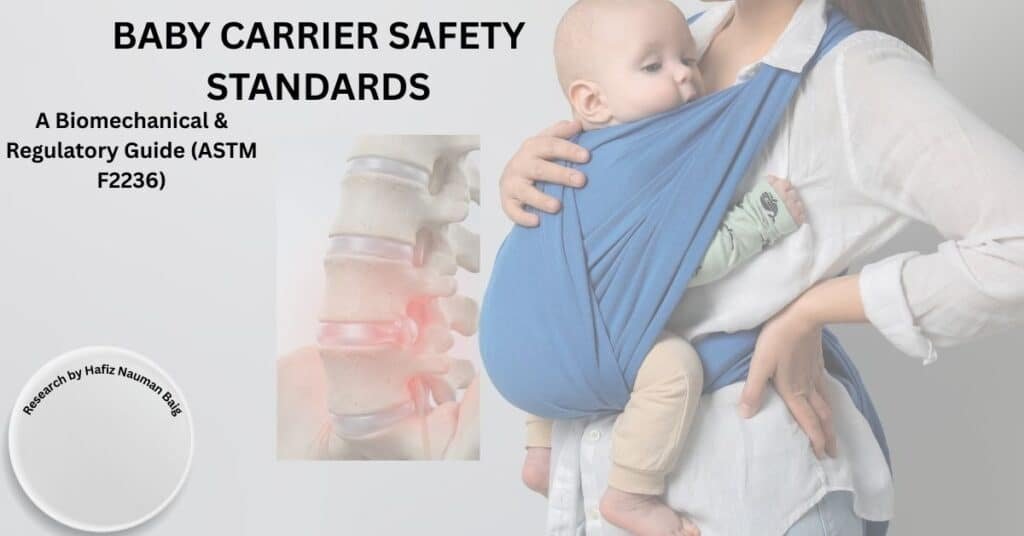
A baby carrier that is entirely free of chemical toxins is still profoundly unsafe if it suffers from structural and biomechanical deficiencies. While non-toxic baby carrier certifications validate the chemical matrix, absolute physical safety also requires adherence to strict engineering and orthopedic standards.
The 2026 Regulatory Landscape: ASTM F2236-24
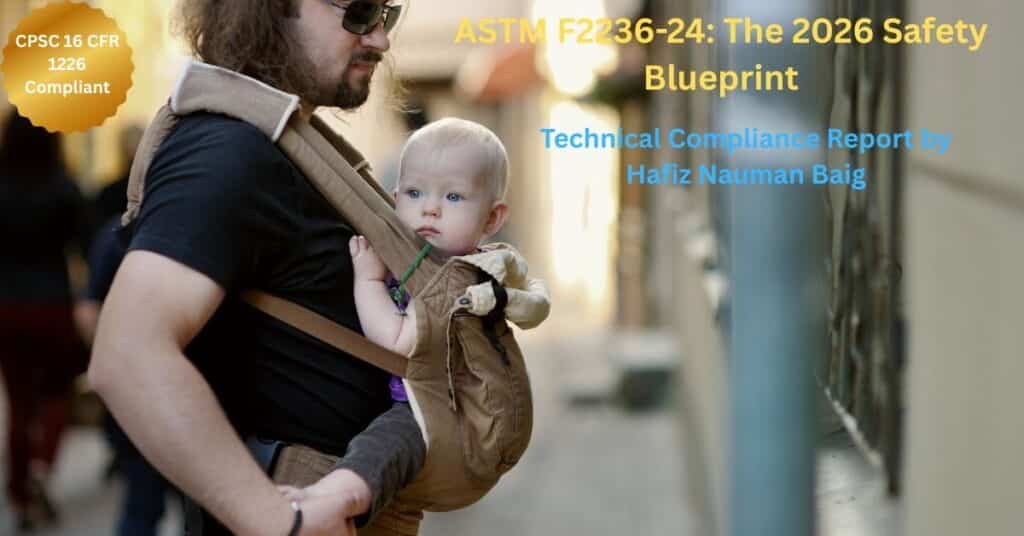
Before a manufacturer can legally sell a carrier, they must prove compliance with the federal code mandated by the U.S. Consumer Product Safety Commission (CPSC). The physical safety of soft infant and toddler carriers in the United States is strictly regulated by the Consumer Product Safety Commission (CPSC) under federal mandate 16 CFR Part 1226. To elevate safety standards for the 2026 market, the CPSC mandated rigorous ASTM F2236-24 testing protocols, which include the critical “Unbounded Leg Opening Test” and intense dynamic load testing to prevent catastrophic failure. For a deep dive into how these federal laws protect your infant from fall hazards, read our complete guide on ASTM / Regulatory Guide .
Polymer Science: The Importance of Delrin Buckles
When evaluating a carrier’s safety profile, the material science of its hardware is just as critical as its fabric. Premium, non-toxic baby carrier certifications often pair with high-performance engineering plastics, specifically Delrin® (Acetal Homopolymer), rather than standard nylon. Unlike nylon, which absorbs environmental moisture and weakens over time, Delrin maintains extreme dimensional stability, resists “creep,” and guarantees that load-bearing buckles will not shatter or slip under the dynamic bouncing weight of a toddler. To understand the mechanical physics behind safe fasteners, explore our detailed breakdown of Delrin Buckles / Fastener Material Science .
Safe Positioning: TICKS and Hip Health
While toxicological certifications protect an infant on a cellular level, behavioral positioning dictates their immediate physiological survival and long-term orthopedic health. A perfectly organic carrier can still pose severe risks if the baby is worn incorrectly.
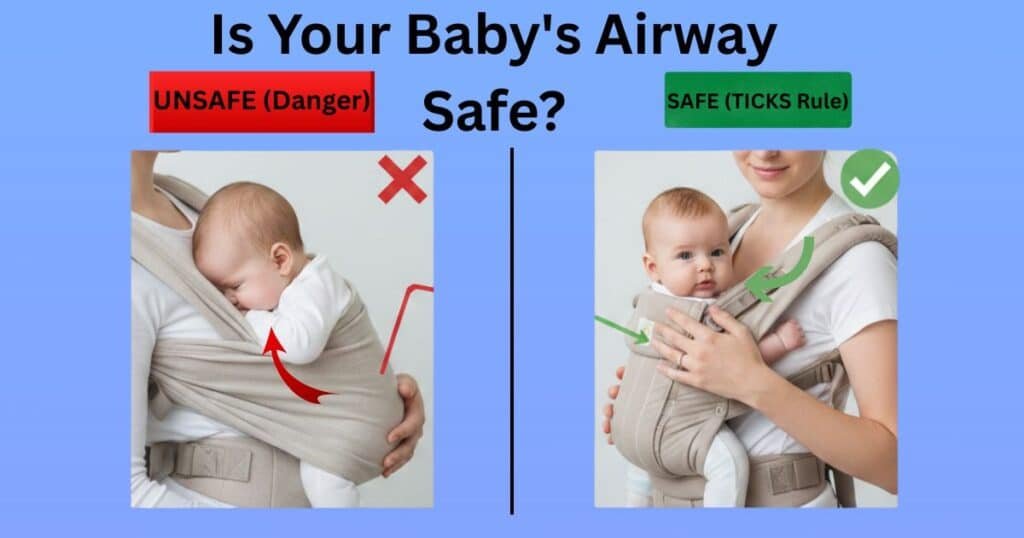
🎥 Visual Guide: Understanding the T.I.C.K.S rule to prevent positional asphyxia and ensure safe, non-toxic babywearing.
- Airway Management: Immediate airway safety is governed by the globally recognized TICKS rule, which prevents the soft cartilaginous “drinking straw” of a newborn’s trachea from kinking and causing silent hypoxia. Master airway safety by reading our comprehensive breakdown of the TICKS Rule .
- Developmental Orthopedics: Long-term orthopedic safety requires proactive defense against Developmental Dysplasia of the Hip (DDH). This is achieved by securing the infant in the biomechanically optimal M-Position (Spread-Squat posture), ensuring the femoral head is seated deeply within the hip socket’s “cone of stability.” Learn how to properly support your infant’s skeletal development in our definitive guide to M-Position / Hip Health.
Market Analysis: Evaluating Top 2026 Baby Carriers
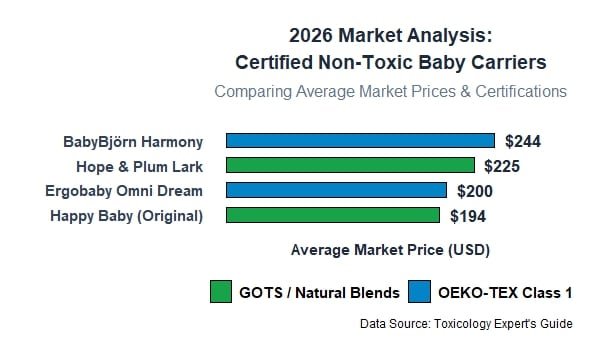
By applying our rigorous standards demanding strict non-toxic baby carrier certifications (OEKO-TEX Class 1 or GOTS), unwavering biomechanical support (verified by the International Hip Dysplasia Institute), and full compliance with federal testing (ASTM F2236-24) we can objectively evaluate the leading carriers on the 2026 market.
| Carrier Brand & Model | Toxicological Profile & Certification | Biomechanical Profile & Ergonomics | Avg. Price (USD) |
|---|---|---|---|
| Ergobaby Omni Dream | Crafted entirely from 100% brushed “SoftTouch” cotton. Fully OEKO-TEX Standard 100 Certified, ensuring all components are free from harmful heavy metals, formaldehyde, and VOCs. | Features an adjustable panel with three specific seat-width settings. Seamlessly supports the M-Position from newborn (7 lbs) to toddler (45 lbs). Excellent thick lumbar support. | ~$200.00 |
| BabyBjörn Harmony | Available in 3D Mesh and Woven Melange fabrics. OEKO-TEX Standard 100, Class 1 Certified. Explicitly manufactured without the addition of any toxic flame retardant chemicals. | Re-engineered from earlier “crotch-dangler” designs, the Harmony offers a wide-seat ergonomic base. IHDI certified as hip-healthy with precise head support. | ~$239.00 – $249.00 |
| Hope & Plum Lark | Constructed from premium natural fiber blends, primarily hemp and organic cotton. The brand prioritizes extremely clean dye practices and ethical, transparent manufacturing. | Utilizes an apron-style design that drastically reduces bulk. Soft, crossable “X” straps distribute weight perfectly across the upper back, avoiding rib-crushing waistbands. | ~$225.00 |
| Happy Baby Carrier (Original) | Utilizing only natural fibers including premium linen, organic cotton, hemp, and Tencel. Dyed using eco-friendly processes guaranteed free from heavy metals and toxic finishes. | An incredibly minimalist, soft-structured carrier that is 30-50% lighter than traditional SSCs. The apron-style waist makes it an exceptional, pain-free choice for C-section recovery. IHDI certified. | ~$184.00 – $204.00 |
Practical Toxicology for Everyday Parents
Understanding complex biochemistry is only beneficial if caregivers can translate that science into practical, everyday habits within the home.
Washing Protocols and Mitigating “Chemical Smells”
When a new carrier arrives, it is common to detect a distinct “chemical odor” emanating from the packaging. If the product lacks verified non-toxic baby carrier certifications, this smell is highly likely to be VOC off-gassing from the polyurethane foams or the pungent residue of formaldehyde used as an anti-wrinkle and anti-fungal shipping agent. Because an infant will inevitably chew on these fabrics, relying on the manufacturer’s factory cleanliness is not an option.
Even when purchasing products with reliable non-toxic baby carrier certifications, caregivers should execute a strict washing protocol before the infant’s first use:
- Mechanical Protection: Fasten all Delrin buckles securely. Place the entire carrier inside a cotton pillowcase or a specialized mesh laundry bag. This prevents the heavy plastic buckles from violently striking the washing machine drum, which can cause micro-fractures in the plastic.
- Chemical Neutrality: Wash the carrier in cold or lukewarm water on a gentle cycle. It is absolutely imperative to use a gentle, “Free and Clear” liquid detergent. Caregivers must explicitly avoid heavily fragranced detergents, optical brighteners, and especially fabric softeners. Fabric softeners coat textiles in a microscopic layer of synthetic lipids, devastating the fabric’s breathability and acting as a primary trigger for severe infant contact dermatitis.
- Thermal Protection: Never place a structured baby carrier in a hot tumble dryer. High thermal heat permanently degrades the elastic webbing, warps the molecular structure of the plastic buckles, and can melt the internal polyurethane foam padding. Carriers must be hung to air dry in a well-ventilated space, out of direct, intense sunlight which can fade natural dyes and degrade fibers.
Identifying Counterfeits and Recalled Products
The proliferation of digital dropshipping and third-party e-commerce platforms has created a dangerous shadow market of unregulated, counterfeit baby gear. These products are manufactured overseas with zero regard for CPSC regulations, bypassing ASTM load testing and chemical safety standards entirely.
The danger is not theoretical. In early 2025, the CPSC issued a severe, widespread safety warning and formal Notice of Violation to a manufacturer regarding the “Babypark” sling carrier, which was sold cheaply via third-party sites like Shein. Federal testing revealed these knock-off slings lacked basic structural integrity, completely failing to retain infants and creating a lethal fall hazard, all while lacking mandatory warning labels.
To navigate this, caregivers must ruthlessly apply the Grandma Rule: If the price seems inexplicably cheap, and the brand possesses no verifiable CPSC compliance records or established digital footprint beyond a nameless Amazon storefront, it is categorically unsafe for a child. Parents should exclusively purchase gear directly from reputable manufacturers or authorized retailers, and immediately fill out the federal registration card to ensure they receive direct notification in the event of a safety recall.
High-Intent FAQs: Everyday Chemical Safety
Are all chemical flame retardants toxic to babies?
Do I need an aftermarket newborn insert for my baby carrier?
Is OEKO-TEX Standard 100 Class 1 better than organic cotton?
Can my baby get a rash just from rubbing against the carrier fabric?
Is it safe to let my baby constantly suck on the carrier straps?
Researcher’s Verdict: The Uncompromising Standard
Infant babywearing is a profoundly beneficial biological practice, but it requires strict adherence to modern scientific safety thresholds. Because an infant’s highly permeable skin and developing airway render them incredibly vulnerable to hidden environmental hazards (like VOCs and chemical flame retardants), choosing a baby carrier requires the exact same scrutiny as selecting a medical device.
By demanding compliance with federal structural mandates (ASTM F2236-24) and verifying non-toxic baby carrier certifications like OEKO-TEX Standard 100 Class 1 or GOTS, caregivers can entirely mitigate the risks of toxic exposure and orthopedic harm. The ultimate takeaway for 2026 is uncompromising: actively reject uncertified, heavily synthetic carriers and demand absolute chemical transparency to ensure your child’s micro-environment is as exceptionally clean and safe as human biology demands.
Works Cited & Scientific References
- U.S. Consumer Product Safety Commission (CPSC): “Safety Standard for Soft Infant and Toddler Carriers; Final Rule.” Federal Register (16 CFR Part 1226).
- Environmental Protection Agency (EPA): “Reducing Your Child’s Exposure to Flame Retardant Chemicals.” EPA Environmental Health Fact Sheet.
- National Institutes of Health (NIH) / PubMed: “Skin Barrier Function in Neonates and Infants.” Clinical Implications and Permeability Studies.
- Duke University Environmental Research: “Toxic Flame Retardants Found in Many Foam Baby Products.” UC Berkeley / Duke University Collaborative Study.
- Environmental Working Group (EWG): “New Baby Textile Product Tests Show Concerning Levels of Toxic ‘Forever Chemicals’ (PFAS).” EWG Health Insights.
- Centers for Disease Control and Prevention (CDC): “How Are Newborns, Infants, and Toddlers Exposed To and Affected by Toxicants?” ATSDR Pediatric Environmental Health Archive.
- OEKO-TEX® Official Framework: “Factsheet – OEKO-TEX® STANDARD 100.” Product Class 1 Testing Parameters for Baby Clothing and Textiles.
- International Hip Dysplasia Institute (IHDI): “Baby Carriers & Other Equipment: Biomechanical Positioning and M-Position Validation.”
- MDPI Toxicology Journal: “Early-Life Exposure to Formaldehyde through Clothing.” Peer-Reviewed Assessment of Allergic Contact Dermatitis in Infants.
- National Center for Health Research (NCHR): “Mandatory Safety Standards for Sling Baby Carriers and Fall Hazard Mitigation.”

Hafiz Nauman Baig is a Researcher and PhD Scholar in Zoology, with a specialized focus on Biomechanics and Anatomical Data Analysis. Merging his academic expertise in biological structures with a deep background in Physical Ergonomics and strength mechanics, Nauman evaluates baby gear through a rigorous scientific lens.
Unlike standard product reviewers, he utilizes R Studio and statistical modeling to assess safety data, focusing on the physiological impact of carriers on the infant airway and the caregiver’s spine. His mission is to bridge the gap between complex biological safety standards and practical, pain-free babywearing.