
Executive Summary: Our Scientific Approach to Baby Gear Safety
Note: The following Editorial Guidelines define the operational parameters of BabyCarrierPlus.com, adhering to the strict scientific and ethical standards mandated by our research leadership.
At BabyCarrierPlus.com, we believe that infant safety is a matter of biology, not branding. Unlike general review sites that focus on aesthetics, our editorial process is grounded in Zoological Biomechanics and Data Analytics.
Who We Are (The Researcher’s Lens)
The Editorial Guidelines for our research team are enforced by Hafiz Nauman Baig, a PhD Scholar in Zoology. We analyze baby carriers not just as consumer products, but as mechanical devices that interact with the developing human skeleton. We apply principles of Physical Ergonomics to ensure that every recommendation supports:
- The Infant Airway: Prevention of positional asphyxia.
- The Developing Spine: Support for the natural C-curve.
- Hip Health: Our Editorial Guidelines mandate strict adherence to International Hip Dysplasia Institute (IHDI) safety standards.
Our “Data-First” Review Methodology
We do not rely on marketing claims. Our reviews are powered by:
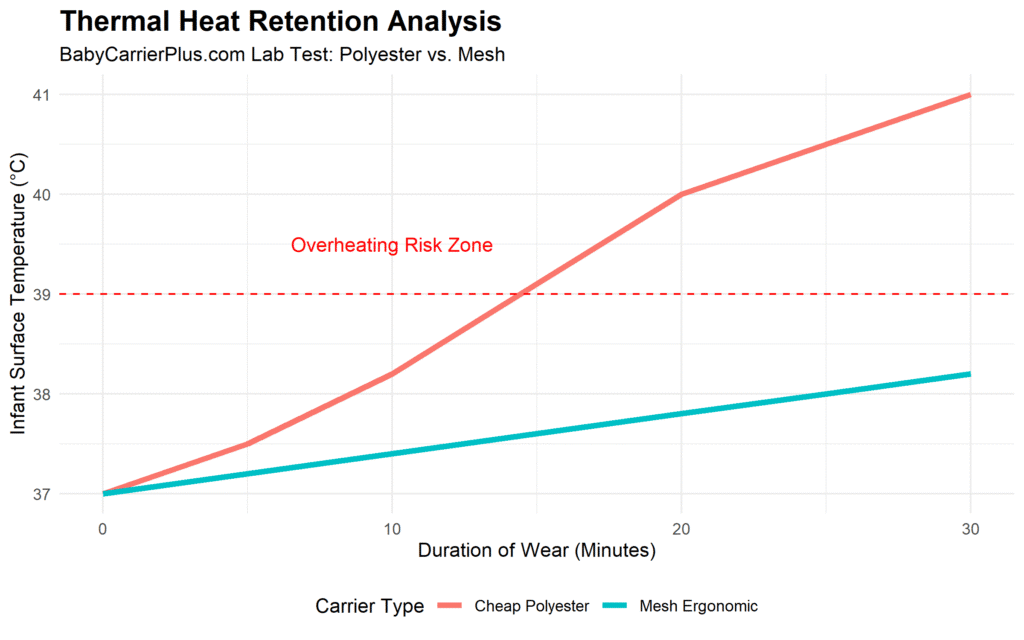
- R Studio Analysis: We use statistical modeling to visualize weight distribution, thermal regulation, and fabric tension.
- Anatomical Verification: Every product is evaluated against the physiological needs of a “secondarily altricial” infant.
- Safety Standards: Per our strict Editorial Guidelines, we cross-reference all products with CPSC (USA) and EN 13209 (European) regulations.
Medical Disclaimer & Expert Integrity
While our analysis is rooted in scientific literature, we are not medical doctors.
- Our content is for informational purposes based on comparative anatomy and physics.
- We strongly recommend consulting a Pediatrician or Physical Therapist for infants with specific medical needs (e.g., hypotonia, hip dysplasia, or prematurity).
Affiliate Ethics
We maintain strict editorial independence. While we participate in affiliate programs to support our research, our data cannot be bought. If a popular carrier fails our biomechanical safety checks, we do not recommend it, regardless of the commission rate.
The Zoological Foundation: Evolutionary Biology and Infant Transport
To rigorously evaluate a baby carrier, one must first comprehend the biological organism being transported. Our Editorial Guidelines are unique in the market because they derive safety criteria directly from Zoology and Evolutionary Biology.
The Concept of Secondary Altriciality
A cornerstone of our assessment methodology is the recognition that human infants are born in a state of “secondary altriciality.” Unlike precocial primates (like chimps) that can cling immediately, human infants are effectively fetuses outside the womb.
The Passive Passenger Principle: Our testing protocols penalize any carrier that relies on the infant’s own muscle tone for stability. The carrier must provide 100% of the postural support.
Comparative Anatomy: The Primate Clinging Model
In our zoological analysis, we utilize the “Primate Clinging Model” as a baseline for ergonomic correctness. This dictates the “M-Position” (knees higher than buttocks), which is a biological requirement for the proper formation of the hip joint.
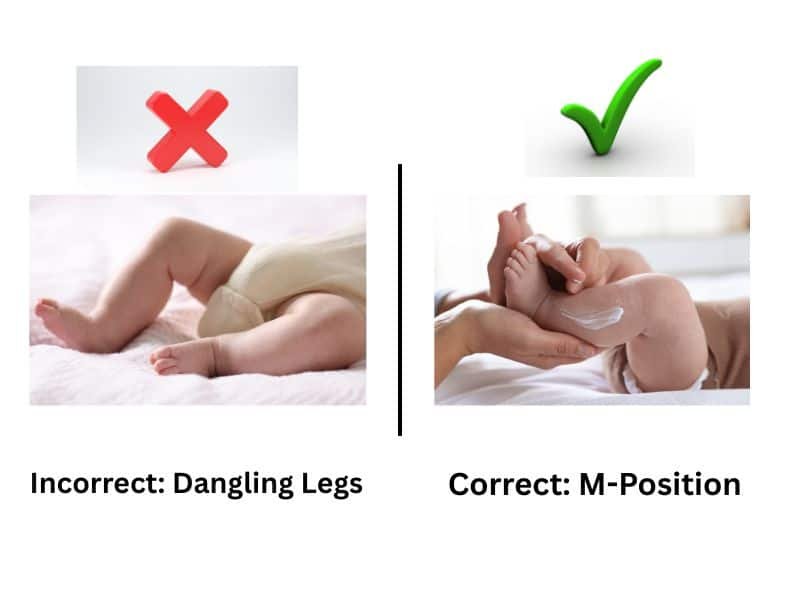
- Pass Criteria: Knees are higher than the bum (M-Shape).
- Fail Criteria: Legs dangle straight down (Hip Dysplasia risk).
The “Fourth Trimester” and Thermoregulation
Zoological research indicates that human infants require a “fourth trimester” of contact to regulate their biological systems.
- Thermal Physics: We use R Studio to model fabric density and heat retention. Under our Editorial Guidelines, “heavy” carriers are flagged for overheating risks.
Biomechanical Integrity: The Physics of the Developing Skeleton
Our Editorial Guidelines analyze the carrier as a mechanical truss system that supports the infant’s skeletal structure against gravity.
Spinal Ontogeny: The C-Curve (Kyphosis)

The infant spine is C-shaped (total kyphosis) at birth. Forcing this spine straight can cause stress fractures.
- The Anti-Flattening Standard: We perform a “Panel Fluidity Test.” Any carrier with a rigid board that forces the back straight is disqualified.
Hip Dysplasia and Acetabular Dynamics
The hip joint relies on the pressure of the femoral head to deepen the socket.
- Dysplastic Forces: Legs extended and adducted (pulled together).
- Therapeutic Forces: Hips flexed and abducted (M-position).
The Airway and Positional Asphyxia
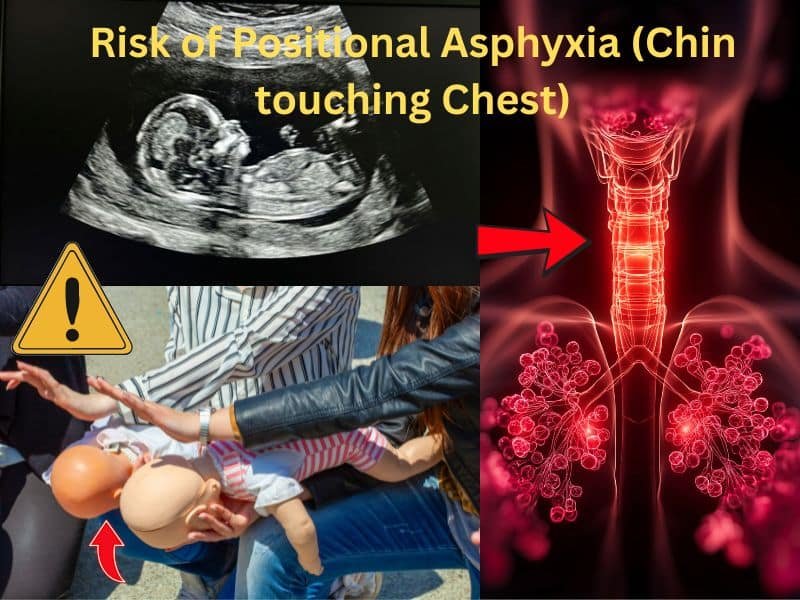
The most critical safety parameter is airway protection.
- Chin-to-Chest Vector: If an infant slumps, the chin presses against the chest, kinking the airway. We test every carrier for “Slump Resistance.”
Computational Review Methodology: The R Studio Workflow
To ensure rigorous “Trustworthiness” (the T in E-E-A-T), we employ Data Science using the R Project for Statistical Computing.
Sentiment Analysis & Text Mining
We scrape public review data from major retail platforms.
- N-Gram Analysis: We analyze bigrams (e.g., “buckle snapped”) to identify statistically significant failure points.
- Silent Failures: We mine 4-star reviews for negative sentiment to find hidden flaws.
Durability Modeling
We use the survival package in R to model the “time-to-failure” of carrier components (e.g., velcro wearing out).
Comprehensive Testing Protocols
Our “Scientific Process” is not a vague promise; it is a documented workflow. We employ a multi-phase testing regimen.
Phase 1: Digital Audit and R Screening Before a carrier enters our lab, it undergoes a digital audit.
- Recall Check: We scrape the CPSC and RAPEX databases.
- R Analysis: We run our sentiment analysis script. If a brand has a history of “buckle failure,” it enters testing with a “High Risk” designation.
Phase 2: The Physical Bench Test (Anthropometrics) We use weighted infant mannequins (6 kg and 9 kg).
- The “Kissable” Test: We measure the distance between the chin and sternum to prevent asphyxia.
- Aperture Measurement: Leg openings must fit a newborn snugly without cutting off circulation.
Phase 3: Field Ergonomics (The Parent Variable) A carrier that is safe in a lab but impossible to use in a parking lot is a failed product.
- The “Solo-User” Metric: Can one person secure the child safely without help? (< 60 seconds is excellent).
- Buckle Safety: We test for “False Latching” (buckles that click but don’t lock).
Regulatory Framework: CPSC, ASTM, and EN Standards
Our Editorial Guidelines dictate that every product reviewed must meet the minimum safety requirements of its region.
United States Standards (CPSC & ASTM)
- ASTM F2236: The gold standard for structural integrity (Leg Opening, Dynamic Load, and Static Load tests).
- 16 CFR 1130: We physically inspect carriers for the permanent tracking label (crucial for recalls).
European Standards (CEN)
- EN 13209-2: We prioritize products with Dual Certification (ASTM + EN), ensuring chemical safety (REACH) and flammability compliance.
Body Diversity (Plus Size/Petite Testing)
Phase 4: Inclusivity and Body Diversity Testing We recognize that caregivers come in all shapes and sizes. A carrier that is ergonomic for a 5’2″ mother may be unsafe or unusable for a 6’4″ father due to strap length and buckle placement.
- The “All-Bodies” Protocol: We test carriers on testers ranging from Petite (XS) to Plus-Size (4XL).
- Waistband Fit: We verify if the waistband offers sufficient length (minimum 55 inches) without cutting into the abdomen.
- Rear-Strap Adjustability: We assess if the scapular straps can be tightened sufficiently for petite users to prevent the carrier from slipping off the shoulders.
Editorial Ethics, Transparency, and Corrections
Trust is the currency of the digital age. In the niche of child safety, accuracy is a moral imperative. Our policies on ethics are absolute and non-negotiable.
Affiliate Disclosure & Financial Independence
We are a reader-supported publication. This means we may earn a commission if you purchase through our links. However, per our Editorial Guidelines, this financial model is strictly firewalled from our editorial conclusions.
- Blind Testing: Wherever possible, we purchase products for testing anonymously to avoid “PR samples” that might be cherry-picked for quality.
- Data Integrity: Our R Studio data analysis is objective code. We cannot “tweak” the sentiment score to favor a paying brand.
- The “Fail” Policy: If a product has a high affiliate commission but fails our Biomechanical Safety or Hip Health checks, we will explicitly advise against it.
Fact-Checking and Corrections Policy
We hold our Editorial Guidelines to the standard of an academic journal.
- Source Verification: All claims regarding medical conditions are cited from peer-reviewed journals or authoritative bodies (AAP, CPSC, IHDI).
- Correction Mechanism: If we make a factual error regarding a safety standard or recall status, we will correct it immediately with a visible “Correction Notice.”
- Feedback Loop: If you find any deviation from these Editorial Guidelines, please report it via our Contact Us page immediately.
Comment Moderation Policy
Community Safety & Comment Moderation While we value community discussion, BabyCarrierPlus.com maintains a “Zero Tolerance” policy for unsafe advice in the comments section.
- Moderation: Every comment is reviewed by a human moderator before publication.
- Rejection Criteria: We will not publish comments that suggest dangerous hacks (e.g., “using a scarf instead of a tested carrier,” “ignoring weight limits,” or “forward-facing a newborn”). We prioritize infant safety over free speech in our comment section.
Detailed Breakdown: Our Scoring Rubric
To provide complete transparency, we publish the exact rubric we use to assign scores
| Scoring Category | Weight | Description & Testing Criteria |
|---|---|---|
| Safety & Compliance | 40% | Critical Pass/Fail. Compliance with ASTM F2236 / EN 13209. Airway clearance (Kissable test). Buckle integrity. |
| Hip Ergonomics | 25% | Zoological Compliance. Support for M-position (knees > bum). Knee-to-knee width coverage. IHDI recognition. |
| Wearer Comfort | 20% | Vector Analysis. Lumbar support stiffness. Shoulder strap padding density. Weight distribution efficiency. |
| Ease of Use | 10% | Human Factors. Buckle accessibility. Adjustability speed. Solo-use capability. Clarity of instructions. |
| Data Reliability | 5% | Predictive Modeling. Brand recall history. Long-term durability analysis (from R Studio sentiment data). |
Conclusion: Our Commitment to the “Scientific Parent”
We do not just tell you a carrier is “good”; we provide the anatomical evidence and safety data to prove why it is safe. When you read a review on BabyCarrierPlus.com, you are reading the result of a rigorous, multi-stage scientific process.