
Pregnancy can cause aching backs, sore shoulders, and even a weak pelvic floor, making many pregnant people uncomfortable. While Tylenol, exercise, and massage are usual remedies, you may also want to add chiropractic care to the list. Pregnancy chiropractic is being discussed because it can reduce these pains. Furthermore, Chiropractic adjustments also make pelvic misalignment and lower back pain less uncomfortable. This article discusses how chiropractic during pregnancy can minimize pain and overall discomfort. Keep reading to see more about prenatal chiropractic protection and advantages.
Researcher’s Note: From a biomechanical perspective, pregnancy dramatically shifts a woman’s center of gravity anteriorly, increasing the lumbar lordotic curve and placing immense shear force on the intervertebral discs and pelvic girdle. Utilizing the Webster Technique—a specific chiropractic sacral analysis and diversified adjustment—reduces interference to the nervous system and balances maternal pelvic muscles and ligaments. This biomechanical optimization not only alleviates maternal musculoskeletal pain but also decreases physiological stress (allostatic load), preparing the pelvic floor for optimal biomechanics during delivery.
Watch the video given below The Webster Technique – Chiropractic Care for a Healthy Pregnancy & Delivery
Watch this helpful Video by Washington Park Chiropractic on YouTube
Table of Contents
The Importance of Pregnancy Chiropractic Therapy
A Safe and Effective Solution:
Pregnancy changes a woman’s body from the hormonal adjustments to weight, as well as redistribution of Centre of gravity. These are characteristically accompanied by discomfort in low back pain, hip pain, and insomnia. Also, chiropractic during pregnancy is a non-invasive, safe method of managing these pains. In its focus on optimizing spinal and nervous system function, prenatal chiropractic limits pain and increases overall health. Skilled chiropractors practicing prenatal care can provide treatments specifically designed for the specific needs of pregnant women.
Chiropractic Care During Pregnancy
| Treatment Area | Clinical Focus | Key Biomechanical Benefits |
|---|---|---|
| Back Pain Management | Spine & Lumbar alignment | Relieves lower back pressure and improves postural balance. |
| Pelvic Pain Relief | Pelvic symmetry (Webster Technique) | Reduces round ligament pain and stabilizes the pelvic girdle. |
| Sciatica Relief | Sciatic Nerve decompression | Eases radiating leg pain and reduces nerve impingement. |
| Posture Correction | Anterior center of gravity correction | Reduces compensatory muscle strain and improves daily mobility. |
| Overall Wellness | Central Nervous System function | Supports optimal fetal positioning and prepares the body for labor. |
What to Expect During Your Visit to a Prenatal Chiropractor
Chiropractic During Pregnancy: A Personalized Approach
Prior to booking an appointment with a prenatal chiropractor, consider consulting your physician for advice beforehand. Once an appointment is scheduled, expect to receive a holistic and customized program to address your case.
Posture Analysis and Spinal Health Assessment
As part of your initial consultation, our chiropractors will further conduct a posture analysis to examine the balance of your pelvis and spine. This helps create a personalized strategy for relieving pain related to pregnancy.
Thermographic Scan for Inflammation Detection
In addition, a thermographic examination can be used to determine areas of inflammation in the spine, which can be very useful for locating areas of need and pointing the way for your chiropractic treatment.
Consultation and Chiropractic Care Plan
Following the assessments, you will get a consultation with us to address your symptoms and concerns. In this manner, your prenatal chiropractic care plan is specifically adapted to your needs and goals, providing effective relief throughout your pregnancy.
Physical Assessment and Chiropractic Adjustments
A full physical examination may include a range of motion tests and neurological exams. The chiropractor adjusts by using gentle maneuvers to align pelvis and spine, alleviating pain and ensuring wellness.
Additional Advice for Ongoing Comfort
Sometimes additional guidance, exercises, or modifications to your lifestyle may be provided based on your assessment to complement your chiropractic during pregnancy care and support your health throughout pregnancy.
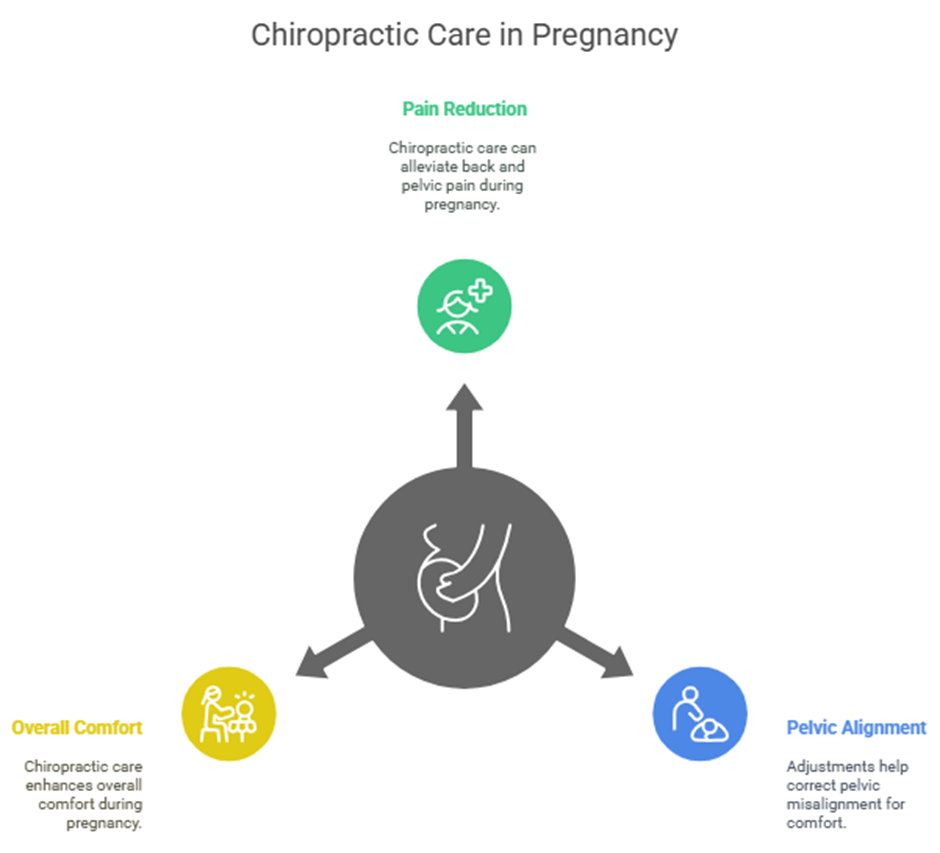
Back Pain and Pelvic Pain Management During Pregnancy
Chiropractic During Pregnancy: Alleviating Discomfort
Pregnancy naturally places additional strain on the spine and pelvis, leading to pelvic pain and back pain. Chiropractic treatment during pregnancy realigns the spine, relieves pressure on nerves, and maintains proper posture, ending the most frequent pregnancy ache.
Pelvic Pain Relief: Aligning the Pelvis
Additionally, pain in the pelvic area, induced by hormonal imbalance and excess weight gain, is also treatable with chiropractic during pregnancy adjustments. The chiropractors adopt mild methods for realigning the pelvis and easing strain on muscles, ligaments, and joints to provide much-relieved comfort throughout pregnancy.
Improving Overall Pregnancy Wellness
Also, chiropractic care enhances general pregnancy health by enhancing brain-to-body communication. This improves the body’s inherent healing powers, facilitates healthy organ function, and ensures a healthier pregnancy.
Common Conditions Chiropractors Can Help Address
Pregnancy causes numerous discomforts that chiropractic treatment can address:
•Back Pain and Sciatica: Chiropractic care can relieve back pain and sciatica resulting from posture alterations and nerve entrapment.
• Symphysis Pubis Dysfunction (SPD) and Pelvic Pain: While chiropractic care can help realign the sacroiliac joints to reduce asymmetrical mechanical stress, passive adjustments alone are often insufficient and may cause a “rebound effect”. For lasting relief, chiropractic care must be paired with Pelvic Floor Physical Therapy to actively build muscular “force closure” around the hyper-mobile pelvic ring.
•Hip and Round Ligament Pain: Chiropractic adjustments release the tension in round ligaments and maintain correct alignment of the hip.
•Postural Alterations and Alignment: Chiropractic care corrects postural imbalance and alleviates pain due to postural alterations brought about by pregnancy.

What is a Prenatal Chiropractor and How Does It Differ from Regular Chiropractic Care?
A prenatal chiropractor is a chiropractor specializing in the pelvic and spinal adjustments to help decrease back pain and anxiety throughout pregnancy. Unlike standard chiropractic care, prenatal chiropractic focuses heavily on pelvic alignment, ease of labor and delivery, and adequate space for the baby’s growth. Also, chiropractic during pregnancy is mild, safe, and customized for each pregnancy phase. To make sure you’re getting the best treatment, use the International Chiropractic Pediatric Association (ICPA) record to locate Webster Certified Chiropractors within your practice. This will ensure you’re getting care that’s effective and safe for you as well as your baby.
What to Expect During Prenatal Chiropractic Treatment
Comfortable Adjustments with Special Modifications for Pregnancy
To mitigate the risks associated with manual force, prenatal chiropractors utilize highly specialized equipment. This includes FDA-cleared Class II medical devices, such as the Activator instrument, which delivers a high-speed, low-amplitude impulse without subjecting the pregnant abdomen to dangerous rotational shear forces. Additionally, practitioners use specialized drop tables with breakaway abdominal sections, ensuring the gravid uterus is completely suspended and devoid of any compressive external forces during the procedure.
Focused on Pelvic Alignment and Pain Relief
Chiropractic tables are furnished with variable segments, allowing your chiropractor to lift independent components of your skeleton while maintaining support for your shoulders, head, hips, and legs. Prenatal chiropractic care may include the use of exclusive support or cushion to cradle your abdomen restfully while you receive your treatment.
Safe and Effective Care with Webster-Certified Chiropractors
During the adjustment, your chiropractor will focus on your pelvis to ensure proper alignment and address any tension or pain areas, while avoiding forceful thrusts that could cause pain. Moreover, a Webster-certified chiropractor will not only focus on physical adjustments but also ensure you feel heard and safe throughout the treatment.
- Important Note: Chiropractors do not manually manipulate or physically turn a breech fetus; that is a medical procedure (External Cephalic Version) performed exclusively by obstetricians. The Webster Technique is strictly designed to correct maternal sacral misalignment, which passively removes biomechanical restrictions (intrauterine constraint), theoretically affording the fetus the optimal anatomical space required to turn spontaneously.
Can I Get Prenatal Care from Any Chiropractor? Or Is an Expert Needed?
If you’re pregnant and considering chiropractor, it’s best to seek a prenatal chiropractor. While some chiropractors may treat pregnant patients, chiropractic during pregnancy requires specialized knowledge. A pregnancy-specialized chiropractor has certifications and training to provide the safest and most effective care for expecting parents. Moreover, you don’t require an appointment to see a chiropractor, but it’s always a good idea to consult your primary care provider or ob./gyn first, especially if you’re at risk of complications. This ensures you’re getting the right care for you and your baby.
Strict Medical Contraindications: According to medical consensus, you must absolutely avoid chiropractic manipulation if you experience vaginal bleeding, placenta previa, placental abruption, Premature Rupture of Membranes (PROM), ectopic pregnancy, or moderate to severe preeclampsia. Furthermore, standard clinical guidelines dictate that electrical stimulation (e-stim) and therapeutic ultrasound are strictly contraindicated during pregnancy due to unknown teratogenic effects on the fetus.

When Could I Get Chiropractic Help During Pregnancy?
The Right Time to Start Care:
You can start prenatal chiropractic care at any stage of your pregnancy, even in the second or 3rd trimester. Chiropractic during pregnancy can help alleviate pain and discomfort, so don’t worry if you’re just discovering it now. Ideally, starting chiropractic care before pregnancy is beneficial for building a strong pelvic floor and back, which can help minimize complications during pregnancy. However, if you’re already pregnant and experiencing pain, there’s no better time than now to seek treatment.
Moreover, if you’re in your second trimester, it’s an excellent stage to check for pelvic alignment between 24-28 weeks to ensure your baby is settled correctly in the pelvic bowl. Even if you’re in the third trimester, chiropractic care can still be helpful, although it’s not essential for preparing for labor.
If you want to read our full guide on Baby Freebies 2026: Best Free Stuff for Moms & Newborns, click here.
Can a woman new to chiropractic care receive treatment during pregnancy?
Chiropractic During Pregnancy: Safe for First-Time Patients
Absolutely! If you’ve never been to a chiropractor earlier, prenatal chiropractic care is still a great option. Many first-time chiropractic patients seek treatment during pregnancy, and pregnancy chiropractors use a soft method to ensure you feel secure and relaxed. Moreover, your chiropractor will focus on providing a supportive and gentle experience to help you manage discomfort during pregnancy. So, if you’re new to chiropractic care, don’t hesitate to give it a try!

Chiropractic Treatment and Preterm Birth: What You Need to Know
Safety and Effectiveness
You may have seen concerns online asking, “Does chiropractic care during pregnancy increase the risk of preterm birth or miscarriage?” The quick reply is no. There is no evidence suggesting that chiropractic adjustments cause or prevent these complications.
Prenatal Chiropractic Care: Risks and Benefits
Furthermore, there are no contraindications for routine care with a certified prenatal chiropractor. If the chiropractor is certified in prenatal care, especially using the Webster technique, you can feel confident in the safety of your treatment. Additionally, chiropractic during pregnancy doesn’t prevent miscarriage or preterm birth, which are often caused by genetic factors, infections, or hormonal imbalances. However, chiropractic care during pregnancy has been shown to improve overall comfort, alleviate common pregnancy pains, and enhance pelvic floor function, which is important for healthy birth outcomes and postpartum recovery.
Watch another video Going to the Chiropractor While Pregnant | Chiropractic Care During Pregnancy | My Visit at 37 Weeks
Watch this helpful Video by Lydia Walker on YouTube
Conclusion: The Benefits of Chiropractic Care During Pregnancy
In conclusion, chiropractic during pregnancy offers a safe and effective way to manage discomfort and improve overall wellness. Moreover, whether you’re dealing with back pain, pelvic pain, or postural changes, chiropractic care can help realign the spine, reduce muscle tension, and support healthy pregnancy outcomes. By addressing common pregnancy-related issues like sciatica, pelvic instability, and hip discomfort, chiropractic care plays a valuable role in promoting comfort and supporting the body’s natural healing process throughout pregnancy. Always consult with a certified prenatal chiropractor to confirm you have the best care tailored to your needs.
Frequently Asked Questions About Chiropractic Care During Pregnancy
Is chiropractic care safe during pregnancy?
Yes, chiropractic care during pregnancy is safe when performed by a certified prenatal chiropractor. Techniques are gentle and tailored to the unique needs of pregnant individuals, ensuring comfort and safety for both mother and baby.
Can chiropractic care help with back pain during pregnancy?
Absolutely! Pregnancy can cause back pain due to shifts in the body’s center of gravity and added weight. Chiropractic care can realign the spine, relieve nerve pressure, and improve posture, effectively alleviating back pain.
When is the best time to start chiropractic care during pregnancy?
Chiropractic care can start at any point during pregnancy. Starting early is ideal to ensure pelvic alignment and minimize discomfort, though even third-trimester care can provide relief.
Does chiropractic care help with pelvic pain during pregnancy?
Yes, chiropractic adjustments can help restore proper pelvic alignment, reducing pain and discomfort caused by relaxed ligaments and instability during pregnancy.
Can chiropractic adjustments prevent preterm birth or miscarriage?
No, chiropractic care cannot prevent preterm birth or miscarriage. However, it can support overall pregnancy wellness, improve comfort, and help maintain proper pelvic alignment for a smoother labor process.
Do I need a referral to see a prenatal chiropractor?
No referral is needed. However, it’s recommended to discuss chiropractic care with your primary doctor or OB/GYN, especially if you have any medical conditions or complications.
How often should I visit a chiropractor during pregnancy?
Visit frequency depends on individual needs and symptoms. Typically, once a week or as needed, especially in the second and third trimesters, to maintain alignment and manage discomfort.
Are chiropractic adjustments painful during pregnancy?
No, adjustments are gentle and specifically tailored for pregnant individuals to ensure comfort while effectively addressing spinal and pelvic alignment issues.

Hafiz Nauman Baig is a Researcher and PhD Scholar in Zoology, with a specialized focus on Biomechanics and Anatomical Data Analysis. Merging his academic expertise in biological structures with a deep background in Physical Ergonomics and strength mechanics, Nauman evaluates baby gear through a rigorous scientific lens.
Unlike standard product reviewers, he utilizes R Studio and statistical modeling to assess safety data, focusing on the physiological impact of carriers on the infant airway and the caregiver’s spine. His mission is to bridge the gap between complex biological safety standards and practical, pain-free babywearing.