
🛍️ Affiliate Disclosure:
As an Amazon Associate, we earn from qualifying purchases. This means if you click a link and make a purchase, we may earn a small commission at no extra cost to you.
Medical Disclaimer: The information provided in this comprehensive guide is for educational and informational purposes only and is not intended as a substitute for professional medical advice, diagnosis, or treatment. Always seek the advice of your obstetrician, dermatologist, or qualified healthcare provider with any questions you may have regarding postoperative care, C-Section scar recovery, or the use of topical treatments.
Researcher Introduction: The Biological Imperative of Maternal Recovery
In the study of maternal biology and reproductive fitness, the period following parturition—specifically the “fourth trimester”—represents a critical window of physiological remodeling. While much of the zoological focus remains on the survival and nutritional acquisition of the neonate, the physical integrity of the mother is the primary anchor for family stability. In the human context, this integrity is frequently challenged by major abdominal surgery. According to data provided by the Centers for Disease Control and Prevention (CDC), approximately 32% of all births in the United States are delivered via Cesarean section. This translates to over one million individuals annually who undergo a procedure requiring the incision and subsequent repair of seven distinct layers of tissue: the skin, subcutaneous fat, fascia, muscle, peritoneum, and the uterus itself.
The evolutionary drive of the human body is designed for rapid repair rather than aesthetic perfection. When the skin barrier is breached, the organism prioritizes “hemostasis” and “closure” to prevent blood loss and sepsis, often at the expense of structural organization. This survival mechanism results in the formation of fibrous scar tissue, which in many cases leads to hypertrophic or keloid scarring—raised, red, and sometimes painful reminders of the surgical event. However, modern advancements in tissue engineering and dermatological science have introduced protocols that can influence this biological outcome. The application of medical-grade silicone and synthetic growth factors represents the frontier of non-invasive postpartum healing. This guide serves to translate the complexities of cellular signaling and occlusion physics into an actionable protocol for the recovering parent, ensuring that C-Section scar recovery is both scientifically optimized and empathetic to the lived experience of motherhood.
Comparative ‘Specification Analysis’ Table
| Product Model | Active Material | How it Works (Simple Physics) | Usage Protocol | Clinical Notes | Availability |
|---|---|---|---|---|---|
| Frida Mom C-Section Patches | 100% Medical-Grade Silicone | The Bumper: Extra-thick, 8-inch long physical barrier that traps moisture (greenhouse effect) while absorbing friction from clothing. | Wear up to 7 days continuously. | Completely waterproof. Ideal for immediate post-closure protection. | Check Price on Amazon |
| Nuvadermis Silicone Sheets | Flexible Medical-Grade Silicone | The Second Skin: Highly flexible occlusion that provides downward pressure to train the scar to heal flat instead of raised. | Lasts up to 14 days per sheet. | Trimmable to any size. Best value for long-term consistency. | Check Price on Amazon |
| Skinuva Scar+ SPF Cream | Synthetic TGF-β3, Vitamin C, Zinc Oxide | The Fetal Blueprint: Uses synthetic growth factors to alter cellular signaling, tricking fibroblasts into scarless fetal-like repair. | Apply twice daily (Morning/Night). | 73% more effective than basic silicone. Contains SPF 30 to stop UV darkening. | Check Price on Amazon |
Researcher’s Takeaway: In simple words, healing is a marathon divided into two distinct phases. For the first 3 months, your incision’s ultimate enemy is physical friction and dehydration. Thick silicone patches like Frida Mom act as a crucial bumper to protect the wound and force it to heal flat. Once the scar is completely flat but still discolored (the remodeling phase), switch to biological intervention. Premium creams like Skinuva possess the actual growth factors needed to fade hyperpigmentation and blend the tissue back to your natural skin tone.
Table of Contents
The Biological Trauma of the Incision: Analyzing the Seven Layers of Abdominal Repair
To understand the necessity of advanced scar management and optimal C-Section scar recovery, one must first respect the magnitude of the trauma the body has sustained. A Cesarean section is not a surface-level event. From a zoological perspective, the skin is an organ of immense complexity, serving as the first line of defense against environmental pathogens. In a C-section, the surgeon must navigate through several layers of specialized biological barriers. In fact, leading medical institutions like the Mayo Clinic emphasize that resting and understanding the depth of this major surgery is the first mandatory step for a healthy C-Section scar recovery.
The Layers of the Abdominal Wall

Understanding your anatomy: The 7 layers of tissue that must heal during C-Section scar recovery.The repair process involves the realignment of the epidermis and dermis (the visible skin), followed by the deep subcutaneous fat layer, which acts as a thermal insulator and energy reservoir. Beneath this lies the fascia—the “duct tape” of the body—and the muscle layers, which are often separated rather than cut. Finally, the peritoneum and the uterus are accessed. When the “repair crew” of the body (fibroblasts) arrives to seal these layers, they are working in a three-dimensional environment. If the visible scar is tight or “tethered,” it often indicates that the internal layers have adhered to one another in an unorganized fashion, a condition known as internal adhesions.
| Layer | Biological Function | Recovery Consideration |
|---|---|---|
| Epidermis/Dermis | Physical barrier & sensation. | Focus of silicone and growth factor therapy. |
| Subcutaneous Fat | Insulation & energy. | Must heal to prevent “pitting” or indentations. |
| Fascia | Structural integrity. | Requires internal support; source of “shelf” feeling. |
| Muscle | Core strength & mobility. | Heals best with rest and eventual desensitization. |
| Uterus | Reproductive organ. | Requires up to 2 years for full cellular maturation. |
The goal of advanced healing protocols is to provide the outermost layer—the skin—with the environmental cues it needs to send a “calm” signal down to the deeper layers. By managing the surface environment, the parent can directly influence the quality of their C-Section scar recovery.
The Regenerative Mystery: Why Human Fetuses Heal Without Scars
One of the most profound discoveries in tissue biology is that human fetuses, during the first two trimesters of gestation, possess the ability to heal wounds without any scar formation whatsoever. This “scarless healing” is the holy grail of dermatological research. As a researcher, it is fascinating to observe that the fetus does not “repair” skin; it “regenerates” it.
The Cxcl12 Gene and Fetal Mimicry
Recent stem cell research from Harvard University has identified molecular mechanisms, such as the suppression of the Cxcl12 gene, which allow embryonic skin to restore all cell types—including sweat glands and hair follicles—rather than just filling the gap with dense collagen. In adult humans, the body has “blocked” this regenerative pathway in favor of speed. Scars are the body’s way of saying, “Close the door now; we’ll worry about how it looks later”.
Advanced growth factor creams, such as those utilizing synthetic TGF-β3, are designed to retract this biological “brake.” By introducing specific proteins that are abundant in the fetal environment but scarce in adult skin, these creams trick the body into adopting a more regenerative approach to repair, establishing an optimal foundation for C-Section scar recovery.
The Four Stages of Wound Healing: A Timeline of Cellular Events

The biological timeline of C-Section scar recovery: Understanding the four cellular stages from the operating room to full scar maturation.The journey from the operating room to a fully matured, faded scar is a marathon, not a sprint. The body follows a strict chronological sequence during C-Section scar recovery. Recommending a product at the wrong stage can be ineffective or even dangerous.
Stage 1: Hemostasis (Initial Minutes to Hours) The body’s “emergency responders,” the platelets, create a mesh of fibrin to stop bleeding. This mesh becomes the scaffold for everything that follows.
Stage 2: Inflammation (Days 1 to 7) White blood cells (neutrophils and macrophages) flood the site to clear out bacteria. During this phase, the scar will look red, swollen, and angry. This is the body’s defensive posture. The “Grandma Rule” applies here: Don’t touch it. This stage is for rest and basic hygiene.
Stage 3: Proliferation (Weeks 2 to 6) The rebuilding begins. Fibroblasts produce collagen to fill the wound. The scar may start to feel thick and “bumpy.” This is the peak window for internal healing, where the surface should be kept clean and dry, but active scar products are generally withheld until the skin is fully closed.
Stage 4: Remodeling (Month 2 to Year 2) This is the longest phase. The body tries to “tidy up” the messy collagen fibers. This is where silicone strips and growth factor creams exert their maximum influence. Over these months, the scar transitions from a raised purple line to a flat, pale mark. This is the ultimate goal of successful C-Section scar recovery.
| Phase | Duration | Visible Signs | Primary Goal |
|---|---|---|---|
| Foundation | Week 1 | Redness, staples/glue. | Infection prevention. |
| Early Healing | Weeks 2-4 | Incision closes; scabbing. | Moisture balance. |
| The Critical Phase | Weeks 5-11 | Peak collagen; itching. | Silicone intervention. |
| Remodeling | Months 3-24 | Fading; softening. | Texture & color optimization. |
Mechanism Analysis I: The Physics of Silicone and the “Greenhouse Effect”
For over three decades, medical-grade silicone has remained the “first-line” clinical recommendation for scar management and C-Section scar recovery. Its success is not due to a chemical drug, but rather to a sophisticated physical interaction with the skin’s top layer, the stratum corneum. This physical barrier approach is heavily supported by dermatological research from the National Institutes of Health (NIH), which highlights silicone gel and sheets as the absolute clinical gold standard for optimal C-Section scar recovery.
The Raincoat Rule for Skin
When a mother’s skin is cut, the new, thin layer of tissue is very poor at holding onto water. It loses moisture up to four times faster than healthy skin. This “dehydration” is a stress signal to the body. If the skin is thirsty, the body produces more collagen to “seal” the leak, which leads to a thick, raised scar.
Applying a medical-grade silicone strip is like putting a “raincoat” or a “greenhouse” over the scar. It creates an occlusive barrier that stops water from evaporating but allows oxygen to pass through.
The Resulting Cascade:
- Hydration: The top layer of skin becomes saturated with internal moisture. Furthermore, protecting your skin’s moisture barrier goes beyond just applying patches. Harsh municipal water can severely dry out healing abdominal tissues during your daily shower. To fully optimize your C-Section scar recovery and protect your infant’s sensitive skin at the same time, installing the best baby bath filter for eczema is a scientifically backed step to neutralize chlorine before it damages your newly forming skin cells.
- Cellular Signaling: The skin cells (keratinocytes) sense this hydration and send a message to the deeper collagen builders (fibroblasts).
- Regulation: The fibroblasts stop overproducing collagen and start organizing it in a flatter, smoother pattern.
The Pressure Factor
Unlike creams, silicone strips provide a secondary benefit: gentle, consistent pressure. In the zoological sense, mechanical tension influences tissue growth. By providing a flat, downward force, strips help “train” the scar to remain flush with the rest of the skin, preventing the “busted lip” look often associated with hypertrophic healing.
Mechanism Analysis II: The Biology of Growth Factors and the “Messengers of Repair”
While silicone focuses on the environment of the scar, advanced creams focus on the instructions being given to the cells. This is the difference between providing a worker with a good workspace (silicone) and giving them a better blueprint (growth factors).
TGF-β3: The Quality Control Manager
In adult healing, the site is dominated by a protein called TGF-β1, which triggers rapid, messy scarring. In fetal healing, the dominant protein is Transforming Growth Factor Beta-3 (TGF-β3). This protein is the “quality control manager” that ensures collagen is laid down neatly.
Advanced formulations like Skinuva Scar contain synthetic, lab-engineered versions of these growth factors. When applied twice daily, these peptides penetrate the upper layers of the skin and initiate a “communication chain” that encourages the fibroblasts to adopt a fetal-like healing pattern.
The Synergy of Ingredients
A high-ticket scar cream is a biological cocktail. Beyond growth factors, it often includes:
- Centella Asiatica: An herbal powerhouse that stimulates the “good” type of collagen.
- Tetrahexyldecyl Ascorbate (Vitamin C): A stable form of Vitamin C that targets “post-inflammatory hyperpigmentation”—the dark brown or red spots.
- Sodium Hyaluronate: A deep hydrator that ensures the growth factors reach their target cells efficiently.
In a head-to-head clinical trial, this growth factor approach was found to be 73% more effective than using regular silicone cream alone. For the parent who is particularly concerned with the color and final aesthetic of the scar during their C-Section scar recovery, this biological intervention is the superior choice.
Comparative Specification Analysis: Strips vs. Creams
Selecting the correct intervention requires balancing clinical efficacy with the realities of caring for a newborn.
| Specification | Silicone Scar Strips (e.g., Frida Mom, Nuvadermis) | Advanced Growth Factor Creams (e.g., Skinuva Scar+) |
|---|---|---|
| Intervention Modality | Physical Occlusion & Pressure. | Biological Cellular Signaling. |
| Primary Ingredient | 100% Medical-Grade Silicone. | Synthetic TGF-β3, Vit C, Hyaluronic Acid. |
| Protection Profile | High: Acts as a physical bumper against clothing. | Low: Offers no protection from friction. |
| Discretion Level | Visible tape; may peel at edges. | Invisible once absorbed; compatible with makeup. |
| User Commitment | Once daily or weekly change. | Twice daily application (Morning/Night). |
| Durability | Waterproof; safe for showering. | Absorbs in 5 mins; needs reapplication. |
| Cost Strategy | Higher volume for the price; reusable. | High-ticket; targeted for color/stretch marks. |
| Best For | Raised, itchy scars; friction sensitivity. | Hyperpigmentation; stretch marks; facial scars. |
Digital Evidence Brief: User Sentiment and Community Experience
Researching the lived experience of thousands of mothers on platforms like Reddit and Amazon reveals a nuanced picture of scar management and C-Section scar recovery. While the science of silicone is undisputed, the “usability” of these products is where many parents struggle.
The “Sticking” Dilemma The most common complaint regarding silicone strips (including top-rated brands like Frida Mom and Nuvadermis) is adhesion failure. Users frequently report that strips “fall off within minutes” or “lose stickiness” after the first wash. This is often due to the “Grandma Rule” being ignored: The skin must be bone-dry and oil-free. Any trace of moisturizer, sweat, or even the natural oils of the skin can ruin the silicone’s ability to bond.
The “Cast-Off” Smell A secondary, though significant, finding in community reviews is the development of a “gross smell” under long-wear strips. This is a biological reality of occlusion—if sweat and bacteria are trapped for seven days without cleaning, a “cast-off” odor develops. Experienced users recommend removing the strip daily for a quick wash of both the skin and the patch to prevent this.
The Cream Preference Conversely, parents who opt for creams like Skinuva report high satisfaction with the “invisible” nature of the treatment. Many find it easier to incorporate a twice-daily rub into their skincare routine than to manage a peeling piece of tape. However, the trade-off is the high price point and the lack of physical protection. Mothers with a “C-section shelf” or an “apron belly” often find that the friction of their skin folding over the incision is painful; in these cases, the physical strip is rated far higher for comfort than the cream.
The Commercial Selection Guide: Top-Tier Recovery Tools
For a parent building their recovery kit, the following products represent the pinnacle of current market availability, each serving a specific biological need.
🌟 Top Pick for Early Protection: Frida Mom C-Section Scar Patches
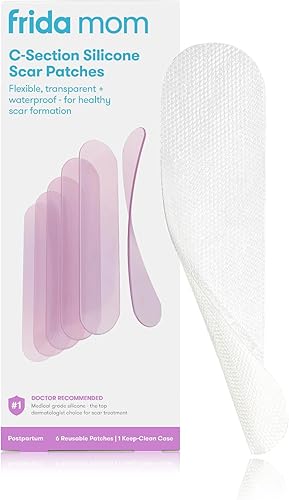
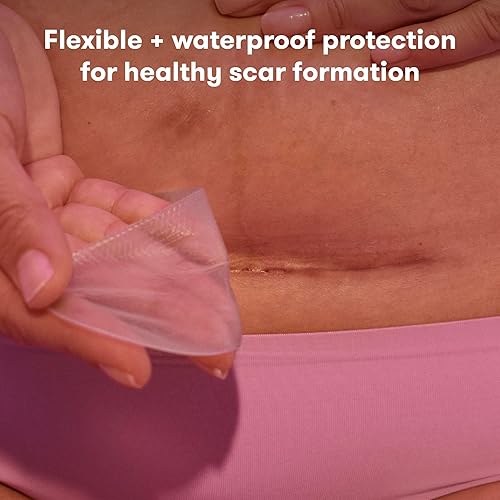
The primary choice for immediate post-closure protection. At 8 inches long, they provide edge-to-edge coverage for the standard horizontal incision. They are notably thicker than generic tape, providing a true “bumper” effect against clothing and friction.
- User Protocol: Each patch lasts up to 7 days and is completely waterproof (safe for daily showering).
- Strategic Value: Priced around $30, making it an ideal middle-ground investment for crucial early healing.
- Extra-thick material offers a true “bumper” effect.
- 8-inch length provides full edge-to-edge coverage.
- Waterproof design allows for worry-free showering.
- Adhesion fails if skin isn’t completely dry or oil-free.
- Trapped sweat can cause a “cast-off” odor without daily cleaning.
💰 Best Value & Long-Term Use: Nuvadermis Silicone Scar Tape Roll


The “Best Value” option for long-term consistency. Made from medical-grade silicone that is highly flexible and “feels like skin”. Available in rolls or large pads, it provides the sheer volume needed for the months-long remodeling phase.
- User Protocol: Trimmable to any size, which is particularly useful for mothers who had emergency vertical incisions or laparoscopic procedures alongside their C-section.
- Strategic Value: These are often the top-rated choice on Amazon for sheer volume and durability, lasting up to 14 days per sheet with proper cleaning.
- Offers unmatched sheer volume and durability for long-term consistency.
- Highly flexible medical-grade silicone that genuinely “feels like skin”.
- Completely trimmable to any size for unique, vertical, or laparoscopic incisions.
- Requires manual cutting to fit the exact size of the scar.
- Adhesion can fail if any trace of moisturizer, sweat, or natural skin oil is present.
🔬 Scientific Gold Standard: Skinuva Scar+ SPF 30 Cream
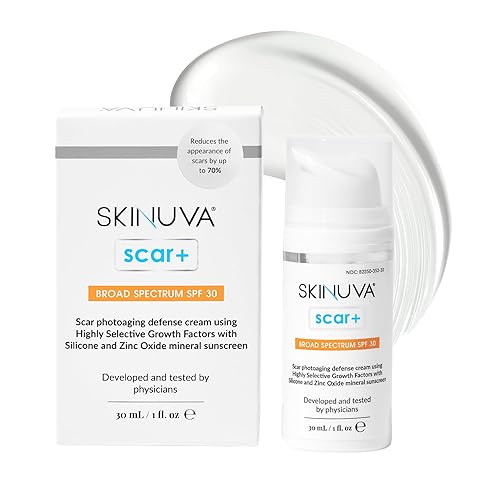
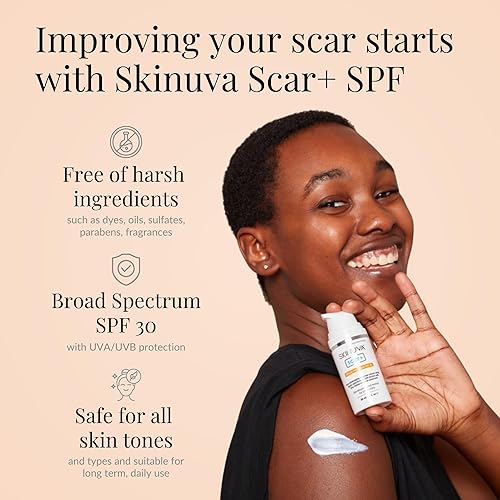
The “Scientific Gold Standard” for aesthetic results. The only major product to use synthetic growth factors (TGF-β3) to mimic fetal healing. In clinical trials, this biological intervention proved to be 73% more effective than basic silicone alone.
- User Protocol: Apply twice daily (Morning/Night). It includes Non-Nano Zinc Oxide (SPF 30), which is crucial to prevent “scar tattooing” where UV exposure makes the scar permanently dark.
- Strategic Value: A premium investment, but for those concerned with discoloration, stretch marks, and blending the tissue to its natural tone, it is the highest-performing option.
- Uses synthetic TGF-β3 to actively alter cellular signaling for fetal-like repair.
- Built-in SPF 30 protects against permanent sun damage and hyperpigmentation.
- Invisible once absorbed and completely compatible with makeup or daily skincare.
- Premium price point makes it a higher financial commitment.
- Offers zero physical “bumper” protection from friction or clothing.
The Strategic Acquisition Protocol: Leveraging the Amazon Baby Registry
In the 2026 digital marketplace, the Amazon Associate ecosystem provides a unique financial benefit to the parent. Most recovering mothers are already utilizing the Amazon Baby Registry for newborn gear; however, many overlook the “Registry Mathematics” that can make high-end products for C-Section scar recovery virtually free.
The $10 Welcome Box Trigger
Amazon offers a “Welcome Box” (valued at $35) to Prime members who complete 60% of their registry checklist and ensure a minimum of $10 in purchases is made from that registry.
- The Play: By adding a box of Nuvadermis Scar Sheets (~$18) or Frida Mom Patches (~$25) to the registry and purchasing it, the mother immediately clears the $10 threshold.
- The Result: She receives the medical-grade scar treatment she needs, plus a $35 box of samples (diapers, bottles, wipes) essentially for free.
The 15% Completion Discount
For high-ticket items like Skinuva Scar+, the registry’s 15% completion discount is a vital tool. This discount applies to items sold and shipped by Amazon in the “Baby” category.
- Timing: The discount window opens 60 days before the due date and stays active for up to 180 days postpartum. This perfectly aligns with the peak “Remodeling Phase” of scar healing.
🎥 Watch: How to Perform a C-Section Scar Massage
Once cleared by your doctor (usually around 6-8 weeks), performing a gentle daily massage helps break down internal adhesions and increases skin mobility. Watch this expert demonstration by a physical therapist:
Video by Live Core Strong | ▶ Watch on YouTube
High-Intent Frequently Asked Questions
When is the absolute earliest I can start using silicone or cream?
The “Researcher’s Rule” for safe C-Section scar recovery is to wait for complete wound epithelialization. This means the incision must be entirely closed, with no scabs, no oozing, and no “weeping” of fluid. For most, this occurs between 4 and 6 weeks postpartum. Applying silicone too early traps bacteria and can lead to a painful infection.
Can I use scar cream and silicone strips together?
Not at the same time. If a cream is applied under a strip, the strip will slide off immediately. The clinically recommended “Hybrid Protocol” is to wear strips at night (for maximum occlusion while the body is in deep repair mode) and use cream during the day (for convenience, discretion, and sun protection).
Are these products safe while breastfeeding?
Yes. Medical-grade silicone is chemically inert and is not absorbed into the bloodstream. Synthetic growth factors like those in Skinuva are “cosmetic peptides” that act locally on the skin tissue and do not pose a risk to breast milk.
How do I know if I’m developing a keloid?
A “normal” hypertrophic scar is raised and red but stays within the boundaries of the original incision. A keloid is thick, hard, and begins to “grow” or spread outside the original cut lines. If the scar begins to expand in width or length, consult a dermatologist immediately; you may require steroid injections in addition to topical therapy.
Will silicone help a C-section scar that is several years old?
Yes, but the goal changes. On a new scar, silicone prevents bad healing. On an old scar (older than 2 years), it softens the tissue. While it won’t make the scar disappear, it can significantly reduce the “pulling” sensation and itching associated with long-term C-Section scar recovery.
The Researcher’s Verdict: The Path to Optimal Healing
After an exhaustive analysis of the biological mechanisms, clinical trials, and consumer data, the path to a “minimally visible” scar and optimal C-Section scar recovery is clear. It requires a transition from physical protection to biological optimization.
- Step 1: The Protection Phase (Weeks 6–12) During the first three months of active healing, the physical integrity of the incision is paramount. The recovering mother should prioritize Frida Mom C-Section Scar Patches. The combination of medical-grade silicone and the “bumper” thickness provides the necessary environment for the fibroblasts to slow down while protecting the sensitive site from the friction of daily life with a newborn.
- Step 2: The Optimization Phase (Months 3–6) Once the scar is flat and the initial sensitivity has subsided, the focus should shift to color correction and cellular remodeling. This is the time to invest in Skinuva Scar+ SPF. By utilizing fetal-mimicking growth factors and a mineral sunblock, the parent addresses the biological “blueprints” of the scar, ensuring it fades effectively into the surrounding skin.
- Step 3: The Maintenance Phase (Months 6–12) Consistency is the only “magic bullet” in scar management. For the long-term commitment required for full maturation, Nuvadermis Silicone Scar Sheets offer the best balance of cost and durability. By continuing to wear these sheets for at least 12 hours a day (ideally at night), the parent supports the final stages of collagen reorganization and overall C-Section scar recovery.
Postpartum recovery is a profound biological transition. By applying the “Simple Science” of occlusion and the advanced biology of growth factors, the modern mother can take control of her physical narrative, ensuring her body heals with the strength, grace, and integrity it deserves.
Navigating the physical demands of early motherhood requires addressing multiple healing fronts simultaneously. While you manage your C-Section scar recovery with advanced silicone and growth factors, you may also be experiencing latching trauma. Integrating the best silver nursing cups into your daily routine can provide the same level of scientific, antimicrobial protection for your chest as silicone does for your abdomen.

Hafiz Nauman Baig is a Lead Researcher and PhD Scholar in Zoology, with a specialized focus on Biomechanics, Anatomical Data Analysis, and Environmental Toxicology. Merging his academic expertise in biological structures with a deep background in physical ergonomics, Nauman evaluates pediatric safety interventions through a rigorous scientific lens.
Unlike standard product reviewers, he utilizes R Studio and statistical modeling to assess clinical safety data. His research spans from evaluating the physiological impact of ergonomic carriers on the infant airway and caregiver’s spine, to analyzing how environmental chemicals (like municipal water additives) compromise the fragile infant skin barrier.
His mission is to bridge the gap between complex biological safety standards and practical, data-driven infant care.
View my verified academic research and clinical profile on ResearchGate.