⚠️ Medical Disclaimer:
The information provided in this article is for educational and informational purposes only. It is not intended to be a substitute for professional medical advice, diagnosis, or treatment. Always seek the advice of your physician or other qualified healthcare provider with any questions you may have regarding your pregnancy.
🔬 Evidence-Based Clinical Summary
Researched & Compiled By: Hafiz Nauman Baig, PhD Scholar (Scientific & Medical Researcher)
This guide is a comprehensive literature review synthesized strictly from the latest obstetric guidelines published by authoritative institutions including the ACOG, NHS, and Mayo Clinic. It is provided for educational purposes and should not replace professional medical triage.

Now that you’ve reached 35 weeks pregnant, you are officially in the late stages of your third trimester. However, it is crucial to understand that your baby is strictly considered “late preterm” at this stage, not full-term. Delivery at 35 weeks carries specific neonatal risks, such as Respiratory Distress Syndrome (RDS) and blood sugar issues, which frequently require NICU monitoring. In this guide, we will cover everything you need to know about fetal development, recognizing true labor signs, and actionable steps to prepare for delivery.
Watch the video below about 35 Weeks Pregnant – Symptoms, Baby Growth, Do’s & Don’ts
Watch this helpful Video by FirstCry Parenting on YouTube
Pregnancy Week 35: Smart Facts
- You’re 8 months pregnant
- Only 5 weeks to go until your due date!
- You’re deep into the third trimester
Common Symptoms at 35 Weeks Pregnant
As your body set up for labor, you may notice a mix of physical discomfort and emotional shifts. Besides, Here are the most general 35-week pregnancy symptoms:
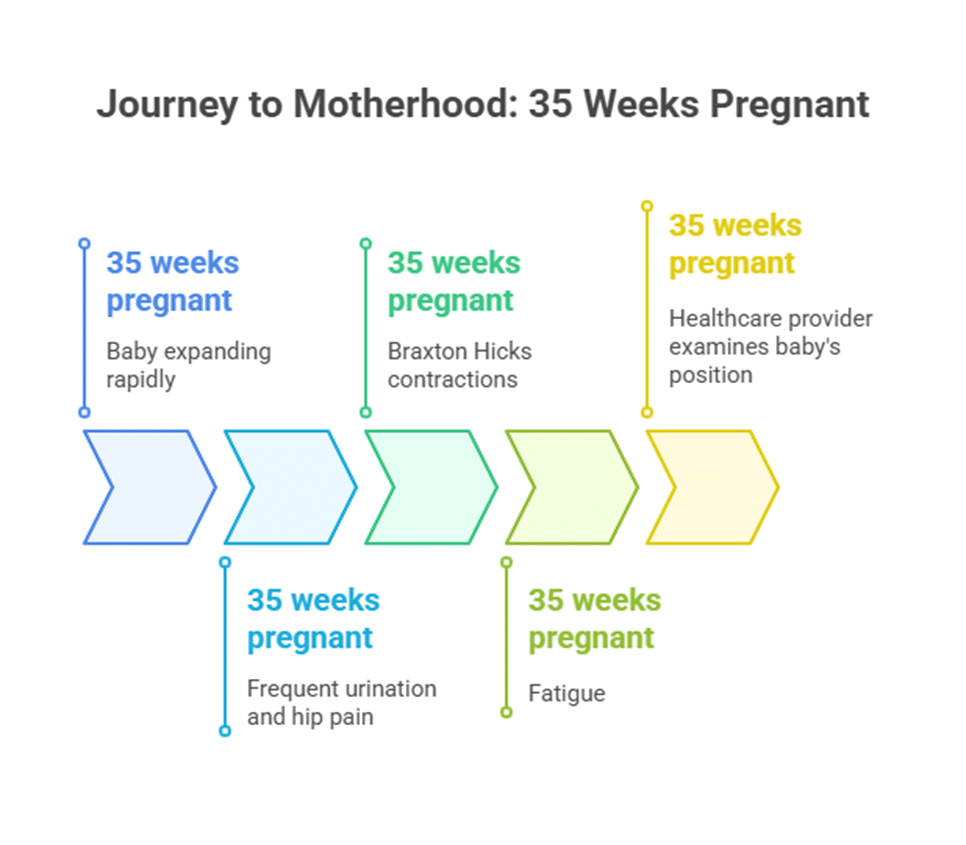
Braxton Hicks Contractions
These “practice contractions” may developed stronger or more frequent.
Tip: Meanwhile, Stay hydrated and alter positions to ease the discomfort.
Heartburn & Indigestion
Your displaced stomach and relaxed muscles will cause severe acid reflux. Solution: Antacids like Tums or Pepcid are generally safe. However, strictly avoid Alka-Seltzer as it contains aspirin, which poses severe bleeding risks and can affect fetal heart development.
Frequent Urination & Leakage
Your growing baby is urging on your bladder.
Try this:
- Cut down on caffeine
- Lean forward when you pee
- Cross your legs if you feel a sneeze coming!
Back Pain & Safe Sleep
The added weight heavily strains your pelvic ligaments. Crucial Sleep Warning: Do not sleep flat on your back (supine). This compresses the vena cava, reducing blood flow to the baby and increasing the risk of stillbirth. Always sleep on your side, preferably the left side, using a pregnancy pillow for support.
Shortness of Breath
However, As your baby pushes upward about your lungs, breathing may become more difficult.
Relief tips: Slow down, sit or stand with improve posture, and try deep breathing exercises.
| Topic | Details | Tips | When to Contact Doctor |
|---|---|---|---|
| Symptoms | Braxton Hicks contractions, pelvic pressure, back pain, swelling | Rest, stay hydrated, use warm compresses | Severe pain, heavy bleeding, or sudden swelling |
| Baby Size & Growth | About 5.5 lbs, 18 inches long; gaining fat for temperature regulation | Eat nutrient-rich foods, prenatal vitamins | Reduced fetal movement or no movement |
| Labor Signs | Regular contractions, water breaking, lower back pain | Track contractions timing | Contractions 5 mins apart lasting 1 min or more |
| Safe Exercises | Walking, prenatal yoga, gentle stretching | Avoid high-impact activities | If exercise causes pain or bleeding |
| Hospital Bag Essentials | Maternity clothes, toiletries, baby clothes, important documents | Pack early, keep bag accessible | – |
| Travel Guidelines | Usually safe for short trips before 36 weeks | Consult doctor before traveling | If you experience contractions or discomfort |
Baby’s Development at 35 Weeks Pregnant
As a result, At 35 weeks pregnant, your infant is fast approaching full-term and hitting exciting developmental milestones.
Brain Growth & Function
Your baby’s brain is maturing quickly, mainly the cerebral cortex, which is key for memory, language, and problem-solving in the future. Finally, This brain maturity will continue well into childhood.
Breathing Practice
The lungs are maturing, and sufficient surfactants may now be present to support independent breathing if your baby comes early.
Fun fact: On an ultrasound, you might even position your baby “practicing” breathing!
Digestive Readiness
The digestive system is practically fully developed. For example, Your baby is now capable of digesting and absorbing nutrients from breast milk or formula after birth.
Skin & Fat Development
Moreover, Your baby’s once-wrinkled skin is now smoothing out, thanks to an increasing fat layer under the skin that will help regulate body temperature. The protective vernix caseosa (that creamy white layer) is initially shed and will continue to do so until birth.
Amniotic Fluid Peak & Sleep Cycles
Around week 35, your amniotic fluid volume reaches its absolute physiological peak (roughly 800 to 1000 mL) before it gradually begins to decrease. Neurologically, your baby has also developed distinct circadian rhythms (sleep-wake cycles). You may notice highly structured patterns of vigorous activity followed by periods of stillness when they are in deep sleep. This is vital to remember when tracking fetal activity (the standard is 10 movements within 2 hours).
Week 35 Prenatal Checkups & Tests
Thus, As you approach the final stretch of pregnancy, your doctor might suggest additional checkups and screenings to confirm everything is progressing well.
📅 Doctor’s Appointments
After 32 weeks, appointments normally become bi-weekly, but depending on your pregnancy, you may be seen at week 35 for close monitoring.
🧪 Common Prenatal Tests at 35 Weeks Pregnant
- Biophysical Profile (BPP)
Consequently, This ultrasound test confirms your baby’s position, growth, amniotic fluid, and breathing movements. - Non-Stress Test (NST)
Firstly, A non-invasive monitoring of your baby’s heart rate in response to movement. It helps detect problems like fetal distress or placental insufficiency. - Group B Strep Screening
Typically done between 36–37 weeks, this test tests for group B streptococcus bacteria in the vagina or rectum.
If positive, you’ll take antibiotics during labor to protect your baby from infection.
- Cervical Exam (Optional)
Your provider might verify your cervical length and dilation to assess pre-labor signs. However, many parents-to-be decided to skip this and simply monitor labor signs at home.
💉 Critical Vaccination Protocols
Maternal vaccination is the primary mechanism for transferring protective antibodies to your baby. If you haven’t already, receiving the Tdap vaccine (recommended between 27 and 36 weeks) is urgent to protect against whooping cough. Additionally, the bivalent RSVpreF vaccine (Abrysvo) is highly recommended between 32 and 36 weeks of gestation to protect your newborn from severe respiratory infections like bronchiolitis.
This Week’s Reminder
Even with a strong care system, professional mental health support can be helpful. Also, As the big day approaches, it’s usual to feel overwhelmed. Talking to a therapist or counselor can ease anxiety and help you emotionally for childbirth.
Important Warnings: Colostrum, Diet Trends, and Travel
- Colostrum Harvesting Delay: Do not start hand-expressing colostrum at 35 weeks. Nipple stimulation releases oxytocin, which can trigger dangerous preterm contractions. Wait until at least 36 to 37 weeks, as advised by lactation professionals[cite: 31, 32].
- The Viral “Gelatin Trick”: Avoid severe caloric restriction or viral weight-loss trends like the “gelatin drink trick.” Your baby needs maximum nutrients right now for brain growth[cite: 53].
- Airline Travel: Flying at 35 weeks is heavily restricted. If you must travel, you need medical clearance, graduated compression stockings, and an aisle seat to prevent blood clots.
Common Questions at 35 Weeks Pregnant
As you reach 35 weeks pregnant, you’re expected flooded with thoughts about labor, birth plans, and what comes after. Meanwhile, Here’s how to get ready and make empowered decisions as delivery approaches.
📝 Birth Plan Tips at 35 Weeks Pregnant: Advocate with Confidence
If you’ve already written your birth plan, the next step is making effective your wishes respected during labor. That’s where the B.R.A.I.N. method can help:
- B – Benefits of the offered intervention or medication
- R – Risks that come with it
- A – Alternatives you can consider
- I – Intuition: What does your gut say?
- N – Nothing: What happens if you wait or decline the option?
💡 Tip: Talk through your plan with your partner or confirm person beforehand so they can help advocate for you when required.

How to Prepare for Postpartum Recovery at 35 Weeks Pregnant
Don’t wait till the last minute—preparing for postpartum improvement now can save you stress later. Here’s how:
Build Your Support Team
Therefore, Start exploring and connecting with:
- Pelvic floor therapists
- Lactation consultants (IBCLCs)
- Postpartum doulas
Finally, You can even charge perinatal consultation with a lactation specialist now. “Breastfeeding is a journey… that involves dedication and grace,” says Amber Knowles, a certified doula from Chicago.
💬 Real mom tip: Karla, who delivered promptly at 34 weeks, shared how difficult it was to seek help with breastfeeding after trying with fertility. Also, You’re not alone—and help is out there.
Stock Up on Recovery Essentials
Before delivery, supply or register for postpartum must-haves:
- Witch hazel cooling pads and anesthetic spray (Dermoplast)
- An ergonomic peri bottle for gentle postpartum cleansing
- Maternity leggings (safe for C-section incisions)
- An extra-long phone charging cable and a sleep mask
- Baby clothes washed in hypoallergenic, fragrance-free detergent
Besides, Having these ready will make those first rare postpartum weeks smoother and more comfortable.
What to Check Off Your List This Week
Now that you’re 35 weeks pregnant, you’re in the last prep phase. Besides packing your hospital bag, make sure to:
✅ Install the Car Seat
Meanwhile, Most hospitals won’t discharge you without checking that your car seat is properly installed.
If your baby is on the smaller side (under 5.5 lbs), they might pass a car seat safety test before going home.
🧸 Prep for the Unexpected
Have some preemie clothes ready—just in case your baby comes early or is smaller than expected.
🩺 Line Up a Pediatrician
Many hospitals request for your baby’s pediatrician info before discharge. Ask friends or community groups for referrals now, so you’re not struggling later.
Support You Might Need at 35 Weeks Pregnant
At 35 weeks pregnant, you’re probable feeling a mix of emotions—some exciting, others overwhelming. No matter how strong your care circle is, this is a great time to lean on professionals for both emotional and physical support.
Emotional Support at 35 Weeks Pregnant: It’s OK to Ask for Help
As childbirth is near, it’s totally normal to feel joy, anxiety, and everything in between. Therefore, Talking to a therapist can assist you process fears or uncertainties about labor, delivery, and parenthood.
In addition, “There are a broad range of emotions that expecting parents feel throughout pregnancy,” says Allison Yura, LCSW, of AY Behavioral Health Services in Chicago. “Excitement, fear, joy, worry, and uncertainty—these responses often heighten as delivery approaches. It’s OK if they feel confused. Pay attention to both the lovely and less pleasant emotions.”
✅ Tip: Many therapists now offer virtual sessions, which can be a excellent option in your third trimester.

Physical Support for Prenatal Discomfort
However, As your baby develops and your body prepares for labor, you might be feeling new aches, tension, or fatigue. Luckily, various types of professionals can help relieve these third-trimester discomforts:
- Prenatal massage therapists – ease back pain and recover circulation
- Acupuncturists – relieve swelling and assistance reduce anxiety
- Chiropractors – support pelvic alignment and reduce nerve pain
- Physical therapists – strengthen muscles and recover mobility
➡️ Pro tip: Always consult your OB-GYN or midwife before any new therapy to confirm it’s safe for your pregnancy.
Baby Development at 35 Weeks Pregnant: What’s Happening Inside the Womb?
Now that you’re 35 weeks pregnant, your baby is pitching up for life outside! With only about five weeks to go, their growth is in full swing. Let’s take a closer look:
- 🧠 Kidneys and Liver in Action
Exciting news in fetal development—your baby’s kidneys and liver are now functioning and creäte to process waste. They’re preparing for their solo debut! - 📏 Growth Slowing, But Steady
Although growth may plateau a bit from this point, your baby is yet gaining weight and getting adorably chubby. Expect them to develop just a couple more inches before delivery. - 👂 Sound Recognition & Listening Skills
Your baby’s hearing development is advanced. They’ve likely identified your voice for weeks and might now respond to your partner’s voice too. Loud or high-pitched sounds may even trigger movement.
35 Weeks Pregnant Checklist: Final To-Dos Before Baby Arrives
As you enter the final stretch of your third trimester, it’s time to tackle those last limited must-dos. Here’s your week 35 pregnancy checklist:
✅ Talk to your insurance provider
Make sure you know how to include your baby to your health insurance after birth.
✅ Wash baby’s clothes and crib sheets
Get those newborn and 0–3-month outfits cleaned in gentle, baby-safe detergent so they’re ready for your little one’s arrival.
✅ Review your baby’s name list
Still love the name you picked? Great! If not, now’s the time to slight down your list and make a final decision.
“You can read our full guide on Cervical Effacement: 50% Effaced, Dilation & Pregnancy for more detailed information.”
Watching another video 35 Weeks Pregnant – What to Expect
Watch this helpful Video by What To Expect on YouTube
🎯 Final Thoughts on Being 35 Weeks Pregnant
As you approach 35 weeks pregnant, it’s both thrilling and overwhelming. You’re just a few short weeks left from meeting your little one, and every small preparation counts. From understanding your baby’s development at 35 weeks pregnant to finishing your hospital checklist, you’re doing all the right issues to get ready for labor and delivery. Moreover, remember to listen to your body, stay in touch with your healthcare provider, and understand from your support system. This stage is not just around physical readiness, but about emotional and mental preparation too.
Take a deep breath, you’re nearly there, and you’re doing great! 💛
Frequently Asked Questions About Being 35 Weeks Pregnant
1. What symptoms are common at 35 weeks pregnant?
At this stage, you may face Braxton Hicks contractions, pelvic pressure, back pain, swelling, and more frequent urination as your body prepares for labor.
2. How big is my baby at 35 weeks pregnant?
By now, your baby normally weighs around 5.5 pounds and measures about 18 inches long, continuing to grow and gain fat to normalize body temperature after birth.
3. What are early signs of labor at 35 weeks pregnant?
Generally, early labor symptoms include regular contractions, your water breaking, lower back pain, and swollen vaginal discharge. Contact your doctor directly if you notice any of these before your due date.
4. Is it safe to have sex at 35 weeks pregnant?
In most cases, sex is safe at this stage unless your doctor has recommended otherwise due to specific pregnancy complications.
5. What should I pack in my hospital bag at 35 weeks pregnant?
At this point, prepare your hospital bag with essentials like maternity clothes, toiletries, baby clothes, main documents, and comfort items for labor.

Hafiz Nauman Baig is a Lead Researcher and PhD Scholar in Zoology, with a specialized focus on Biomechanics, Anatomical Data Analysis, and Environmental Toxicology. Merging his academic expertise in biological structures with a deep background in physical ergonomics, Nauman evaluates pediatric safety interventions through a rigorous scientific lens.
Unlike standard product reviewers, he utilizes R Studio and statistical modeling to assess clinical safety data. His research spans from evaluating the physiological impact of ergonomic carriers on the infant airway and caregiver’s spine, to analyzing how environmental chemicals (like municipal water additives) compromise the fragile infant skin barrier.
His mission is to bridge the gap between complex biological safety standards and practical, data-driven infant care.
View my verified academic research and clinical profile on ResearchGate.