Researched & Authored by: Hafiz Nauman Baig, PhD Scholar (Toxicology & Mammalian Physiology)
Medical Disclaimer: The content provided on this page is for informational and educational purposes exclusively and is not intended to serve as a substitute for professional medical advice, diagnosis, or treatment.
Last Updated: May 4, 2026 | Medically Reviewed On: May 4, 2026

As your pregnancy progresses, you may experience unfamiliar aches, headaches, or even cold symptoms. With a naturally suppressed immune system, finding safe relief is a priority. Many expectant mothers frequently ask, “Can you take Tylenol while pregnant?” or “What’s the appropriate acetaminophen dosage while pregnant?” Tylenol (acetaminophen) is the primary over-the-counter analgesic recommended during gestation. However, understanding the clinically indicated Tylenol pregnancy dosage is crucial for maternal and fetal safety.
Tylenol (acetaminophen) is one of the most suggested over-the-counter options for pain and fever relief during pregnancy, but knowing the accurate Tylenol pregnancy dosage is crucial for your safety and your baby’s health. Below, we break down entirely you need to know—from safe dosage instructions to what the research says—so you can feel better, positively and carefully. “…once you track your conception timeline, using an accurate pregnancy test calculator helps estimate your definitive due date instantly.
Watch the video below Is Tylenol Safe During Pregnancy?
Watch this helpful Video by Healthcare Triage on YouTube
The Physiological Imperative of Pain and Fever Management:
Acetaminophen is not merely for maternal comfort; it is a vital clinical tool to actively prevent fetal harm. Untreated maternal hyperthermia (fever) during the first trimester can interfere with cellular division and significantly increase the risk of neural tube defects (such as spina bifida). Furthermore, managing severe headaches is a critical diagnostic tool, as unmanaged pain can mask the symptoms of preeclampsia, a life-threatening hypertensive disorder.
A pervasive misconception exists that pregnant individuals should universally endure illness to avoid medications. However, elevated core body temperature (hyperthermia), particularly during the first trimester, is a potent teratogen that can disrupt cellular division and cause severe neural tube defects or miscarriage. Suppressing a maternal fever with acetaminophen is not merely for comfort; it is an active, necessary protective measure for fetal viability. Furthermore, unmanaged severe headaches can mask preeclampsia, a life-threatening hypertensive disorder.”
How Much Tylenol Is Secure to Take While Pregnant?
When you’re dealing with headaches, body aches, or mild fever through pregnancy, Tylenol (acetaminophen) is often believed to be a safe go-to. But knowing the correct Tylenol pregnancy dosage is crucial. While the absolute maximum daily limit for a non-pregnant adult is 4,000 mg, modern clinical consensus strongly advises pregnant individuals to stay under a conservative limit of 3,000 milligrams per 24-hour period to minimize maternal hepatic (liver) burden.
- Regular Strength (325 mg): Take 2 tablets every 4 to 6 hours (Maximum 9 pills / 2,925 mg per day).
- Extra Strength (500 mg): Take 2 caplets every 6 hours (Maximum 6 pills / 3,000 mg per day).
- Tylenol 8-Hour Arthritis Pain (650 mg): Take 2 tablets every 8 hours (Maximum 4 pills / 2,600 mg per day).
- Critical Note: Because this is an extended-release matrix, these tablets must NEVER be crushed, chewed, or cut, as it dumps a massive dose into the bloodstream and risks acute liver toxicity.”
Can I Take Tylenol Ultra Strength While Pregnant?
Yes, Tylenol Extra Strength is usually secure for pregnant people—however, it contains more acetaminophen per dose, so caution is key.
➡️ With your doctor’s approval, the suggested acetaminophen dosage during pregnancy for Extra Strength is:
- Two 500 mg caplets every 6 hours
- Do not exceed six caplets (3,000 mg) in 24 hours
📌 In other words, while Tylenol can offer support, taking more than the recommended dosage can be unsafe to both you and your baby. Always follow your provider’s advice when using Tylenol while pregnant.
Tylenol Pregnancy Dosage Overview Table
| Product Name | Dosage (per use) | Max Daily Limit | Pregnancy Safety |
|---|---|---|---|
| Tylenol Regular | 2 x 325 mg tablets | 10 tablets (3,250 mg) | Generally safe if used as directed |
| Tylenol Extra Strength | 2 x 500 mg caplets | 6 caplets (3,000 mg) | Safe in moderation with doctor approval |
| Tylenol PM | 2 caplets at bedtime | 2 caplets (1 dose only) | Short-term use only, confirm with provider |
| Tylenol Cold & Flu | Varies by formula | As per label directions | May contain phenylephrine — avoid in 1st tri |
| Tylenol Sinus | Varies by formula | As per label directions | Often not recommended during pregnancy |
| Generic Acetaminophen | Matches branded dosage | Matches branded dosage | Safe if dosage and ingredients match Tylenol |
Can I Take Other Acetaminophen-Containing Tablets While Pregnant?
Many moms-to-be wonder if other products including acetaminophen—the active ingredient in Tylenol—are also safe to use. These consist of popular medications like Tylenol PM, Tylenol Cold and Flu, and Tylenol Sinus, along with other generic options. These combination drugs frequently pair acetaminophen with other ingredients to treat signs beyond just pain or fever. However, when you’re pregnant, it’s critical to look beyond the brand and check each active ingredient for safety.
Tylenol Pregnancy Dosage Warning: Be Cautious with Combination Products
If you’re thinking any acetaminophen-containing drugs during pregnancy, always read the label carefully. While some components are safe, others may pose a risk, mainly in the first trimester.
For example:
- Tylenol PM merges acetaminophen with diphenhydramine (also known as Benadryl).Doctors consider both safe for short-term use during pregnancy. But an essential note: Take no more than two caplets at sleep time.
- Tylenol Cold and Flu / Sinus: These frequently contain oral phenylephrine. In late 2023, an FDA Advisory Committee voted unanimously that oral phenylephrine is completely ineffective as a systemic nasal decongestant. Taking a medication that offers zero clinical benefit while exposing your fetus to unnecessary pharmaceutical compounds is strongly advised against by obstetricians. Strictly avoid these during pregnancy.
👉 In short, even if the product includes Tylenol pregnancy dosage, that doesn’t automatically make it safe. Always talk to your doctor and confirm each ingredient first.
📌 Pro Tip: Always check the active components list on the package label and confirm with your healthcare provider before treating any combination medication during pregnancy.
Are There Any Safety matters with Tylenol Use During Pregnancy?
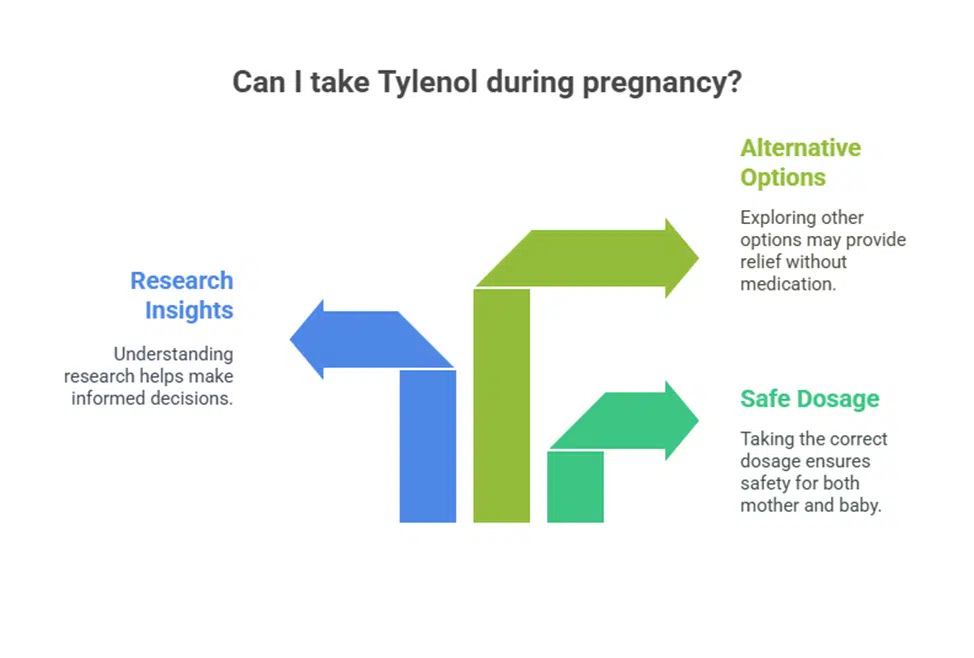
If you’re pregnant and wondering whether Tylenol is safe, the short answer is yes—when used properly. Most experts agree that Tylenol (acetaminophen) is one of the safest pain substitutes offered for pregnant people. However, just like any medication, it’s important to follow the correct guidelines.
👉 When used only as necessary and in the recommended Tylenol pregnancy dosage, there are no main safety concerns. Still, the label recommends all pregnant individuals to consult their healthcare provider first before taking it.
Tylenol Pregnancy Dosage & Potential Long-Term Risks
- Headlines have previously caused panic by linking acetaminophen to ADHD and Autism Spectrum Disorder (ASD). However, a monumental 2024 nationwide cohort study published in the Journal of the American Medical Association (JAMA) analyzing nearly 2.5 million children fundamentally reshaped this debate.
- By utilizing a sophisticated ‘sibling-control’ analysis, researchers proved that the apparent risks were actually driven by familial genetics and maternal health conditions, not the acetaminophen itself. When genetics were factored in, the hazard ratio for autism dropped to 0.98 (a null association indicating zero increased risk). In September 2025, both ACOG and the Society for Maternal-Fetal Medicine (SMFM) formally reaffirmed that acetaminophen remains the safest first-line medication for pain and fever in all trimesters, rejecting the causal link to neurodevelopmental disorders.
Be Aware of Overdose Risk
Many people use Tylenol widely, but taking too much can cause harm. Exceeding 4,000 mg per day can lead to liver damage. Symptoms of Tylenol overdose contain:
- Nausea or vomiting
- Abdominal pain
- Weakness or fatigue
👉 Always trace your dosage and prevent combining Tylenol pregnancy dosage with other medications containing acetaminophen. It is critical to note that symptoms of hepatic injury from an acetaminophen overdose often do not appear immediately. Clinical signs typically manifest 24 to 48 hours after toxic ingestion and include profound nausea, dark-colored urine, and jaundice (yellowing of the skin and eyes). If an accidental overdose is suspected, contact emergency medical services or a Poison Control Center immediately for the administration of N-acetylcysteine to replenish glutathione stores.
Substitutes to Tylenol While Pregnant
The pharmacological landscape for alternatives is exceptionally narrow. Nonsteroidal anti-inflammatory drugs (NSAIDs) like ibuprofen (Advil, Motrin) and naproxen (Aleve) have a vastly inferior safety profile compared to acetaminophen.
Extensive use in the first trimester is linked to an increased risk of early spontaneous abortion and congenital anomalies. Furthermore, the FDA strictly warns against any NSAID use at 20 weeks of gestation and beyond due to severe risks of fetal renal (kidney) failure, critically low amniotic fluid (oligohydramnios), and premature closure of the ductus arteriosus. NSAIDs should be universally avoided throughout pregnancy unless explicitly prescribed by a Maternal-Fetal Medicine specialist.”
Summary: Use Caution and Consult Your Provider
✅ In summary:
- Tylenol is safe during pregnancy when taken at the mentioned dose and only as needed.
- Always check with your healthcare provider about which medications are right at each stage of pregnancy.
- Read the label for dosage and ingredients, mainly with combination products that also involve acetaminophen or other active substances.
- When in doubt, check your OB-GYN or midwife before taking any new medication—even if it’s over the counter.

How to Relieve Pregnancy Pain Without Medication
While Tylenol is normally used to manage pregnancy pain, many expectant moms prefer to explore natural pain relief options before changing to medication. Headaches, backaches, and round ligament pain are among the most usual discomforts during pregnancy.
💡 According to Dr. Sarah Yamaguchi, an LA-based ob-gyn, “Body aches are more normal during later pregnancy and can be cured with massage or Tylenol if needed. But it’s even better to avoid them through healthy lifestyle habits.”
Natural Alternatives to Tylenol Pregnancy Dosage
Here are numerous safe and effective ways to ease pregnancy pain without medication:
- Prenatal Yoga & Stretching: Gentle stretches or yoga can lower back pain and help relieve tension headaches, specifically with deep breathing.
- Meditation: Even a few minutes every day can lower stress, making headaches and typical aches less frequent. Apps like Expectful, Calm, or Headspace make it easy.
- Hot or Cold Packs: Apply warm compresses for muscle and sinus aches and cold packs for severe, tension-related headaches.
- Prenatal Massage: Helps relax tight muscles and smooth soreness naturally. Always use a certified prenatal massage therapist.
- Belly Belts: Maternity provision belts can relieve pressure on your back and hips by assisting your growing belly.
- Stay Hydrated: Dehydration is a usual cause of headaches. Drink plenty of water and enjoy water-rich foods like watermelon and cucumber.
- Use Body Pillows: A pregnancy pillow between your legs or under your belly while sleeping can lower strain on your back and improve comfort.
When to Call Your Doctor
These natural remedies can go a long way to relief you feel better. However, if you’re experiencing severe pain, frequent headaches, or a fever, it’s important to contact your healthcare provider. Not only can they guarantee there are no underlying issues, but they’ll also offer safe pain-relief strategies, including when and how to use Tylenol pregnancy dosage correctly.
Is Tylenol During Pregnancy Linked to ADHD and Autism in Children?
This public concern reached an apex in early 2026 when high-level political figures made public statements suggesting the link between Tylenol and autism was ‘very suggestive’ based on older observational data. However, organizations such as ACOG and the Society for Maternal-Fetal Medicine (SMFM) issued immediate rebuttals, warning that discouraging appropriate acetaminophen use poses severe public health risks and is scientifically unfounded.
Lately, headlines and lawsuits have increased concerns about a possible connection between Tylenol during pregnancy and developmental disorders, like ADHD and autism in children. Many expectant moms understandably feel alarmed. But what does science say?
👉 Acetaminophen, the active ingredient in Tylenol, is still broadly considered safe during pregnancy when treated at the proper dosage.
“If you read the full guide on How Many Months Is 29 Weeks? Fetal Development & Size Guide, you’ll find a detailed explanation of how far 29 weeks is in months.”
Final Take: Is Tylenol Safe in Pregnancy?
While Tylenol pregnancy dosage stays a hot topic, the medical consensus still supports its use as a safe pain comforter during pregnancy, mainly when taken at the lowest effective dose and only as needed. As always, consult your healthcare provider to make a reliable decision for you and your baby.
Watching another video Tylenol – How Much & How Often Can You Take It?
Watch this helpful Video by Bob & Brad on YouTube
Conclusion: What You Should Know About Tylenol Pregnancy Dosage
In conclusion, Tylenol pregnancy dosage is normally considered safe when used at the suggested amount and only when necessary. While latest studies have raised concerns about a potential link between acetaminophen use during pregnancy and conditions like ADHD or autism, the current medical agreement does not support a direct causal relationship. Moreover, reputable health organizations—containing the FDA and the Society for Maternal-Fetal Medicine—still identify acetaminophen as one of the safest pain relief choices for pregnant people.
That said, it’s important to always follow your doctor’s guidance. Before taking Tylenol or any other acetaminophen-containing medication while pregnant, review the dosage guidelines carefully and consult your healthcare provider, specifically if you’re considering extended use.
✅ Bottom line: When used properly, Tylenol during pregnancy remains a safe and effective choice for managing pain and fever. But as always, personalized medical guidance is best.
🤰 FAQs About Tylenol Pregnancy Dosage
1. Can I take Tylenol during pregnancy?
Yes, Tylenol (acetaminophen) is normally considered safe during pregnancy when taken at the recommended dose. Always consult your doctor before taking any medication while pregnant.
2. What is the safe Tylenol pregnancy dosage?
The usual safe dose is 650 mg to 1,000 mg every 4 to 6 hours, not exceeding 3,000–4,000 mg in 24 hours. However, always follow your doctor’s guidance and read the medication label.
3. Is 500 mg of Tylenol safe during pregnancy?
Yes, 500 mg of Tylenol (one Ultra Strength caplet) is safe, but no more than six caplets (3,000 mg) must be taken in 24 hours. Take only what’s required to relieve your symptoms.
4. Can I take Tylenol Extra Strength while pregnant?
Yes, Tylenol Extra Strength can be taken during pregnancy in moderation. The normal dosage is two 500 mg caplets every 6 hours, not exceeding six caplets in 24 hours.
5. What happens if I take too much Tylenol while pregnant?
Overdosing on Tylenol can lead to liver damage, which is unsafe for both you and your baby. Never exceed the suggested dose and seek medical help immediately if you think you’ve taken too much.
About the Author: Hafiz Nauman Baig is a PhD Scholar in Zoology specializing in Fisheries at Quaid-i-Azam University. Leveraging advanced statistical data analysis in R Studio and research expertise in aquatic adaptation and oxidative stress, he provides rigorous, evidence-based safety and ergonomic evaluations for baby gear.