
It’s often difficult to choose the perfect gear for your baby, and balancing usability with safety is a special challenge. That is where the Doona Infant Car Seat and Stroller comes in—an innovative, multi-purpose travel product designed to make life easier for new parents.
In this guide, we will discuss the features of the Doona combo, how it works, and if it is appropriate for your child’s first ride. We will also review its main characteristics, safety requirements, and reviews from real parents.
Join the conversation: Share your experience or get new ideas in our community forum regarding the Doona Infant Car Seat and Stroller to see what other moms and dads are saying.
Doona X Recline Mechanics & Review
Table of Contents
What Is the Doona Infant Car Seat and Stroller?
The Doona Infant Car Seat and Stroller is a revolutionary all-in-one travel system designed for today’s parents who value safety, convenience, and style. Unlike traditional systems, which require attaching a separate stroller to a car seat, the Doona is a car seat that doubles as a stroller in an instant—all it needs is a button press.
This innovative product is popular with city parents and frequent travelers, thanks to its portability. Let’s explore what has led the Doona combo to be a 2026 must-have.
Key Features of the Doona Combo System
The Doona features a set of convenience-focused and safety-focused attributes that simplify life on the go. Highlights include:
- One-Click Change: Fast switchover from car seat mode to stroller mode within 10 seconds.
- FAA-Approved for Air Travel: Perfect for world-traveling families looking for an easy flying experience.
- Integrated Wheels: No need to lug or attach a standalone stroller frame.
- Side Impact Protection: Designed to surpass safety requirements in both car seat and stroller modes.
- Infant Insert and Head Support: Suitable for newborns 4–35 lbs. and up to 32 inches tall.
Compact & Lightweight: Weighs about 16.5 lbs (Doona+) to 18.3 lbs (8.3 kg for Doona X), making it easy to maneuver in confined areas.
These features make the Doona Infant Car Seat and Stroller a favorite among parents looking for sleek safety.
While the original Doona+ established the all-in-one car seat stroller category with its fixed upright seating angle, the flagship Doona X introduces crucial upgrades to comfort and ergonomics.
The 2-Hour Positional Asphyxia Rule: Pediatric health organizations advise limiting upright car seat time to no more than two continuous hours. Because newborns lack neck muscle control, an upright car seat angle can cause an infant’s head to slump forward, compressing their narrow trachea and reducing blood oxygen saturation levels (positional asphyxia).
The Doona X Solution: The Doona X directly addresses this clinical concern by introducing a 3-position recline system that adjusts to a 159° Lay Back (near-flat) position. While the seat must remain upright in the car, parents can recline the Doona X into Lay Back mode as soon as the wheels are deployed for strolling. This ergonomic near-flat position keeps the infant’s airway open and supports healthy spinal development during longer outings.
Doona vs. Traditional Travel Systems: Quick Comparison
| Feature | Doona Infant Car Seat & Stroller | Traditional Travel System |
|---|---|---|
| Conversion Speed | One-click, under 10 seconds | Manual transfer takes longer |
| Storage Space | Minimal (add-on bags available) | Usually includes basket |
| Weight | ~16.5 lbs (without baby) | Car seat: 9lbs + Stroller: 20lbs+ |
| Ease of Travel | FAA-approved, no base needed | Usually needs base or adapters |
| Longevity | Newborn to 12–15 months | Newborn to 3–4 years |
| Best For | Urban living, travel, convenience | Suburban families, long-term use |
Pricing Note:
- Doona Infant Car Seat and Stroller: $550 (Includes car seat, stroller, infant insert, base).
- Doona Travel Bundle: $650–$700 (Includes storage bag, sunshade, snap-on bag).Tip: Pricing may vary depending on sales and bundles.
How Does the Doona Infant Stroller and Car Seat Work?
The Doona is designed to make parenting on the go as effortless as possible. Unlike bulky travel systems, this all-in-one combo offers a seamless transition from car to pavement—no extra attachments, no complicated setup.
One-Push Conversion from Car Seat to Stroller
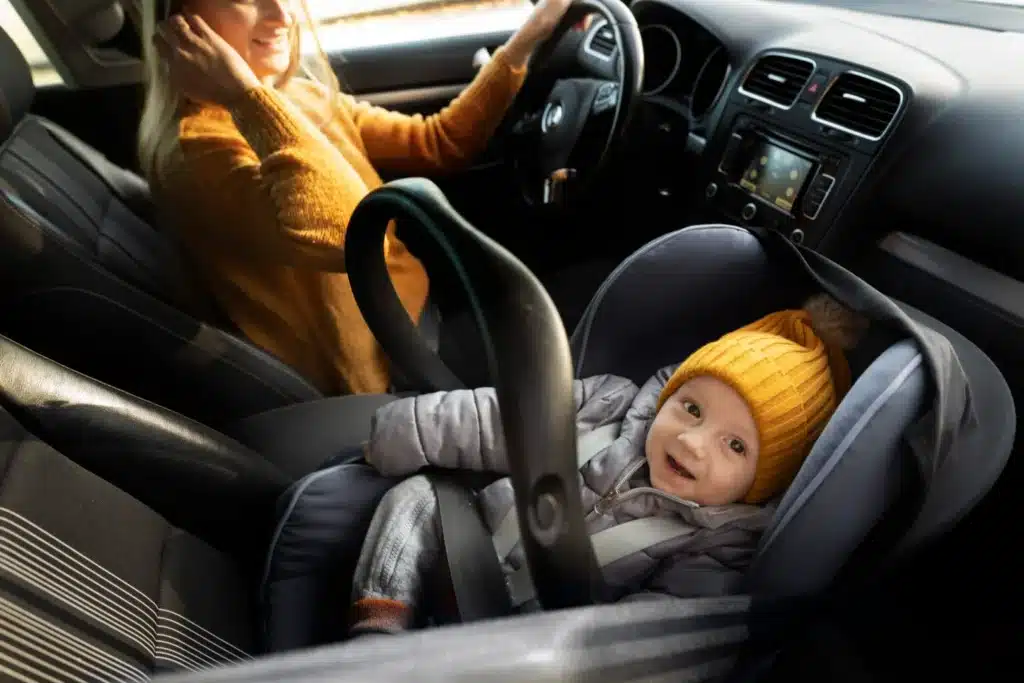
Its patented mechanism allows you to switch modes in seconds:
- Release the Handle: Start by removing the car seat from the base or vehicle.
- Press the Conversion Button: Locate the rear release button.
- Extend the Wheels: The wheels automatically unfold to transform the car seat into a full stroller.
- Adjust the Handlebar: Move the handlebar to the upright position to maneuver the stroller.
How to Install (With or Without Base)
- With Base (Daily Use): Secure the base using the LATCH system or seat belt, then click the Doona in. Check the level indicators for a safe fit.
- Without Base (Travel/Taxi): Place the Doona rear-facing on the vehicle seat. Route the seat belt through the designated path and tighten.
Critical Installation Step: The Anti-Rebound Handle Regardless of whether you install the Doona using the LATCH base or baseless with a 3-point vehicle seatbelt, you must always rotate the handlebar forward so it rests firmly against the vehicle’s seatback. In this anti-rebound position, the handle absorbs impact energy during a collision, preventing the car seat from pitching toward the rear seatback and significantly reducing the risk of injury.
Safety Features and Certifications
Safety is non-negotiable. The Doona Infant Car Seat and Stroller is engineered to meet some of the highest safety standards.
The 2-Hour Rule & Positional Asphyxia: Medical experts strongly advise following the “2-Hour Rule,” which states that infants should not remain in a semi-upright car seat for more than two continuous hours. Because newborns lack neck muscle control, an upright angle can cause their head to slump forward, compressing their trachea and restricting their airway (known as positional asphyxia). The new Doona X directly solves this critical issue with its 159° Lay Back (near-flat) stroller mode, keeping the baby’s airway safely open and supporting healthy spinal development during extended outings.
Key Safety Highlights:
- FMVSS 213 Certified: Meets Federal Motor Vehicle Safety Standards.
- TUV and FAA Approved: Safe for air travel.
- Anti-Rebound Protection: The handlebar acts as an anti-rebound bar in car seat mode to reduce injury during collisions.
- 5-Point Harness: Secures your baby safely in both modes.
Toxicological Compliance & Material Safety: Doona strictly complies with European REACH standards. This rigorous certification ensures that all Doona textiles, inner foams, and plastic components are independently tested and verified to be completely free of Substances of Very High Concern (SVHC), including hazardous heavy metals, lead, phthalates, cadmium, and toxic azo dyes.
Age and Weight Guidelines
To provide maximum safety, adhere to these limits:
Weight Range: 4 to 35 lbs (1.8 to 15.8 kg) for Doona+; 4 to 30 lbs for Doona X.- Height Limit: Up to 32 inches (81 cm).
- Approximate Age: Birth to 12–15 months.
Mandatory Crash Replacement Policy (Zero-Tolerance): Doona enforces a strict zero-tolerance crash replacement policy, explicitly rejecting standard NHTSA minor crash reuse allowances. If your vehicle is involved in ANY accident—even a minor fender bender or if the seat was unoccupied—the Doona must be permanently replaced. Even if there is no visible damage, microscopic stress fractures inside the plastic chassis and EPS foam core can severely compromise the seat’s structural integrity for future impacts. How to Safely Discard a Crashed Seat: To prevent a compromised seat from being reused, cut the 5-point harness straps and crotch buckle, remove and shred all fabric covers, write “CRASHED – DO NOT USE” across the plastic shell with a permanent marker, and dispose of the dismantled parts in a heavy-duty, opaque black trash bag.
Pros and Cons of the Doona System
Benefits (Pros)
- Quick Transitions: No need to move a sleeping baby from car seat to stroller.
- Space-Saving: Ideal for city homes and compact cars.
- Travel-Friendly: Easy to install in taxis and on planes.
- Minimal Lifting: Great for C-section recovery.
Limitations (Cons)
- Short Usage Window: Most babies outgrow it by 15 months.
- No Storage Basket: You will need to buy add-on bags for groceries or diapers.
Heavier Unit Weight: At 16.5 lbs (Doona+) to 18.3 lbs (Doona X), it is heavier than a standard carrier when lifting into a vehicle.
Common Questions About the Doona
Can the Doona Be Used on Airplanes?
Yes, the Doona is FAA-approved. It is a great option for flying as it fits easily down most airplane aisles (in stroller mode) and installs in the seat without a base.
Is it Safe for Newborns?
Absolutely. It comes with an infant insert and head support designed to cradle babies as small as 4 lbs in a correct ergonomic position.
Can You Use It Without the Base?
Yes. This makes it perfect for Uber, Lyft, or taxis. Just route the seat belt through the guides on the seat itself.
Real Parent Experiences
What Moms Are Saying:
- “It was a lifesaver during the newborn stage—especially when my baby was sleeping and I didn’t want to wake him.”
- Perfect for apartment living! We didn’t have space for both, so the Doona Infant Car Seat and Stroller was perfect.”
Practical Tips:
- Use the included infant insert until your baby is around 11 lbs.
- Practice the one-click transformation at home before your first trip.
- Buy the “Snap-On Storage” bag since the Doona Infant Car Seat and Stroller lacks a basket.
How to Clean and Maintain Your Doona
Since the Doona Infant Car Seat and Stroller is designed for daily use, it will inevitably get messy. Spilled milk, crumbs, and outdoor dust are part of the journey. Keeping your Doona clean not only keeps it looking fresh but also ensures the mechanisms work smoothly.
1. Cleaning the Seat Cover The good news is that the Doona’s fabric covers are removable and washable.
- Remove the Cover: Unhook the seat cover carefully from the frame.
- Machine Wash: Wash it in cold water on a gentle cycle. Do not use bleach.
- Drip Dry: Never put the cover in a dryer, as the heat can shrink the fabric or damage the padding. Hang it up to drip dry in the shade.
2. Cleaning the Hardware The wheels and handle joints can accumulate dirt, especially if you walk in parks or on uneven pavement.
- Wipe Down: Use a damp cloth with mild soapy water to wipe the plastic parts and the handle.
- Wheel Maintenance: Check the wheels for any trapped hair or mud. You can use a soft brush to clean out the crevices.
- Avoid Harsh Chemicals: Do not use abrasive cleaners, as they can weaken the plastic structure over time.
Must-Have Accessories for the Doona
While the Doona Infant Car Seat and Stroller comes with the essentials, a few add-ons can make your life significantly easier. Since the stroller does not have a built-in storage basket, these accessories are highly recommended by parents.
1. Doona Snap-On Storage Bag This is the number one accessory parents buy. It clips onto the back of the stroller and provides much-needed space for diapers, wipes, and your wallet. Note: It must be removed before folding the Doona into a car seat.
2. Rain Cover If you live in an area with unpredictable weather, the official Doona Rain Cover is essential. It fits perfectly over the canopy, keeping your baby dry while maintaining ventilation.
3. Sunshade Extension The standard canopy is great, but for sunny days or nap time, the Sunshade Extension provides full coverage (UPF 50+) to protect your baby’s sensitive skin from harsh UV rays.
4. Wheel Covers If you use the Doona in mud or rain and then need to put it in your car, wheel covers prevent your vehicle’s upholstery from getting dirty. They clip onto the wheels instantly.
Final Thoughts: Is the Doona Infant Car Seat and Stroller Right for You?
If you value quick, smooth transitions and live a busy, on-the-go lifestyle, the Doona Infant Car Seat and Stroller is a smart investment for the first year of parenthood. It simplifies travel, saves space, and keeps your baby safe.
If you are preparing for a new baby, also explore our comprehensive guide on baby carrier drool pads and protective accessories to complete your setup.
However, if you need a stroller with massive storage for grocery runs or want a product that lasts until age 3, a traditional modular system might be better.
Recap:
- ✅ Perfect for newborns up to 35 lbs.
- ✅ Transforms in seconds.
- ✅ FAA-approved for travel.
- ❌ Short usage lifespan (approx. 15 months).
Frequently Asked Questions (FAQs)
1. Is the Doona Infant Car Seat suitable for newborns?
2. How long can I use the Doona?
3. Can the Doona Be Used on Airplanes?
Yes, the Doona is FAA-approved, but there are specific regulations parents must follow. Although its 17.3-inch width allows it to easily roll down most airplane aisles in stroller mode, FAA rules strictly prohibit stroller usage during taxi, takeoff, landing, and inflight movement. The wheels must be folded into car seat mode and the seat must be secured into a purchased passenger seat using the aircraft’s lap belt. Additionally, you must rotate the handlebar forward into the anti-rebound position against the airplane seatback.
Important Note on the AmSafe CARES Harness: Parents often confuse general FAA car seat approval with the AmSafe CARES harness. The CARES device is an FAA-approved restraint designed only for older children weighing 22 to 44 pounds who can sit upright unassisted in forward-facing seats. It cannot support infants or replace a rear-facing infant car seat like the Doona.
4. Does the Doona need a base?
5. Is the Doona safe for everyday use?
About the Author: Hafiz Nauman Baig is a PhD Scholar in Zoology specializing in Fisheries at Quaid-i-Azam University. Leveraging advanced statistical data analysis in R Studio and research expertise in aquatic adaptation and oxidative stress, he provides rigorous, evidence-based safety and ergonomic evaluations for baby gear.